
Balochistan’s Hidden War: Women, Sexual Scandals and Tribal Honour Turned Into Weapons
· 196 views
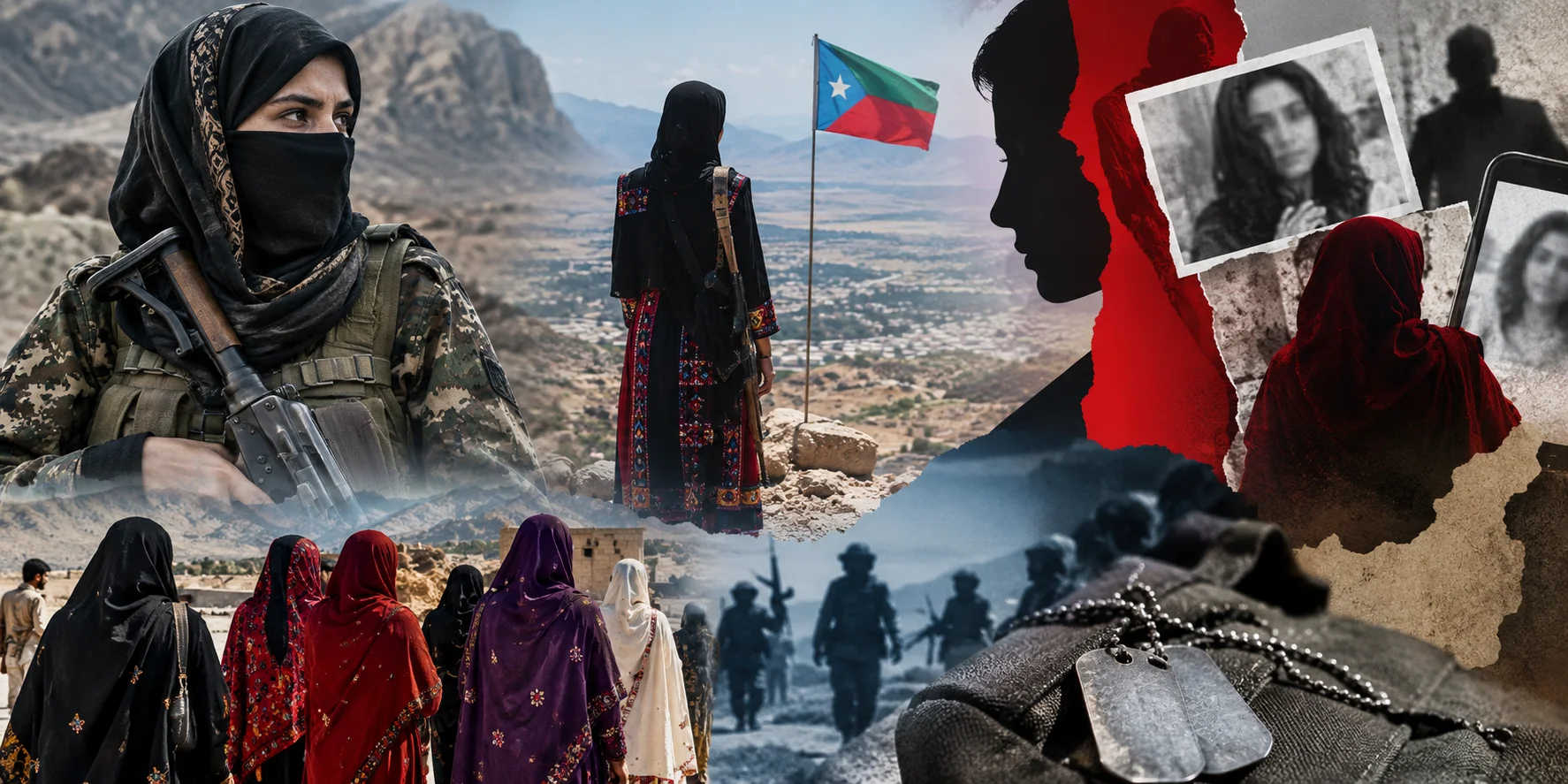
Washington, D.C.(Terror Monitor) — The conflict in Pakistan’s southwestern province of Balochistan is increasingly extending beyond conventional armed confrontations, with women’s participation in militant organisations, allegations of sexual exploitation and the concept of tribal honour becoming central to competing narratives, according to an analysis published by the US-based Jamestown Foundation’s Terrorism Monitor.
The analysis examines how gender and social norms are being drawn into the information war surrounding Baloch militancy, with rival sides seeking to shape public perceptions of female participation in the insurgency. It suggests that the debate is no longer limited to weapons, attacks and security operations, but increasingly concerns women’s agency, personal autonomy and the social consequences of their involvement in armed movements.
The growing visibility of women in militant organisations has also created challenges for security agencies, particularly as female members may participate in intelligence networks, organisational leadership and frontline operations rather than remaining confined to traditional support roles.
Female Militants and Competing Narratives
According to the analysis, the reported killing of Balqis Didag, also known as Almas, a female commander associated with the proscribed Balochistan Liberation Front (BLF), and the controversy surrounding related events illustrate how the identities and reputations of women have become part of the wider information battle.
The competing narratives carry significant political and social implications. Women’s participation in armed organisations can reflect political convictions, personal grievances, organisational recruitment strategies or a combination of factors. However, narratives portraying female militants as having been coerced or manipulated can also be used to undermine their agency and question the legitimacy of their political choices.
The analysis describes how allegations involving blackmail, intimate videos and sexual exploitation can be deployed to discredit militant organisations by appealing to conservative social attitudes and traditional notions of tribal honour. Such claims, however, must be distinguished from independently verified evidence, as allegations about individual women’s experiences cannot automatically be treated as established facts.
Militants Portray Female Members as Symbols of Resistance
The analysis also examines how militant organisations respond to negative portrayals of their female members. Rather than accepting narratives that depict women as victims of manipulation, these groups may present women killed during the conflict as symbols of resistance, sacrifice and autonomy.
Such portrayals can become part of recruitment and propaganda efforts, potentially influencing younger people and encouraging greater participation by women. By highlighting female members in leadership and operational roles, militant organisations can also project an image of organisational strength and challenge assumptions that armed movements are exclusively male domains.
At the same time, the use of women in militant operations raises serious questions about the consequences of expanding the conflict into civilian and family life. The political symbolism surrounding female fighters can obscure the realities of armed violence and the risks faced by the communities in which these organisations operate.
Security Policies and the Impact on Baloch Women
The growing prominence of women in the conflict presents security agencies with challenges that extend beyond conventional battlefield operations. Female participation in intelligence gathering, organisational networks and armed activities can complicate established approaches to surveillance, recruitment prevention and counterinsurgency.
However, responses based on suspicion or restrictive security measures can also affect women who have no involvement in militancy. Increased scrutiny, movement restrictions and social pressure may limit ordinary Baloch women’s ability to travel, work, study and participate in public life.
The analysis warns that the politicisation of women’s identities and tribal honour risks deepening alienation among sections of the Baloch population. When competing sides use allegations about women to discredit opponents, the resulting stigma can extend well beyond the individuals directly involved in the conflict.
A Conflict Increasingly Shaped by Information Warfare
The broader significance of the analysis is that the Balochistan conflict is being fought not only through armed operations but also through competing efforts to control public perceptions. Women have become central to this struggle because their participation, personal choices and social standing carry political significance within the region’s conservative communities.
The competing narratives can serve different strategic purposes: state-aligned accounts may seek to discredit militant recruitment, while militant propaganda may portray female members as evidence of resistance and political commitment. Neither narrative, on its own, establishes the circumstances behind an individual woman’s decision to join an organisation or the allegations made about her.
Ultimately, the growing role of women in Baloch militancy presents both a security challenge and a wider social concern. The treatment of women in this conflict risks becoming another source of resentment if allegations are circulated without evidence or security responses impose broad restrictions on the civilian population.
The central warning is that when women’s identities and tribal honour become instruments in an information war, the consequences can reach far beyond militant organisations and security agencies, affecting the freedoms, safety and social standing of ordinary Baloch women.
Source note: The Jamestown Foundation’s Terrorism Monitor examined the growing role of women in Baloch militancy and its strategic implications.