
Former Pakistan Army Captain Rehman Gul Named BLA Chief; Rs250 Million Bounty on Him
· 25 views
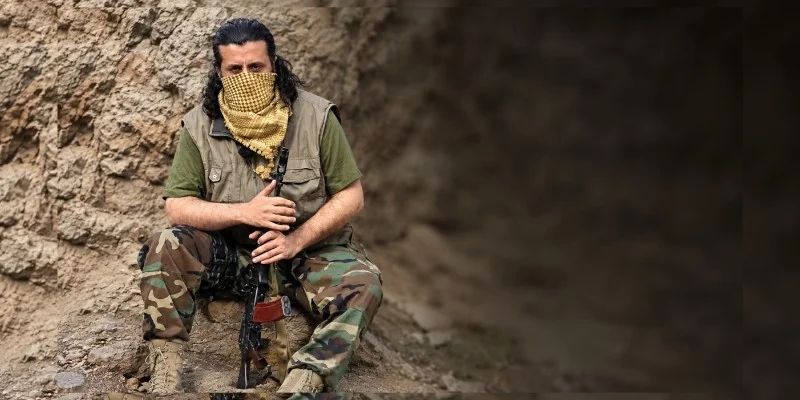
Islamabad (Terror Monitor) — The outlawed Balochistan Liberation Army (BLA) has appointed Rehman Gul, alias Mureed Baloch, as its new commander-in-chief, replacing Bashir Zeb Baloch, whose removal from the leadership position was announced earlier this month.
The militant organisation announced on November 14 that its Senior Command Council had unanimously elected Gul following consultations among its senior leadership and commanders.
Gul, who previously served as commander of the BLA’s Majeed Brigade and a member of its Senior Command Council, is reportedly a former Pakistan Army captain who left the military in 2010 and subsequently joined the insurgent group.
The appointment marks a leadership transition within the organisation following Bashir Zeb’s departure from the top position. The BLA had announced on November 3 that its administrative, military and policymaking powers had been transferred to the Senior Command Council pending the selection of a new commander-in-chief.
The council reportedly finalised Gul’s appointment on November 14, according to the announcement circulated by the group’s spokesperson, Jeeyand Baloch.
Leadership Transition Following Bashir Zeb’s Removal
The BLA announced in early November that Bashir Zeb Baloch was no longer serving as its commander-in-chief. The organisation said the decision had been taken during a meeting of its senior leadership on October 16.
Following Zeb’s departure, the group said all administrative, military and policymaking powers had been entrusted to its Senior Command Council until a successor was selected.
The organisation described the transition as a collective decision intended to give renewed momentum to its activities. However, the circumstances surrounding Bashir Zeb’s removal and his future role within the organisation have not been publicly clarified.
Bashir Zeb had become the BLA’s second commander-in-chief following the death of Aslam Baloch, also known as Ustad Aslam or Ustad Achu, in a suicide attack in December 2018. He remained at the helm for approximately eight years.
Rehman Gul is the third commander-in-chief of the BLA under the leadership structure established following Aslam Baloch’s death.
Who Is Rehman Gul?
Rehman Gul, also known as Mureed or Ustad Mureed, reportedly belongs to the Mengal tribe and was born in Nushki district of Balochistan, near the Afghan border.
According to journalist and Balochistan affairs analyst Kiyya Baloch, Gul was born in August 1984 in Killi Mengal, a locality south of Nushki city, into a prominent Mengal family with longstanding connections to tribal, social and political affairs.
His family reportedly has links to Baloch nationalist politics. Gul Khan Naseer, a prominent Baloch poet and progressive politician who served as education minister during the National Awami Party government, was among his close relatives.
Another relative, Lawang Khan Mengal, was reportedly a guerrilla commander who joined the insurgency following the dismissal of Balochistan’s first elected government led by the National Awami Party in the 1970s. He was subsequently killed during a military operation in the Dasht-e-Goran area of Kalat district.
Gul reportedly completed his early education at Government Boys Model High School in Nushki before moving to Quetta for intermediate studies. He later graduated from the University of Peshawar in Khyber Pakhtunkhwa.
From Pakistan Army Captain to BLA Commander
According to reports by the Pakistan Institute for Conflict and Security Studies (PICSS) and journalist Kiyya Baloch, Rehman Gul joined the Pakistan Army in 2002 and graduated from the Pakistan Military Academy’s 109th Long Course in 2004.
He was subsequently assigned to the 19 Frontier Force Regiment and reportedly served in several areas, including North and South Waziristan and the Kashmir sector along the Line of Control.
Gul reportedly spent approximately eight years in the military before leaving in 2010 while holding the rank of captain.
BBC reported that it contacted the Inter-Services Public Relations (ISPR), the military’s media wing, regarding Gul’s reported military service but had not received a response by the time its report was published.
Following his departure from the army, Gul reportedly joined the BLA and initially operated in the mountainous Bolan region of Kachhi district under the command of Aslam Baloch, also known as Ustad Aslam Achu.
Aslam Baloch was among the organisation’s prominent commanders and is credited with expanding its operational activities beyond remote mountainous areas into urban centres, including Karachi.
Rise Within the BLA and the Majeed Brigade
Rehman Gul reportedly rose through the BLA’s ranks over the years and became commander of the Majeed Brigade in 2018.
The Majeed Brigade is the organisation’s suicide-attack formation and has been associated with some of its high-profile attacks targeting security personnel, Chinese nationals and infrastructure linked to Chinese projects in Pakistan.
The brigade has played a significant role in the BLA’s increasingly sophisticated and high-profile operations in recent years.
Gul reportedly served as a member of the BLA’s Senior Command Council before being appointed commander-in-chief, placing him within the organisation’s senior decision-making structure during the leadership transition.
His elevation therefore represents the appointment of a figure from within the existing senior command rather than an outsider.
Wanted by Pakistani Authorities
Rehman Gul is reportedly wanted in more than 100 terrorism-related cases registered in Balochistan, according to the provincial Counter-Terrorism Department (CTD).
He has also reportedly been nominated in several terrorism-related cases in Sindh, including cases linked to attacks in Karachi and the attack targeting Chinese engineers near Karachi’s airport.
The Balochistan Home Department has included Gul in its list of highly wanted individuals. Authorities have announced a reward of 250 million Pakistani rupees for information leading to his arrest.
The reward places him among the most heavily wanted militant figures listed by provincial authorities.
BLA Attacks and Chinese Interests
The BLA and its Majeed Brigade have expanded their attacks in recent years, targeting Pakistani security forces, government installations, civilians and Chinese nationals working on projects in Balochistan.
The group has repeatedly opposed Chinese investment and infrastructure projects, including those associated with the China-Pakistan Economic Corridor (CPEC).
The Majeed Brigade has been associated with attacks intended to draw international attention to the Baloch insurgency, including suicide attacks and operations against Chinese personnel.
Some Pakistani and international media reports have suggested that Gul held a particularly hardline position toward China. However, security analyst Amir Rana said opposition to China and CPEC was not limited to one commander or faction.
He said both the BLA and the outlawed Balochistan Liberation Front (BLF) had opposed Chinese projects and targeted them because they viewed China's growing influence as strengthening Pakistan's military and state institutions.
Rana said militant organisations believed China's support would contribute to Pakistan's military and economic strength, which they considered detrimental to their objectives.
Analysts Assess Leadership Change
Senior analyst and executive director of the Centre for Research and Security Studies, Imtiaz Gul, described the leadership change as a tactical rather than a fundamental strategic shift.
He said the organisation's basic structure was unlikely to change significantly simply because a new commander had assumed leadership.
Gul also pointed to the increasing number of intelligence-based operations being conducted by Pakistani security forces in Balochistan, saying that if the reported operational successes and militant casualties were accurate, they could put considerable pressure on the organisation and its leadership.
Former Balochistan government spokesperson and analyst Jan Achakzai said Rehman Gul differed from his predecessor because of his military background.
He warned that the leadership change did not mean the threat posed by the organisation had diminished and said Pakistan's security agencies would need to remain alert.
Security analyst Amir Rana said organisations claiming to represent a particular ideology often change their leadership to prevent the emergence of personality-based or cult-like structures.
He said leadership transitions could also involve internal disagreements, although he had no information confirming disputes within the BLA over the latest change.
China Policy and the Future of the Insurgency
Analyst Abdul Hai Kakar, a senior journalist and intellectual based in the United States, said opposition to Chinese development projects in Balochistan had remained a longstanding position among both Baloch militant groups and political parties.
He said Rehman Gul appeared to represent a faction within the insurgency that considers confronting China's influence necessary to challenge the Pakistani state.
The appointment of a former Majeed Brigade commander to the BLA’s top position is likely to draw attention to the organisation’s future leadership, its relationship with China and the direction of its campaign in Balochistan.
While the leadership transition has resolved the immediate question of succession following Bashir Zeb’s removal, the BLA has not publicly outlined any changes to its strategy or operational priorities under Rehman Gul.
The impact of the new leadership on the organisation’s activities, internal cohesion and attacks in Balochistan remains uncertain.
Related Articles
Five TTP Militants Killed in CTD Operation in Peshawar, Pakistan
Five suspected TTP militants were killed in a CTD intelligence-based operation in Peshawar's Budh Bher area, while wanted commander Taj Muhammad alias Sheena escaped with two to three associates. Three Kalashnikov rifles, two pistols and a hand grenade were recovered from the scene.

U.S. Court Sentences ISIS Supporter Anas Said to 15 Years in Prison
A 30-year-old American ISIS supporter, Anas Said, has been sentenced to 15 years in federal prison for producing and distributing ISIS propaganda, creating videos and posters praising the terrorist group, and lying to FBI investigators about a weapon. He will also face lifetime supervised release after completing his sentence.
Pakistan: Drone Attacks Injure 23 in Khyber Pakhtunkhwa, Including Children
At least 23 people, including several children, were injured in suspected drone and quadcopter attacks in Dera Ismail Khan and Bannu districts of Pakistan’s Khyber Pakhtunkhwa province, while a government primary school in North Waziristan was also targeted in a reported overnight drone attack.
Pakistan: 4 Injured in Lakki Marwat Blast; Police Constable and Father Shot Dead in Charsadda
Five people, including two police personnel, were injured in an IED blast targeting a police vehicle in Lakki Marwat, while a police constable and his father were shot dead by unidentified armed militants in a separate attack in Charsadda, Khyber Pakhtunkhwa.