
IAEA ‘Increasingly Concerned’ Over Iran’s Undeclared Enrichment Plant at Isfahan
· 250 views
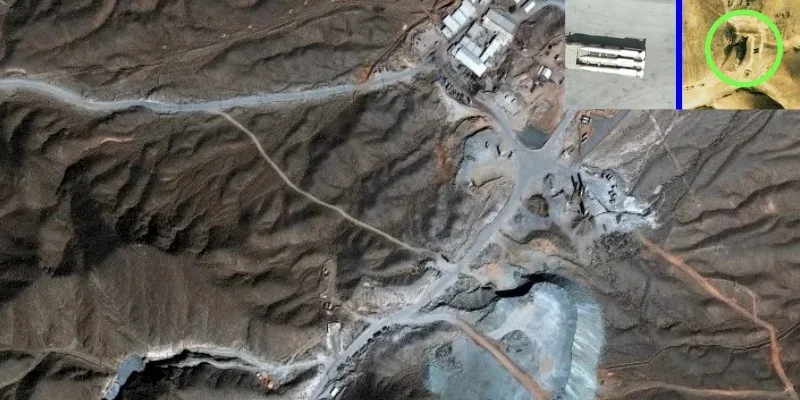
VIENNA (Terror Monitor) — The International Atomic Energy Agency (IAEA) has expressed growing concern over an Iranian uranium-enrichment facility in the central city of Isfahan, which Tehran formally notified the UN nuclear watchdog about last year but has still not allowed international inspectors to visit or examine.
In a confidential quarterly report circulated to member states on Friday, November 13, the IAEA said it remained increasingly concerned about Iran’s continued refusal to provide access to the Isfahan Fuel Enrichment Plant (IFEP), including its design information and operational details.
According to the report, reviewed by Reuters, the agency does not know the facility’s exact location, its current status under international nuclear safeguards, or whether it contains nuclear material.
“The Agency does not know IFEP’s exact location, status for safeguards purposes or whether it contains nuclear material,” the report stated, warning that the lack of information and access represents a serious nuclear proliferation concern that needs to be addressed with the utmost urgency.
The latest assessment comes amid heightened tensions between Iran, the United States and Israel, with the ongoing conflict and stalled diplomatic efforts further complicating international attempts to monitor Tehran’s nuclear activities.
Iran declared the facility shortly before June 2025 strikes
According to the IAEA, Iran formally notified the agency about the Isfahan Fuel Enrichment Plant on June 12, 2025, just one day before Israel launched a major military campaign against Iranian nuclear and military facilities.
The agency had planned to send inspectors to the newly declared facility on June 13, 2025, to conduct an initial inspection. However, the planned visit could not take place after Israel and subsequently the United States launched a 12-day bombing campaign against Iran.
The military strikes severely damaged or destroyed several major components of Iran’s nuclear infrastructure, including uranium-enrichment facilities at Natanz and Fordow, while underground tunnel complexes in Isfahan were also targeted.
The Isfahan facility, known as IFEP, is believed to be associated with an underground network of tunnels. However, a senior Western diplomat told Reuters that neither its precise location within the Isfahan complex nor its current operational status could be established with certainty.
The IAEA's latest report also expressed concern that Iran had not provided the agency with the facility's design information, preventing inspectors from determining its configuration and nuclear activities.
Iran has denied inspectors access to bombed nuclear facilities
The IAEA said Iran has not allowed its inspectors to return to any of the nuclear facilities targeted during the June 2025 US-Israeli bombing campaign, leaving the agency unable to independently verify the condition of the installations and the status of nuclear material previously held there.
The restrictions have significantly weakened international monitoring of Iran's nuclear programme.
IAEA Director General Rafael Grossi said in March 2026 that the agency believed a significant quantity of Iran's highly enriched uranium could be located in the underground tunnel complex at Isfahan.
The agency had previously estimated that Iran possessed approximately 440.9 kilograms of uranium enriched to 60 percent purity before the June 2025 attacks.
Uranium enriched to 60 percent is considerably above the level required for most civilian nuclear applications and is technically a relatively short enrichment step away from weapons-grade uranium, generally considered to be approximately 90 percent purity.
However, the IAEA has been unable to establish how much of the material survived the military strikes, where it is currently stored, or whether any of it has been moved to other locations.
The newly declared Isfahan Fuel Enrichment Plant should be distinguished from the underground tunnel complex where the agency believes a substantial portion of Iran's previously enriched uranium may be stored. The precise relationship between the two locations and the status of their nuclear material remain unclear.
Iran says nuclear monitoring cannot resume under military threats
In a separate development, the Associated Press reported on Friday that Iran had informed the IAEA that discussions about restoring nuclear monitoring cannot proceed while the country remains under the threat of further military attacks.
According to another confidential report circulated to member states, Tehran cited what it described as persistent and explicit public threats by US President Donald Trump to carry out further military strikes against Iran, particularly against its nuclear facilities.
The Iranian position further complicates efforts to restore international inspections, as the agency continues to demand access to nuclear installations and information about the country's enriched uranium stockpile.
Meanwhile, the IAEA has encouraged Iran to consider gradual technical measures that could create conditions for inspectors to return and allow normal nuclear safeguards activities to resume.
The agency believes that incremental steps could help restore at least some international oversight of Iran's nuclear programme.
US-Iran negotiations remain deadlocked amid continuing conflict
The latest IAEA warning comes as diplomatic efforts to end the conflict between Iran and the United States remain uncertain.
According to the Associated Press, Qatar has recently presented proposals to Tehran and Washington aimed at bridging differences over Iran's nuclear programme and creating conditions for broader negotiations.
Under a proposed two-day arrangement discussed by regional officials, the United States would lift its blockade on Iranian ports and release some frozen Iranian funds. In return, Iran would allow IAEA inspectors to access nuclear facilities previously bombed by the United States and Israel.
The second stage of the proposal would involve reopening the strategically important Strait of Hormuz under a temporary arrangement, followed by wider negotiations over Iran's highly enriched uranium stockpile and other aspects of its nuclear programme.
However, Iran has maintained that it will not enter substantive nuclear negotiations until Washington meets several conditions, including lifting sanctions, unfreezing Iranian assets, ending the blockade, providing compensation for war damage and bringing regional hostilities to an end.
US President Donald Trump has meanwhile expressed confidence in the US military position, while also indicating that Washington remains in contact with Tehran through intermediaries.
In a recent statement, Trump said the United States did not need an agreement with Iran, although he acknowledged that the conflict had not yet ended.
The Associated Press also reported that Trump had announced limited US strikes against an Iranian air-defence system near Qeshm Island, close to the Strait of Hormuz, amid continuing military tensions.
The latest diplomatic developments have coincided with renewed concerns over commercial shipping in and around the strategic waterway, which is a critical route for international oil supplies.
International concerns over Iran's nuclear stockpile
The IAEA's latest report underscores growing international concerns about the future of Iran's nuclear programme, particularly the absence of independent verification of its highly enriched uranium stockpile.
The agency has repeatedly called on Tehran to disclose the status of its enrichment facilities, provide information about nuclear material and allow inspectors to resume their work at sites damaged during the military campaign.
Without access to these facilities and reliable information about the whereabouts of enriched uranium, the watchdog cannot independently verify the current state of Iran's nuclear programme or establish whether nuclear material remains under safeguards.
The agency has described the lack of information and access as a serious proliferation concern requiring urgent resolution.
Iran has consistently maintained that its nuclear programme is peaceful and intended for civilian purposes. However, the continuing restrictions on international inspections, uncertainty surrounding its enriched uranium stockpile and the escalating confrontation with Washington and Israel have intensified concerns among Western governments about Tehran's nuclear activities.
The latest report is likely to add further pressure on Iran as international efforts to revive nuclear monitoring and secure a diplomatic settlement remain stalled.
Related Articles

Saudi-Led Coalition Shoots Down Two Houthi Drones Targeting Riyadh
Saudi-led coalition says it has shot down two Houthi drones targeting Riyadh and southern regions of the kingdom amid escalating regional tensions.
Cuba Prepares for Possible US Military Attack After Trump Says He Wants to ‘Get Cuba Done’ Before Leaving Office
Cuban President Miguel Díaz-Canel says the country is preparing to repel a possible US military attack after President Donald Trump suggested he wanted to resolve the Cuba issue before leaving office in January 2029, raising fresh tensions between Washington and Havana.
US Air Force Responds to Suspected Drone Activity Over UK Military Airbase Amid Heightened Security Alert
The US Air Force has responded to suspected unauthorised drone activity over RAF Lakenheath in eastern England, triggering a security alert and precautionary measures. The incident comes amid heightened security at US military installations in Britain following recent aircraft relocations and concerns over potential threats.

Iran Claims Destruction of US Early-Warning Radar in Bahrain; CENTCOM Says Two Iranian Drones Intercepted
Iran’s IRGC claims it destroyed a US early-warning radar system in Bahrain in retaliation for an alleged American airstrike in southern Iran. Meanwhile, CENTCOM says US forces intercepted and destroyed two Iranian suicide drones heading towards Bahrain, with no casualties or damage reported. Iran has also claimed to have shot down a US MQ-1 drone near Kohestak.