
Iran Accuses US of Undermining Chemical Weapons Watchdog, Warns US Bases Remain Within Reach
· 2 views
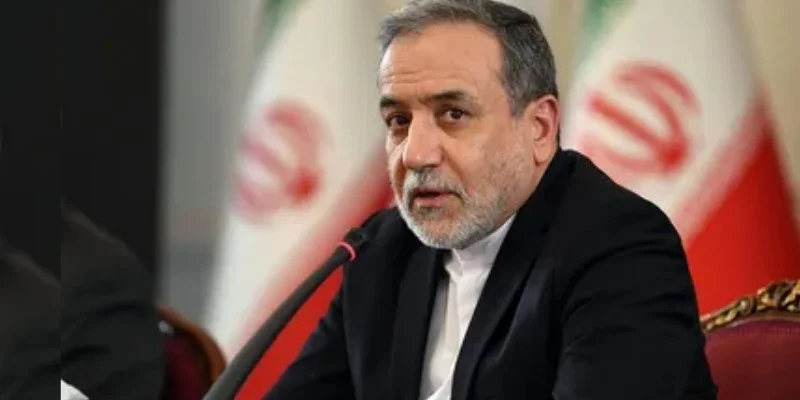
Tehran (Terror Monitor) — Iran has accused the United States of jeopardizing international peace and security by undermining the operations of the Organisation for the Prohibition of Chemical Weapons (OPCW), as Tehran stepped up its criticism of Washington over unpaid financial contributions to the international watchdog.
Iranian Foreign Minister Abbas Araghchi made the remarks following a Reuters report that the OPCW is facing a severe financial crisis because of outstanding contributions from its largest financial contributor, the United States.
In a post on social media platform X, Araghchi accused Washington of hypocrisy over its stated concerns about chemical weapons, saying the United States was effectively crippling the very international organization responsible for monitoring and eliminating them.
"The US is so concerned about chemical arms that it’s crippling the world’s chemical weapons watchdog," Araghchi wrote.
He warned that the organization's financial difficulties could force it to suspend operations and scale back critical programmes, adding that obstructing its mandate was deliberately putting global peace and security at risk.
The Iranian foreign minister described the situation as "shameful."
According to Reuters, published on November 23, the OPCW is facing a shortfall of approximately 25 percent of its annual budget of €83 million (around $91 million), largely because the United States has not paid its full assessed financial contribution for 2026.
The agency's Director-General, Sabrina Dallafior, told member states in The Hague that the organization was in a precarious financial position, with approximately €20 million in outstanding contributions.
The financial difficulties have become particularly serious after the organization exhausted its working capital reserve of more than €8 million.
Reuters reported that, as of October, Washington had paid only 20 percent of its €17 million assessed contribution for 2026, according to Greg Koblentz, a US-based expert on biological and chemical weapons.
Dallafior warned that the organization would have to pause operational activities from December 1 to review its financial position and revise its plans for 2027.
If outstanding contributions are not received, the OPCW could suspend planned operational activities from January 1, potentially affecting inspections, technical assistance, special missions and capacity-building programmes.
The financial crisis comes at a particularly sensitive time for the OPCW's work in Syria, where international inspectors are assisting the new Syrian authorities in identifying and eliminating chemical weapons left over from the government of former President Bashar al-Assad.
Following Assad's removal from power in December 2024, OPCW inspectors and Syrian authorities discovered previously undeclared chemical weapons and related materials.
In a statement delivered on November 24, Dallafior confirmed that the organization had verified the irreversible destruction of 42 aerial bombs in Syria in August, marking the first verified destruction of declared chemical weapons in the country since 2014.
She also disclosed that OPCW teams had identified equipment potentially linked to the production or use of chemical weapons during an inspection in November.
The director-general warned that financial constraints could undermine the organization's ability to continue these operations and carry out other international inspections.
The United States has not publicly acknowledged responsibility for the entire financial shortfall. According to Reuters, a US State Department spokesperson declined to discuss specific payments but said Washington supported the OPCW's mission and expected the organization to manage its budget efficiently.
Iranian military chief warns US against relocating bases
Separately, Iran's top military commander, Major General Ali Abdollahi, has warned that relocating American military installations to more distant locations across the Middle East would not place them beyond the reach of Iranian armed forces.
According to Iran's state-run Islamic Republic News Agency (IRNA), Abdollahi made the remarks during a meeting with the head of the Basij Organization and other senior officials on Tuesday, marking Basij Week.
Abdollahi, who serves as chief of staff of Iran's armed forces and commander of the Khatam al-Anbiya Central Headquarters, said Washington's attempts to move its military installations farther away would not change Tehran's ability to target them.
"Wherever these bases are stationed, they will be within the reach of Iran's Armed Forces if necessary," he warned.
The Iranian commander claimed that US military installations across the region had suffered extensive damage during the war, with significant portions of their infrastructure destroyed and several bases rendered inoperable.
He said some American military installations had still not returned to their previous operational capabilities, while the damage had prompted Washington to consider relocating its bases to more distant locations.
Abdollahi argued that geographical distance would not provide protection against Iranian military capabilities, reiterating that all American installations in the region would remain potential targets if Tehran considered it necessary.
He also claimed that Iran's missile capabilities and coordinated military operations had forced its adversaries to retreat.
According to the commander, Iranian forces had successfully struck their intended targets at sea and compelled the opposing side to withdraw.
He further insisted that the United States would eventually have to respect Iran's rights and national interests and change its approach toward the Islamic Republic.
"The United States will have to be forced to respect Iran's rights and interests and change its behaviour," he said, according to the account of his remarks.
AP analysis confirms extensive damage to US military installations
Abdollahi's remarks come as independent reporting by the Associated Press has documented substantial damage to American military facilities across the Middle East during the conflict with Iran.
In an analysis published earlier this month, AP examined satellite imagery from multiple providers and interviewed regional officials with knowledge of the attacks.
The investigation found that more than 115 Iranian or Iran-backed drone and missile strikes had damaged or destroyed structures at 26 US military bases and other locations housing American military equipment through August.
According to AP, Iranian attacks initially focused on early-warning radar systems and air defence infrastructure before expanding to aircraft hangars, warehouses, communications facilities, fuel installations and accommodation for military personnel.
Kuwait was among the hardest-hit countries, with Ali Al Salem Air Base struck at least 30 times. The attacks damaged or destroyed numerous aircraft hangars and other military facilities.
American installations in Bahrain, Iraq, Jordan, Oman, Qatar, Saudi Arabia and the United Arab Emirates were also targeted.
AP further reported, citing regional officials, that the United States had moved significant amounts of military equipment out of the Persian Gulf following the attacks. The relocated assets reportedly included aircraft, air defence systems and communications equipment.
The Pentagon, however, maintained that American forces and military bases remained well protected and that the US military retained its operational strength.
A separate analysis published by Al Jazeera on November 24 said the war had exposed vulnerabilities in the American military presence across the Middle East, prompting renewed discussion about reducing the number of permanent installations and dispersing military assets to locations farther from Iran.
Defence analysts cited by the network said Washington could increasingly rely on smaller, more dispersed and better-protected facilities rather than maintaining large, fixed military bases within the range of Iranian missiles and drones.
The latest statements from Tehran highlight two parallel points of confrontation between Iran and the United States: Washington's financial obligations to international institutions and the future of American military deployments across the Middle East.
Related Articles
Saudi Airstrikes Kill 26 in Yemen’s Lahj Province
At least 26 people, including 14 civilians and 12 Houthi fighters, were killed in an airstrike targeting vehicles in Yemen’s southwestern Lahj province, according to local officials cited by AFP. Houthi media reported 25 people killed or missing and six others wounded, while Yemen’s warring sides traded accusations over responsibility for the attack.
Israeli Strikes Kill Seven Palestinians, Including Senior Hamas Security Official
Israeli airstrikes killed at least seven Palestinians in the Gaza Strip on Tuesday, including Hamas’s director of internal security and two police officers, as Israeli attacks on Hamas-run security installations continue despite the October 2025 ceasefire. Gaza’s Health Ministry says at least 74,746 Palestinians have been killed since the war began in October 2023.
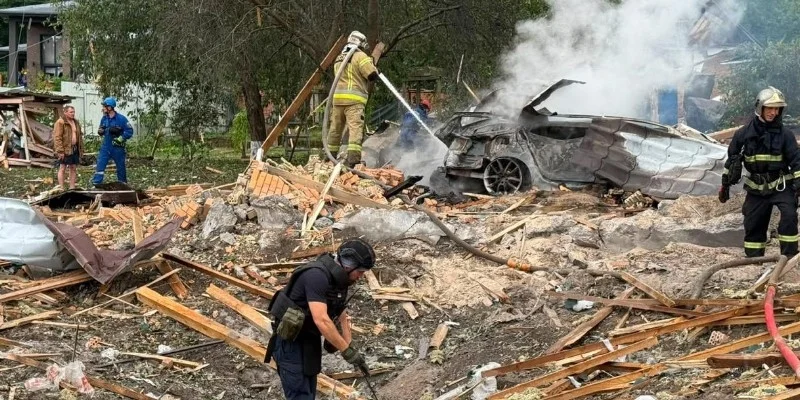
Russian Attack on Zaporizhzhia Kills Two, Injures 40, Including Four Children
Russian attacks on Zaporizhzhia and the Kyiv region killed at least 13 people and injured dozens, including children, as rescuers pulled a seven-year-old boy alive from rubble after 14 hours.
Trump Administration Imposes New Sanctions on 30 Iran-Linked Individuals and Entities Over Shadow Banking Network
The United States has imposed fresh sanctions on eight individuals and 22 entities linked to Iran's alleged shadow banking system, targeting financial networks operating in Iran, the UAE, Turkey and Hong Kong. The US Treasury says its financial intelligence unit identified approximately $14.7 billion in potentially Iran-linked financial activity between January 2025 and August 2026.