
“Our Mission Regarding Iran Is Not Over Yet”: Israeli Defense Minister
· 41 views
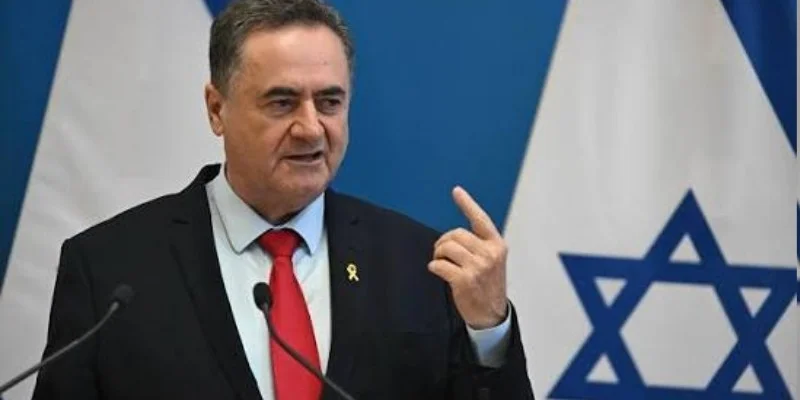
JERUSALEM (Terror Monitor) — Israeli Defense Minister Israel Katz has called for national unity and solidarity in the face of what he described as a renewed Iranian nuclear threat, as opposition leader Gadi Eisenkot prepares to form a new government following a major political setback for Prime Minister Benjamin Netanyahu.
Speaking on Sunday, November 8, at a memorial ceremony in Jerusalem for Israeli soldiers killed during the 1956 Sinai campaign, Katz accused Iran of resuming efforts to develop nuclear weapons and warned that Israel's mission against Tehran was not yet complete.
"Regarding Iran, the mission is still not complete," Katz said, adding that Tehran was seeking to renew its efforts to obtain nuclear weapons alongside other activities that he described as serious threats to Israel's security.
"We cannot accept these threats," he said.
Katz stressed that Israel must remain prepared for every possible scenario and take whatever measures are necessary to protect its citizens.
"It is our duty to be prepared for every scenario and to act as necessary to protect Israeli citizens. Ahead of the major missions still before us, we must be united," he said.
He also addressed Israel's internal political divisions, warning that disagreements between political factions should not undermine national security.
Israel's defense minister said the country's adversaries should understand that, despite political differences, Israelis remained determined to stand together against threats to their country's existence.
"This is a time for unity, responsibility and mutual solidarity," Katz added.
Eisenkot receives mandate to form government
Katz's remarks came as Israel underwent a significant political transition following the October 27 parliamentary elections, in which neither Netanyahu's governing bloc nor the opposition secured the 61 seats required for a parliamentary majority in the 120-member Knesset.
Israeli President Isaac Herzog announced on Saturday that he would task Gadi Eisenkot, leader of the centrist Yashar party and Netanyahu's main political challenger, with forming the next government.
Herzog formally handed Eisenkot the mandate on Sunday at a ceremony at the President's Residence in Jerusalem.
According to the Israeli president's office, political factions representing 67 members of parliament recommended Eisenkot for the task, compared with 46 lawmakers who supported Netanyahu. A faction representing seven seats did not recommend either candidate.
Eisenkot, a former chief of staff of the Israel Defense Forces (IDF), has 28 days to assemble a governing coalition. The president can grant him an additional 14 days if necessary.
In his first response to receiving the mandate, Eisenkot pledged to establish a national emergency government and said Israel could not afford another prolonged political crisis or repeated elections.
He also invited political parties and individual lawmakers to participate in negotiations, signalling his willingness to explore different political arrangements to secure a parliamentary majority.
Netanyahu faces growing political uncertainty
The election results represent a significant challenge to Netanyahu, who has dominated Israeli politics for years and remains one of the country's longest-serving prime ministers.
According to the Associated Press (AP), Netanyahu's bloc secured 53 seats, while the opposition bloc led by Eisenkot won 48. Arab-majority parties secured a combined 19 seats, giving them a potentially decisive role in determining the composition of the next government.
AP reported that Eisenkot could seek support from Arab-led parties, although such an arrangement remains politically controversial among several Jewish-led opposition parties.
Another possibility is a broader national unity government involving Netanyahu's Likud party, although substantial disagreements over military conscription, Gaza policy and investigations into security failures could complicate negotiations.
The Associated Press also noted that Netanyahu's government will remain in a caretaker capacity until a new coalition is established.
Iran remains a major security concern
Katz's warning highlights the continuing importance of Iran in Israel's national security calculations, particularly following the confrontation between the two countries over Tehran's nuclear programme.
Israel has repeatedly accused Iran of pursuing nuclear weapons capabilities, while Tehran has consistently maintained that its nuclear programme is peaceful and intended for civilian purposes.
The latest remarks suggest that the Israeli government intends to keep Iran's nuclear activities high on its security agenda regardless of the outcome of the coalition negotiations.
Reporting by The Times of Israel and the Jewish News Syndicate (JNS) also highlighted Katz's assertion that Iran was renewing efforts to acquire nuclear weapons and that Israel's military and security objectives concerning Tehran remained unfinished.
Meanwhile, international coverage by the Associated Press, CBS News and Deutsche Welle has focused on the political implications of Eisenkot's appointment, particularly the difficulties he faces in assembling a parliamentary majority.
The coming weeks are therefore expected to be crucial for Israel, as Eisenkot attempts to negotiate a new governing coalition while the country's political leadership faces continuing security challenges involving Iran, Gaza and Lebanon.
Related Articles
Houthis Claim 83 Killed in Saudi-Led Coalition Airstrikes Across Yemen in 24 Hours
Iran-backed Houthis claim that 83 people were killed and around 50 injured in Saudi-led coalition airstrikes across Yemen over the past 24 hours, while Saudi authorities say they are reviewing reports of civilian casualties.

Houthis Claim Missile and Drone Attacks on Riyadh, Aramco Tower Damaged
Yemen’s Iran-backed Houthis claim four missile and drone operations targeting Riyadh, including the King Abdullah Financial District. An Aramco office tower sustained damage, while Saudi Arabia says no casualties were reported and its air defences intercepted several incoming missiles.
Houthis Say Saudi Airstrikes Kill 33, Injure 39 Near Yemen’s Sanaa
Houthi-run media reports that Saudi airstrikes near Yemen’s Sanaa have killed at least 33 people and wounded 39 others, mostly women and children. Saudi Arabia says it is investigating the reports.
US CENTCOM Establishes ‘Iron Gate’ Task Force to Disrupt Iran’s Weapons Supply Routes
US CENTCOM has established Task Force Iron Gate to disrupt Iran’s weapons supply routes through land borders and the Caspian Sea, expanding Washington’s efforts to restrict Tehran’s military capabilities.