
Pakistan Minister Challenges India on Terrorism Allegations, Calls for Evidence-Based Mechanism During New Delhi Visit
· 73 views
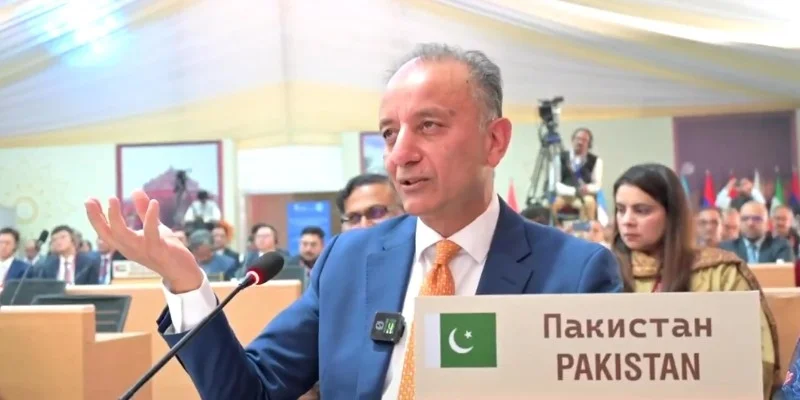
New Delhi (Terror Monitor) — Pakistan's Federal Minister for Climate Change and Environmental Coordination, Dr. Musadik Masood Malik, has called for a transparent and evidence-based mechanism to address terrorism-related allegations between Pakistan and India, saying both countries must present concrete evidence rather than engage in mutual accusations.
Malik made the remarks while speaking to journalists on the sidelines of the Shanghai Cooperation Organisation (SCO) Civilisational Dialogue Forum in New Delhi, where he is leading Pakistan's delegation.
Responding to an Indian journalist who questioned why Pakistan was not taking action against terrorist groups allegedly operating from its territory, the Pakistani minister said transparency was essential whenever terrorism-related issues were discussed.
He stressed that both sides should provide evidence to support their allegations and proposed establishing a credible mechanism through which such claims could be examined.
"Both sides must bring forward evidence. Our objective is to establish a transparent mechanism, a proposal we have put forward on several occasions," Malik said, according to Pakistani media reports.
He argued that such an arrangement could help restore mutual confidence, address longstanding disagreements and create opportunities for practical solutions.
Pakistan has also suffered heavily from terrorism
The Pakistani minister emphasized that his country had itself suffered devastating consequences from terrorism, including substantial losses of human lives and economic damage.
He said thousands of Pakistanis had lost their lives in terrorist attacks and that the Pakistani population had paid a heavy price over the years.
Malik also acknowledged that India had experienced terrorist incidents, arguing that terrorism was a regional challenge rather than a problem confined to a single country.
He said thousands of people had been killed in terrorist incidents across different countries in recent years and called for a lasting and sustainable regional response.
"I do not wish to present a narrative of mere victimhood; we are doing our utmost to address the situation," he said.
The minister maintained that focusing exclusively on individual incidents and exchanging accusations would not resolve the underlying problems.
Instead, he advocated a structured approach based on credible evidence, transparency and cooperation among regional countries.
Malik says SCO discussions should not be reduced to Pakistan-India tensions
Earlier, responding to questions from Indian journalists about cross-border terrorism, Malik said he had travelled to India to participate in a multilateral diplomatic forum and wanted discussions to remain constructive and orderly.
He cautioned against allowing bilateral disputes between Pakistan and India to overshadow the broader objectives of the SCO gathering.
The minister pointed out that security challenges facing the region extended beyond the two neighbouring countries, involving Afghanistan, Iran, Central Asia and other parts of the region.
He said the SCO provided an opportunity for member states to discuss common challenges, strengthen regional cooperation and explore solutions through dialogue.
When initially asked about India's concerns regarding terrorist networks allegedly operating from Pakistani territory, Malik indicated that he would address the broader issues after delivering his statement at the forum.
He subsequently reiterated his position that allegations should be supported by evidence and examined through a transparent mechanism.
First Pakistani ministerial visit to India since 2023
Malik arrived in New Delhi on November 20 to lead Pakistan's delegation at the first SCO Civilisational Dialogue Forum, being held from November 20 to 22.
His visit marks the first trip to India by a Pakistani federal minister since former Foreign Minister Bilawal Bhutto-Zardari attended an SCO foreign ministers' meeting in Goa in May 2023.
The visit also comes amid strained relations between Islamabad and New Delhi following the military confrontation between the two nuclear-armed neighbours in May 2025.
According to Reuters, the 2025 confrontation was the most serious military escalation between India and Pakistan in decades.
Pakistan's Foreign Office said Malik's participation was aimed at highlighting the country's commitment to dialogue among civilizations, cultural understanding and constructive engagement within the SCO framework.
Pakistan's minister holds meetings with Iranian and Tajik officials
On Saturday, Malik also held separate meetings with senior officials from Iran and Tajikistan on the sidelines of the SCO forum.
According to Pakistan's High Commission in New Delhi, he met Mohammad Mahdi Imanipour, president of Iran's Islamic Culture and Relations Organisation, and Tajikistan's Culture Minister Sattoriyon Amonzoda.
The meetings focused on cultural relations, regional engagement and opportunities to strengthen cooperation among SCO member states.
During his address to the forum on Saturday, Malik also highlighted the threat posed by climate change to civilizations and cultural heritage, describing climate change as a common challenge facing societies across the region.
Regional diplomacy amid strained Pakistan-India relations
The SCO Civilisational Dialogue Forum has brought together representatives of member states to discuss cultural connections, shared history, regional cooperation and common challenges.
Indian Prime Minister Narendra Modi inaugurated the gathering, which is being hosted at the historic Purana Qila in New Delhi.
Pakistan has assumed the rotating chairmanship of the SCO Council of Heads of State for the 2026-27 term and is scheduled to host the organisation's summit in Islamabad in August 2027.
The participation of a Pakistani federal minister in the New Delhi gathering is being viewed as a limited diplomatic engagement between the two neighbours, whose political and security relations remain deeply strained.
Although Malik's visit has not resulted in any announced breakthrough in bilateral relations, his call for an evidence-based mechanism to address terrorism allegations has brought the issue of security cooperation and mutual trust back into the diplomatic discussion.
India and Pakistan have continued to accuse each other of supporting or harbouring militant networks, allegations that both governments have repeatedly rejected.
Malik's remarks underline Islamabad's stated position that terrorism-related disputes should be addressed through verifiable evidence, transparency and a credible process rather than public accusations.
Related Articles

U.S. Court Sentences ISIS Supporter Anas Said to 15 Years in Prison
A 30-year-old American ISIS supporter, Anas Said, has been sentenced to 15 years in federal prison for producing and distributing ISIS propaganda, creating videos and posters praising the terrorist group, and lying to FBI investigators about a weapon. He will also face lifetime supervised release after completing his sentence.
Pakistan: Drone Attacks Injure 23 in Khyber Pakhtunkhwa, Including Children
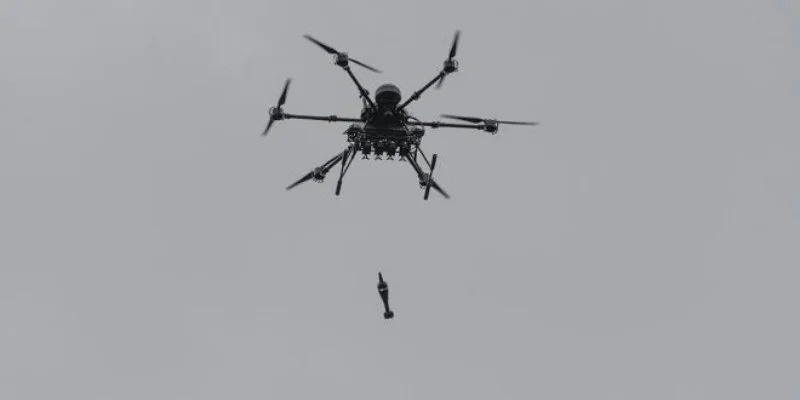
At least 23 people, including several children, were injured in suspected drone and quadcopter attacks in Dera Ismail Khan and Bannu districts of Pakistan’s Khyber Pakhtunkhwa province, while a government primary school in North Waziristan was also targeted in a reported overnight drone attack.
Pakistan: 4 Injured in Lakki Marwat Blast; Police Constable and Father Shot Dead in Charsadda
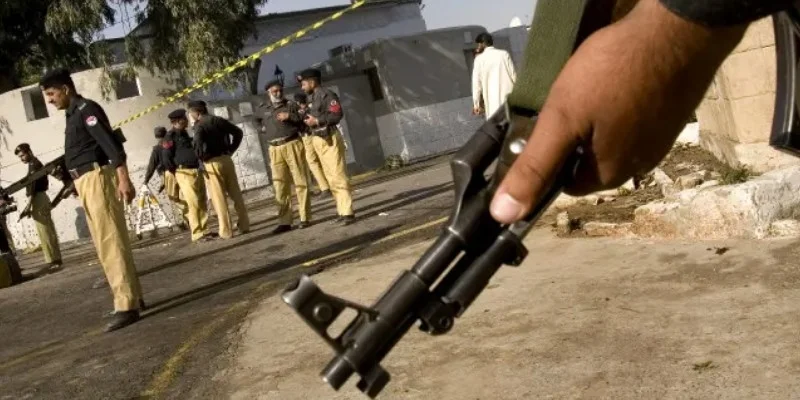
Five people, including two police personnel, were injured in an IED blast targeting a police vehicle in Lakki Marwat, while a police constable and his father were shot dead by unidentified armed militants in a separate attack in Charsadda, Khyber Pakhtunkhwa.

Pakistan: Security Forces Recover Large Weapons and Explosives Cache in North Waziristan
Pakistani security forces have recovered a large cache of heavy weapons, ammunition and explosives allegedly belonging to the banned Tehreek-e-Taliban Pakistan (TTP) during a search and clearance operation in Mir Ali, North Waziristan, amid intensified counterterrorism operations across Khyber Pakhtunkhwa.