
Pezeshkian Rejects Trump’s ‘Language of Force,’ Says Iran Is Ready for Diplomacy
· 30 views
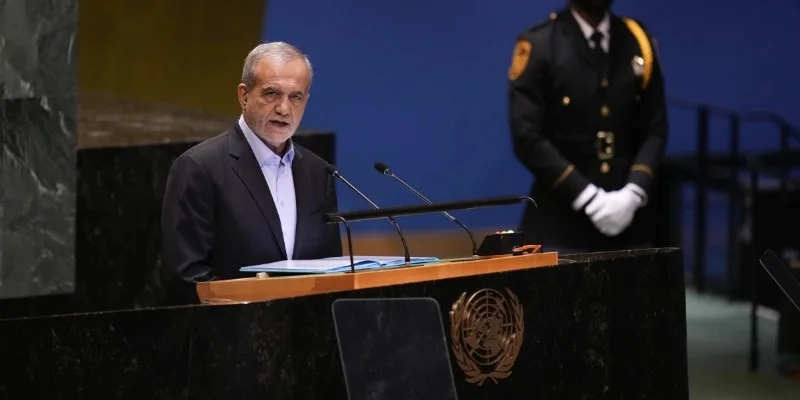
NEW YORK (Terror Monitor) — Iranian President Masoud Pezeshkian rejected U.S. President Donald Trump’s threats against Tehran in an address to the United Nations General Assembly on Wednesday, saying Iran was prepared for dialogue and diplomacy but would not accept negotiations conducted under pressure or through the “language of force.”
Speaking a day after Trump warned that he could “annihilate” Iran if no agreement was reached, Pezeshkian said threats against Iran would strengthen national unity rather than force Tehran to surrender. Reuters reported that Pezeshkian said Iran would not surrender in its war with the United States but remained committed to diplomacy as a way to end the conflict.
“Trump and those who want to make us bow through bullying should understand that we are ready for dialogue, diplomacy and negotiations, but we will not accept the language of force,” Pezeshkian said.
He added that threats would unite the Iranian people and warned that Iran would make aggressors “regret” their actions. Iranian state-linked and regional reports also highlighted his rejection of what he described as attempts to force Iran into submission.
Pezeshkian Displays Images of Children
Pezeshkian began his speech by displaying images of children killed in an attack on a school in Minab, Iran, during the conflict.
He also displayed images connected to other Iranian casualties and accused the United States and Israel of attacking Iran with advanced weapons. Iranian officials have said the conflict has caused large numbers of deaths in Iran, while Washington and Israel have presented their military actions as part of efforts to counter Iran’s military and nuclear capabilities.
The U.S. delegation walked out at the beginning of Pezeshkian’s speech, according to Reuters.
Nuclear Program
Pezeshkian said Iran was not seeking nuclear weapons but would not give up what he described as its right to nuclear science and peaceful nuclear technology.
“Iran does not accept that nuclear knowledge should be the monopoly of a few countries,” he said.
He also criticized what he described as international double standards over nuclear inspections, contrasting inspections in Iran with Israel’s undeclared nuclear arsenal.
Israel is widely believed to possess nuclear weapons, although it has never officially acknowledged having them and does not allow international inspections of its nuclear facilities under the same framework applied to Iran. Tehran has long argued that its nuclear program is peaceful, while the United States and its allies have sought guarantees that Iran cannot develop a nuclear weapon.
Strait of Hormuz
The Iranian president also addressed the continuing dispute over the Strait of Hormuz, a strategic waterway through which a significant share of global oil and liquefied natural gas shipments normally passes.
Pezeshkian said Iran would not accept being deprived of navigation rights and argued that maritime security could not be achieved by undermining the security of coastal states.
“It cannot be the case that everyone benefits from the Strait of Hormuz while we are denied access to shipping through this waterway,” he said, according to Reuters.
He added that the deployment of hostile naval forces and expansion of the war would not bring peace.
The Strait has become a major flashpoint in the U.S.-Iran conflict. Iran has effectively restricted passage through the waterway since the war began, while Washington has demanded secure navigation and has deployed naval forces to the region.
“No One Can Be Safe Alone”
Pezeshkian called for regional cooperation on security, saying no country in the Middle East could achieve lasting security by acting alone.
“No one in this region can remain safe alone. Either we establish security together, or we will all face insecurity together,” he said.
His remarks came amid renewed diplomatic activity at the United Nations. U.S. and Iranian officials held talks in New York, with Trump saying the discussions had lasted about three hours and had gone well. Iranian state media confirmed that Foreign Minister Abbas Araghchi met with U.S. special envoys Steve Witkoff and Jared Kushner.
Neither side has announced a breakthrough or agreement, but Pezeshkian’s speech maintained that diplomacy remained possible while rejecting any settlement reached under military pressure.
The address underscored the sharp divide between Washington and Tehran: Trump has demanded that Iran abandon the possibility of obtaining nuclear weapons, while Pezeshkian has insisted that Iran will defend its nuclear knowledge and peaceful technology and will not accept negotiations conducted through threats or force.
Related Articles
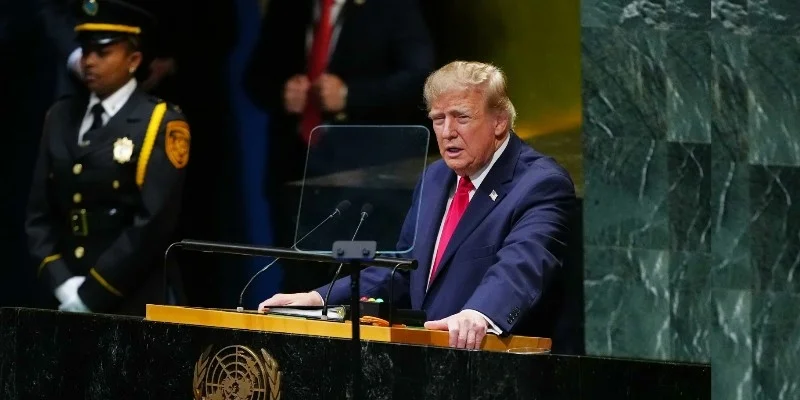
US President Trump Warns He Could ‘Annihilate’ Iran in UN Address
U.S. President Donald Trump warned that he could “annihilate” Iran if Tehran refuses to reach a deal with Washington, while saying he believes an agreement could be reached after the U.S. midterm elections. Addressing the U.N. General Assembly, Trump also demanded that ICC member states withdraw from the court and defended U.S. sovereignty against international institutions.
High-Level U.S.-Iran Talks Held in New York, Tehran Confirms
Trump said U.S. and Iranian officials held a three-hour meeting in New York on Tuesday, with Steve Witkoff and Jared Kushner representing the U.S. and Iranian Foreign Minister Abbas Araghchi attending for Tehran. No agreement or ceasefire was announced, but both sides indicated that further discussions could continue.
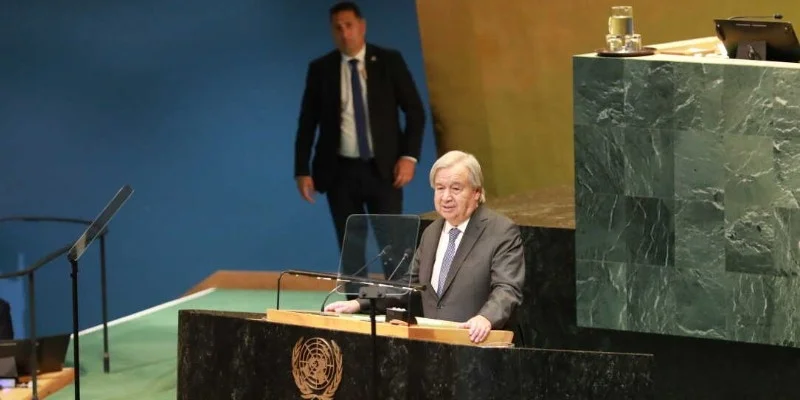
Guterres Calls for End to Wars in Final UN General Assembly Address
U.N. Secretary-General António Guterres called on world leaders Tuesday to end wars worldwide and establish comprehensive international rules for artificial intelligence. In his final opening address to the General Assembly, Guterres also urged the modernization of global institutions and reaffirmed support for a two-state solution to the Israeli-Palestinian conflict.
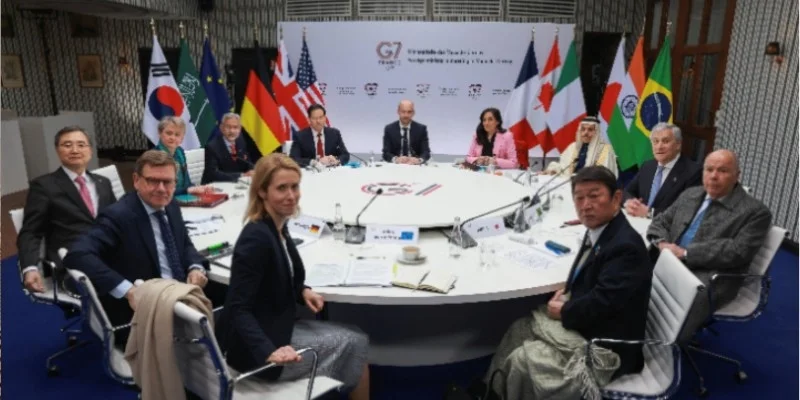
G7 Urges Iran to Stop Arming Houthis as Yemen Fighting Escalates
G7 foreign ministers have called on Iran to stop arming and supporting the Iran-backed Houthis in Yemen, while demanding an immediate end to attacks and threats against civilian shipping. The G7 also condemned Houthi attacks on Saudi Arabia, as renewed fighting along Yemen’s Red Sea coast has displaced more than 120,000 people.