
Saudi Arabia Presses EU to Designate Houthis as Terrorist Group Amid Renewed Attacks
· 107 views
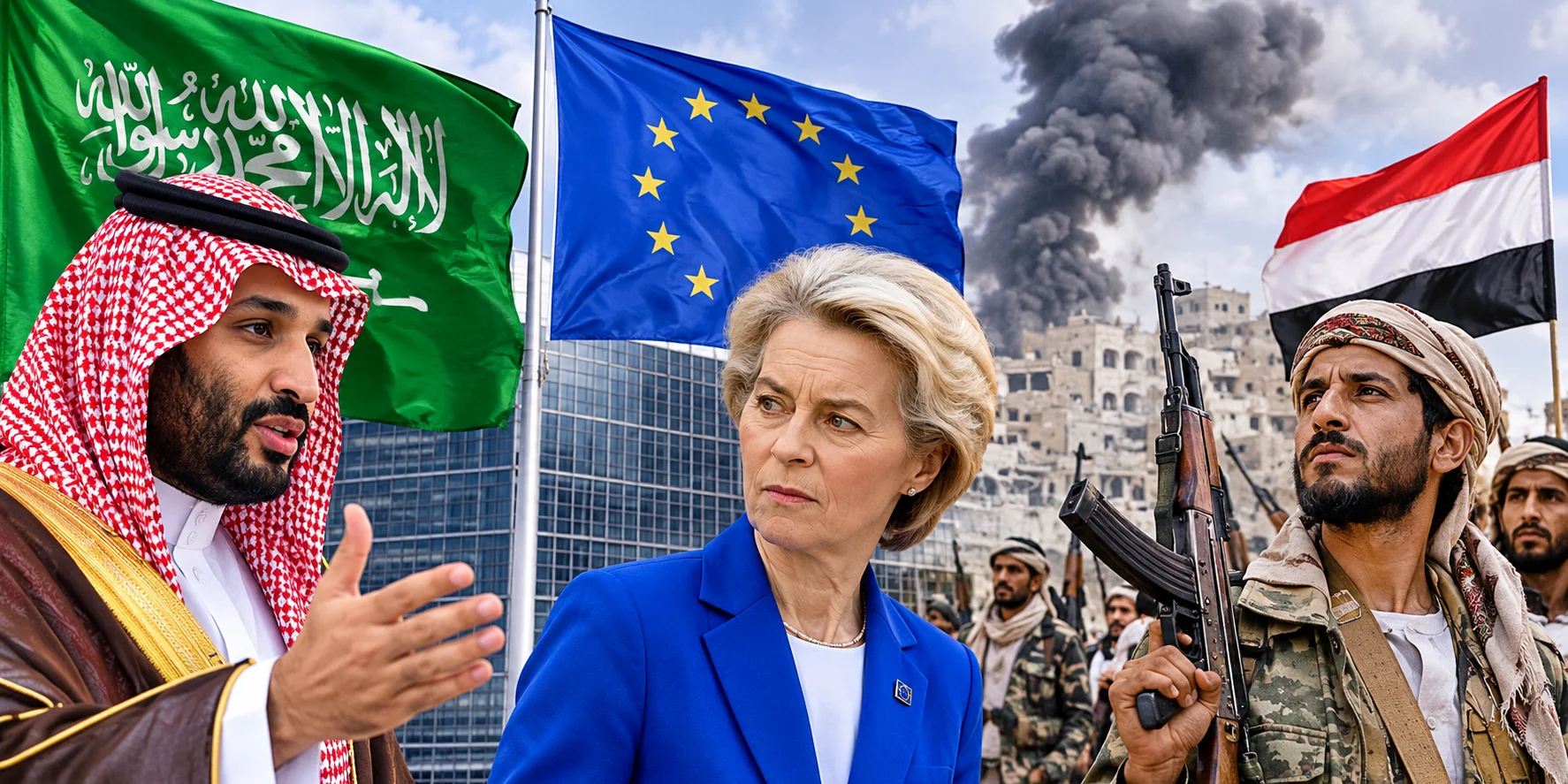
BRUSSELS (Terror Monitor) — Saudi Arabia is stepping up diplomatic efforts to persuade the European Union (EU) to designate Yemen’s Iran-backed Houthi movement as a terrorist organisation, as the group intensifies its attacks on Saudi territory and threatens regional security and international shipping.
However, the initiative faces resistance from several European governments, which fear that formally blacklisting the Houthis could undermine diplomatic engagement with the group, close existing communication channels and complicate efforts to secure a lasting peace settlement in Yemen.
According to a Reuters report published on Thursday, November 12, citing six European officials familiar with the discussions, Riyadh’s campaign is part of a broader effort to increase international pressure on the Houthis following the renewed escalation of the Yemeni conflict.
The Houthis have reportedly been carrying out near-daily attacks against Saudi Arabia in recent weeks.
The group is already subject to European Union sanctions, including an arms embargo and asset freezes targeting 12 of its commanders. However, the EU has so far refrained from placing the movement itself on its terrorist list.
The European Union has, meanwhile, formally designated Iran’s Islamic Revolutionary Guard Corps (IRGC), a key supporter of the Houthis, as a terrorist organisation. The decision was adopted by the EU Council on February 19, 2026.
The United States, Canada and Australia have also designated the Houthis as a terrorist organisation.
European divisions over terrorist designation
Under EU rules, adding the Houthis to the bloc’s terrorist list would require unanimous approval from all 27 member states. According to one of the six European officials cited by Reuters, only a small number of countries currently support the proposal.
The officials said European governments were concerned that such a designation could eliminate the limited diplomatic channels they still maintain with the Houthis and weaken Europe’s ability to participate in future negotiations aimed at ending the Yemeni conflict.
The Saudi government’s communications office did not respond to Reuters’ request for comment. EU foreign policy spokesperson Anouar El Anouni said the bloc remained in regular contact with Riyadh on regional developments but declined to discuss specific diplomatic exchanges.
The European Parliament has also called for the Houthis to be designated as a terrorist organisation. It adopted a resolution on October 22 urging the EU to take the step, although the resolution is non-binding and does not itself change the bloc’s sanctions policy.
Joana de Deus Pereira, a senior fellow at the London-based Royal United Services Institute (RUSI), said European governments wanted to demonstrate solidarity with Saudi Arabia but remained reluctant to impose a terrorist designation because its practical consequences could be limited.
European officials and security analysts have raised concerns that the Houthis could retaliate by targeting European vessels operating near Yemen. Such a move could also complicate humanitarian operations in areas controlled by the group, where international aid organisations continue to work.
Another concern is that reversing an EU terrorist designation would be politically and procedurally difficult, as it would also require unanimous agreement among member states.
France signals support for tougher pressure
In a significant development on Friday, November 13, France expressed support for increasing pressure on the Houthis.
French Foreign Ministry spokesperson Pascal Confavreux said Paris supported stronger measures to stop the group’s attacks and provocations in the region, particularly those directed against Saudi Arabia.
His remarks came in response to a question about whether France supported the EU formally designating the Houthis as a terrorist organisation.
However, the French statement did not amount to an explicit confirmation that Paris had committed to supporting the formal terrorist listing. Reuters reported that European concerns about the potential impact on future peace negotiations remained unresolved. Reuters
Renewed Houthi attacks raise regional security concerns
The diplomatic push comes amid a fresh escalation in attacks involving Saudi Arabia and the Houthis.
According to reports by Reuters and Al Jazeera on November 12, Saudi-led coalition forces said they had intercepted suspected Houthi drones over the Riyadh region and the kingdom’s Eastern Province.
Houthi military spokesperson Yahya Saree claimed that the group had targeted Saudi oil infrastructure and military installations, including a pumping station along the kingdom’s East-West Pipeline and the Yanbu oil facility on the Red Sea coast.
These claims have not been independently verified.
The renewed escalation has also prompted action at the United Nations. On November 12, the UN Security Council agreed to extend sanctions relating to the Houthi movement, amid growing concerns over its military activities, regional destabilisation and threats to maritime security.
Yemen conflict and threats to international trade
The Houthis seized Yemen’s capital, Sanaa, in 2014, forcing the internationally recognised government from the city and triggering a prolonged civil war.
Saudi Arabia has since led a military coalition supporting Yemen’s internationally recognised government against the Houthi movement.
A truce reached in 2022 brought a period of relative calm, but renewed fighting in July 2026 has again heightened tensions between the two sides and increased the risk of cross-border attacks.
Yemen’s strategic coastline stretches along the Red Sea and the Bab al-Mandeb Strait, one of the world's most important maritime chokepoints connecting Europe and Asia through the Suez Canal.
Any further escalation involving Houthi attacks on commercial vessels could disrupt international shipping, increase transportation costs and put additional pressure on global supply chains.
The situation is particularly sensitive because international shipping is already facing serious disruption following the conflict involving the United States, Israel and Iran and the resulting restrictions on maritime traffic through the Strait of Hormuz.
The growing tensions therefore present a challenge not only for Saudi Arabia and its regional allies but also for European governments seeking to protect maritime trade while preserving diplomatic channels that could eventually help bring an end to Yemen’s conflict.
Related Articles
Four Terrorists Killed as Police Foil TTP Attack on Checkpost in Pakistan’s Bannu
Police kill four TTP terrorists after foiling an attack on the Kingar Pul police checkpost in Bannu, Khyber Pakhtunkhwa, Pakistan.
Saudi Arabia Executes Two Men Over ‘Terrorism’ Charges
Saudi Arabia executes two men convicted of terrorism-related offences, including Jawad al-Qureiris, who human rights group Reprieve says was 14 at the time of the alleged crimes.
16 TTP Terrorists Killed, Two Pakistani Soldiers Die in North Waziristan Operations: ISPR
Pakistani security forces have killed 16 TTP militants, including two Afghan nationals, in operations across North Waziristan, while two Pakistan Army soldiers were also killed in exchanges of fire. The ISPR said the operations targeted militant hideouts in Ali Khel, Mir Ali and Datta Khel over a 12-hour period.

Pakistan Army Major Among Two Soldiers Killed in Armed Quadcopter Attack in Balochistan
Two Pakistani soldiers, including an army major, were killed in a BLA-claimed armed quadcopter attack on security forces in Balochistan’s Kardagap area, while the military said eight militants, including a suicide bomber, were killed in a separate operation in Kolpur.