
Saudi Arabia replaces Yemen coalition commander amid Houthi advance towards Aden
· 98 views
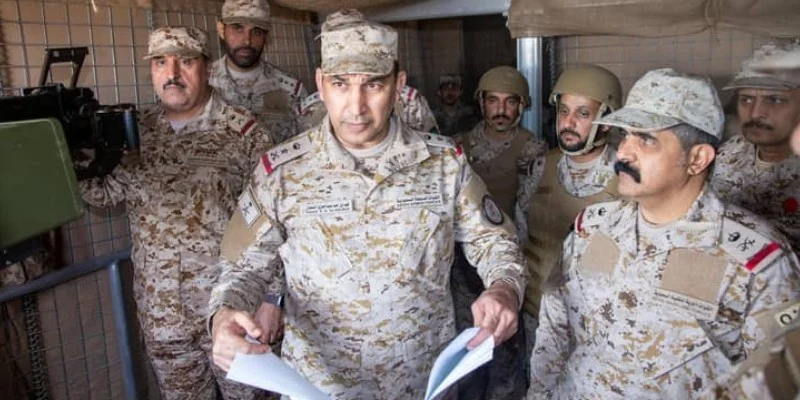
Riyadh/Sanna (Terror Monitor) — Saudi Arabia has replaced the commander of its military forces overseeing operations against Iran-backed Houthi rebels in Yemen, in a major military reshuffle announced as the Houthis advance towards Aden, the interim seat of Yemen's internationally recognised government.
Saudi state media announced the decision on Monday, November 16, citing a royal decree issued by King Salman bin Abdulaziz.
According to the Saudi Press Agency (SPA), Lieutenant General Fahd bin Hamad bin Abdulaziz Al-Salman has been relieved of his position as commander of the Saudi Joint Forces and appointed as an adviser for military affairs to the Minister of Defence.
Chief of the General Staff General Fayyad bin Hamed bin Ruqad Al-Ruwaili has been appointed as his successor while retaining his existing position.
The appointments were made on the recommendation of Saudi Defence Minister Prince Khalid bin Salman, according to the official announcement.
The decision comes at a critical moment for Saudi Arabia and its allies, as Houthi forces have made significant territorial gains in southern Yemen, intensifying pressure on the Saudi-backed government and raising concerns over the security of Aden.
According to Agence France-Presse (AFP), the leadership change came a day after Houthi fighters advanced to positions approximately 60 kilometres (37 miles) from Aden.
Four military sources within government forces and two government sources told AFP that the Houthis had seized control of the Al-Maqatirah and Al-Madaribah districts in Lahj province and were moving closer to the southern city.
The sources said Houthi fighters had reached the Al-Kharaz military camp in Al-Madaribah, around 60 kilometres from Aden.
Al-Salman had assumed command of the Saudi-led coalition's joint forces in August 2024. His replacement marks a significant change in the military leadership overseeing Saudi Arabia's campaign against the Houthis.
Reuters also reported the leadership reshuffle, linking it to recent battlefield setbacks suffered by Saudi-backed Yemeni forces and the growing threat to Aden.
Yemeni forces withdraw from strategic Bab al-Mandab area
The Saudi military reshuffle comes after government-aligned Yemeni forces began withdrawing from positions along the Red Sea coast near the strategic Bab al-Mandab Strait on Sunday.
The forces said they were redeploying troops to strengthen defensive positions around Aden and neighbouring governorates in response to the advancing Houthi fighters.
The withdrawal represents a setback for the Saudi-backed government's efforts to regain territory along Yemen's western coastline.
According to Reuters, the withdrawal effectively ended a six-week counteroffensive launched by government forces to recapture coastal areas seized by the Houthis in September.
Reuters reported that the Houthis had gained greater control over territory overlooking the Bab al-Mandab Strait, one of the world's most important maritime chokepoints connecting the Red Sea with the Gulf of Aden.
The strategic waterway is a major route for international commercial shipping, particularly vessels travelling between Asia and Europe through the Suez Canal.
Yemeni government officials said the redeployment was necessary to protect Aden and strengthen military positions against the Houthi advance.
However, the Houthis portrayed the withdrawal as a military defeat for government forces, claiming they had been forced out of their positions under pressure from Houthi fighters.
Growing threat to Aden
Aden serves as the temporary headquarters of Yemen's internationally recognised government, which was forced out of the capital, Sanaa, after the Houthis seized control of the city in 2014.
The Houthis, also known as Ansar Allah, control much of northwestern Yemen and have been fighting the internationally recognised government for more than a decade.
Saudi Arabia formed a military coalition in 2015 to support the Yemeni government and prevent the Houthis from consolidating control over the country.
The latest Houthi advances have intensified concerns about the government's ability to defend its remaining strongholds in southern Yemen.
Al Jazeera, citing military and strategic analysts, reported that the fighting around southern Yemen could determine the future of the conflict, particularly because the area connects Aden, the besieged city of Taiz and the Bab al-Mandab maritime corridor.
Meanwhile, Reuters reported that the Houthis have also intensified drone and missile attacks against Saudi Arabia in recent weeks, targeting Saudi infrastructure and increasing pressure on the kingdom.
UN urges parties to protect civilians
The latest escalation has also raised concerns about the humanitarian consequences of renewed fighting.
A spokesperson for the United Nations Human Rights Office urged all parties to the conflict to respect international humanitarian and human rights law and ensure that humanitarian assistance reaches people in need.
The United Nations has repeatedly warned that continued fighting, displacement and restrictions on humanitarian access could further worsen conditions for civilians across Yemen.
Yemen's conflict began in 2014 when Houthi forces captured Sanaa, prompting the internationally recognised government to relocate its operations to Aden.
Saudi Arabia intervened militarily in March 2015 in support of the government. Although a UN-brokered truce in 2022 significantly reduced large-scale fighting, hostilities have escalated again in 2026.
The latest developments, including the Houthi advance towards Aden, the withdrawal of government forces from the Bab al-Mandab area and the replacement of Saudi Arabia's coalition commander, point to a renewed and potentially decisive phase in Yemen's prolonged conflict.
Related Articles
US strikes multiple targets on Iran’s Qeshm Island as Tehran claims American drones downed
The United States has struck multiple targets on Iran’s Qeshm Island in the Strait of Hormuz, with sources telling Terror Monitor that several IRGC personnel were killed and wounded. Meanwhile, Iran claims to have shot down an American MQ-1 drone and captured another, while Bahrain says it intercepted Iranian attacks. CENTCOM has rejected Tehran’s claim that an American radar system at Bahrain’s Sheikh Isa Air Base was hit.
Yemen Houthis report nine wounded in Sanaa airstrike as Saudi-led coalition intercepts drone over Riyadh
Yemen’s Iran-backed Houthis claim at least nine people were wounded in an airstrike targeting a shoe factory in Sanaa, while the Saudi-led coalition says it intercepted and destroyed a Houthi drone over the Riyadh region. The latest escalation comes amid growing military tensions around the strategic Bab al-Mandab Strait and fears of further advances towards Aden.
US Intelligence Warns of Possible Iranian Dirty Bomb or Chemical Attack Targeting Trump Officials in Washington
US intelligence warns that Iran may be developing plans to target senior Trump administration officials in Washington, DC, using a radioactive dirty bomb or chemical weapons, according to a CNN report citing seven US officials. American officials remain divided over whether Tehran has the capability or intention to carry out such an attack, while the White House says there is currently no credible immediate threat to the US homeland.

Mossad Allegedly Kidnapped Two Iranian Generals in Search for Missing Israeli Airman Ron Arad
A New York Times investigation alleges that Mossad kidnapped two Iranian generals in separate covert operations while searching for missing Israeli airman Ron Arad. One general was allegedly killed and his body dumped in the Black Sea, while the second was released in South Africa after interrogation.