
Saudi, UAE Leaders Meet in Riyadh Amid Renewed Houthi Escalation in Yemen
· 327 views

RIYADH (Terror Monitor) — Saudi Crown Prince and Prime Minister Mohammed bin Salman met with United Arab Emirates Vice President and Deputy Prime Minister Sheikh Mansour bin Zayed Al Nahyan in Riyadh on Tuesday, in the first high-level face-to-face meeting between senior Saudi and Emirati officials since a major rift emerged between the two Gulf allies over Yemen.
The meeting comes as the security situation in Yemen has deteriorated sharply and Saudi Arabia faces renewed attacks from the Iran-backed Houthis, increasing pressure on Riyadh and Abu Dhabi to restore coordination over the conflict.
According to Saudi and Emirati state media, the two leaders discussed bilateral relations and developments in the region. Saudi Defence Minister Prince Khalid bin Salman also attended the meeting. Sheikh Mansour's visit was described by the UAE as a “fraternal visit” and came at the invitation of Prince Khalid bin Salman.
The meeting is significant because relations between Saudi Arabia and the UAE deteriorated sharply over their competing interests and alliances inside Yemen. The two countries had previously fought on the same side against the Iran-backed Houthi movement, but their preferred Yemeni partners and political objectives increasingly diverged.
The UAE has supported the Southern Transitional Council (STC), which seeks greater autonomy or independence for southern Yemen, while Saudi Arabia has backed Yemen's internationally recognized government. The dispute escalated late last year when UAE-backed southern forces expanded their control in parts of southern and eastern Yemen, prompting Saudi-backed forces to push back.
In December 2025, Saudi Arabia issued an unusually strong warning concerning the UAE's role in Yemen, saying its national security was a “red line” and supporting a demand for Emirati forces to leave the country. The episode exposed the depth of mistrust between the two countries despite their broader strategic partnership.
The latest meeting comes against the backdrop of a renewed Houthi offensive. The Iran-backed group has intensified attacks against Saudi Arabia and expanded its military operations along Yemen's Red Sea coast, while fighting has also intensified between the Houthis and forces aligned with the internationally recognized Yemeni government.
On September 24, Saudi Arabia said it had intercepted six ballistic missiles launched from Yemen toward Taif and Yanbu. The Houthis subsequently claimed attacks against Riyadh and Saudi Aramco facilities in Yanbu using ballistic and cruise missiles and drones, although Saudi authorities did not confirm the reported strikes or casualties in those locations.
The renewed fighting has also raised concerns over maritime security. The Houthis have increased pressure around the Red Sea and the Bab al-Mandab Strait, one of the world's most important maritime trade routes. Recent Houthi advances along the Red Sea coast have threatened shipping and further complicated international efforts to contain the conflict.
Saudi Arabia has been seeking broader international support as the Houthi threat has grown. U.S. Secretary of State Marco Rubio held talks with Saudi Foreign Minister Prince Faisal bin Farhan in Washington on Monday, with regional security, shipping through the Strait of Hormuz and the escalating conflict involving the Houthis among the issues discussed.
The Saudi-Emirati meeting therefore comes at a particularly sensitive moment. Riyadh has an interest in strengthening the anti-Houthi camp, while Abu Dhabi retains influence through Yemeni forces and political factions it has supported over the years.
However, it remains unclear whether Tuesday's meeting will lead to a formal restoration of Saudi-Emirati military cooperation in Yemen. Saudi and Emirati state media focused on bilateral relations and regional developments without announcing a new military arrangement or specific agreement concerning Yemen.
The meeting nevertheless represents a notable diplomatic development after months of tension. Reuters described Sheikh Mansour's visit as the first visit by a senior UAE official to Saudi Arabia since the rift between the two Gulf powers deepened over Yemen.
The immediate challenge for both governments is how to respond to the renewed Houthi offensive while managing their differing interests among Yemen's competing factions. Any renewed Saudi-UAE coordination could have significant implications for the balance of power in Yemen, the security of the Red Sea and Bab al-Mandab, and the wider regional confrontation involving Iran and its allies.
Related Articles
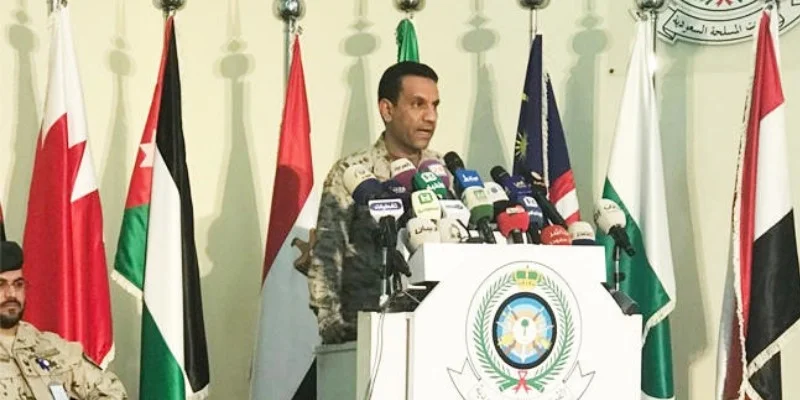
Saudi-Led Coalition Says It Intercepted Three Houthi Ballistic Missiles as Fighting Intensifies in Yemen
A Saudi-led coalition said it intercepted and destroyed three ballistic missiles fired by Iran-backed Houthis toward Khamis Mushait in southern Saudi Arabia. The Houthis claimed Saudi Arabia carried out 94 attacks in Yemen within 24 hours, as fighting intensified around the strategic city of Taiz.
Israeli Airstrike on Gaza Residential Building Kills at Least Five Hamas Fighters
At least five Hamas fighters were killed in an Israeli airstrike on a residential building in Gaza City early Saturday, according to Gaza health officials and aid workers. The strike comes amid a fragile ceasefire, with disputes over Hamas’s disarmament and Israeli troop withdrawal continuing. Gaza officials say at least 1,400 Palestinians have been killed since the truce began in October 2025.
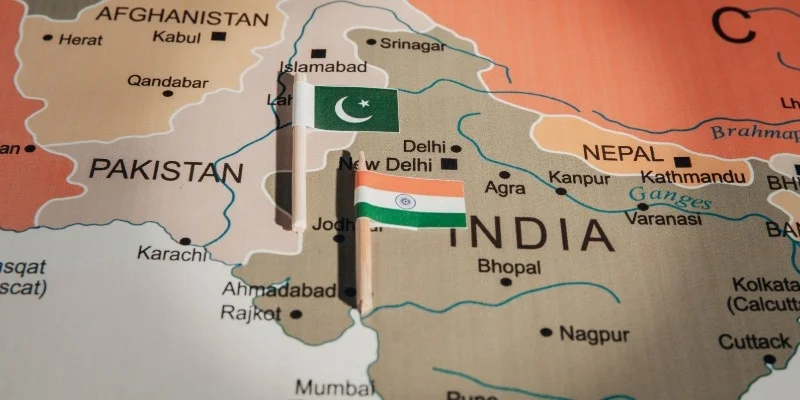
Two Pakistanis Killed, One Injured in Indian BSF Firing in Kasur
Two Pakistani civilians, Azmat Rasool and Mohsin Jutt, were killed and another injured in a shooting involving India’s Border Security Force near the international border in Kasur district. Pakistani sources said the men were shot without warning, while Indian media, citing BSF sources, claimed the two killed were attempting to cross into Indian Punjab illegally.

Saudi-Led Coalition Accuses Iran-Backed Houthis of Drone Attack on Power Facility in Madinah
Saudi-led coalition accused Iran-backed Houthis of launching a drone attack on an electricity distribution station in Madinah that supplies the Prophet’s Mosque. The strike reportedly disabled one transformer without disrupting the wider power network. The Houthis denied responsibility as Turkey, Qatar, the Arab League and Al-Azhar condemned the alleged attack.