
US President Trump Warns He Could ‘Annihilate’ Iran in UN Address
· 36 views
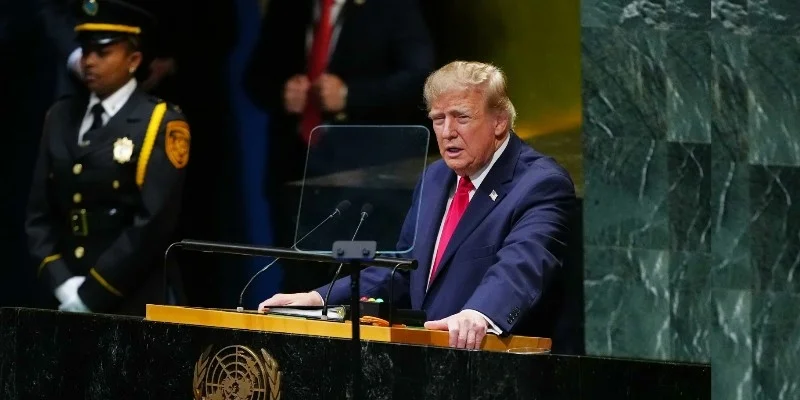
Washington, D.C. (Shabbir Turi) — U.S. President Donald Trump warned Tuesday that he could “annihilate” Iran if Tehran fails to reach a peace agreement with Washington, while saying he believes a deal could be reached after the U.S. midterm elections in November.
Addressing the 81st United Nations General Assembly in New York, Trump said he faced a major decision over whether to pursue an agreement that would allow Iran to rebuild or take further military action against the Islamic Republic.
“I have a big decision to make,” Trump said, asking whether Iran should be allowed to rebuild and become a stronger country or whether the United States should “annihilate” the Islamic Republic.
Trump reiterated that Iran must not be allowed to obtain a nuclear weapon and accused Tehran of supporting terrorism and destabilizing the Middle East. He described the Iranian government as “weak and desperate” and said its current behavior reflected weakness rather than strength.
Trump Predicts Iran Deal After Midterm Elections
Despite his threats, Trump said he believed Washington and Tehran could reach a settlement after the November 3 U.S. midterm elections.
“I believe we’ll make a deal right after the election,” Trump said, arguing that Iranian leaders were waiting to see how he performs in the midterms. He added that he himself was not running in the election.
Later, Trump said that the two countries were continuing to communicate and that he believed a settlement would eventually be reached.
“They want to talk to us. They have been talking to us, even today,” Trump said, according to Reuters.
The comments came amid renewed diplomatic contacts between Washington and Tehran in New York, where Iranian Foreign Minister Abbas Araghchi and U.S. envoy Steve Witkoff have held discussions through mediation efforts.
Strait of Hormuz
A major part of Trump’s speech focused on the Strait of Hormuz, a critical global energy route.
Trump claimed that the U.S. Navy had recently escorted more than 1 billion barrels of oil through the Strait of Hormuz and said oil flows through the waterway were higher than at any point since the start of the war.
He called on Iran to fully reopen the strategic waterway and return to negotiations.
The remarks came as a senior Iranian official told Reuters that Tehran could reopen the Strait within days if Washington eased military pressure and lifted its blockade of Iranian ports.
Defense of U.S. Power
Trump used the opening portion of his address to highlight what he described as U.S. economic, military and technological strength.
He said the U.S. military was the most powerful in the world, the American economy was stronger than ever and the country was leading in technology. He also cited lower crime, stronger border security and increased investment as achievements of his administration.
Trump said the United States was “back” and stronger than ever, presenting his administration's domestic and foreign policies as evidence of what he described as a broader resurgence of American power.
Pakistan-India Conflict
Trump again referred to his claimed role in ending fighting between Pakistan and India, citing the episode while discussing conflicts in which he said his administration had helped bring about peace.
He also discussed the war in Ukraine and said Washington was working with both Moscow and Kyiv to reach an agreement, expressing confidence that progress could come sooner than many expected.
Attack on International Criminal Court
Trump also launched a strong attack on the International Criminal Court (ICC), calling on countries that are members of the court to withdraw.
He said the United States would not allow its military personnel or other American citizens to face what he described as “show trials” before what he characterized as an anti-American tribunal.
“I call on all nations that are members of the ICC to officially resign from this rogue institution immediately,” Trump said.
His comments reflect Washington’s longstanding opposition to the ICC exercising jurisdiction over U.S. nationals. Trump argued that international institutions should not be able to impose their agendas on the United States or interfere with American sovereignty.
Criticism of the United Nations
Trump also criticized the United Nations and international organizations for what he described as interference in U.S. domestic affairs.
He said there was no global government and argued that U.S. sovereignty and national security would not be compromised by international institutions.
The speech also touched on immigration, global taxation, artificial intelligence, Venezuela, Cuba, Greenland and the war in Ukraine. Reuters described the address as a 37-minute speech covering a broad range of foreign-policy priorities.
Artificial Intelligence
Trump also addressed artificial intelligence, saying his administration would use the term “super intelligence” rather than artificial intelligence and arguing against restrictions that could slow U.S. technological development.
He presented American technological leadership as a key component of national power and said the United States should maintain its advantage in the rapidly developing field.
Trump’s address came as diplomatic efforts over the Iran war intensified in New York. AP reported that the president’s speech simultaneously defended his decision to launch the war while leaving open the possibility of a diplomatic settlement and calling on Iran to reopen the Strait of Hormuz and return to negotiations.
Most members of the Iranian delegation left the General Assembly chamber during Trump’s criticism of Tehran, according to reports. The speech was followed by a series of diplomatic meetings involving Trump and other world leaders as efforts continued to address the Iran conflict and broader international crises.
Related Articles
High-Level U.S.-Iran Talks Held in New York, Tehran Confirms
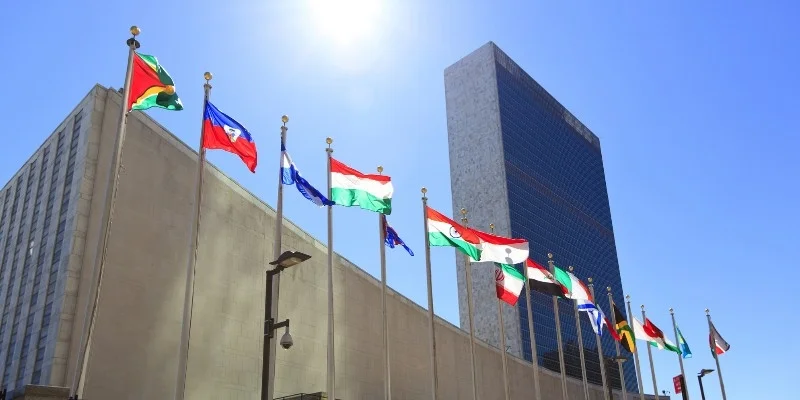
Trump said U.S. and Iranian officials held a three-hour meeting in New York on Tuesday, with Steve Witkoff and Jared Kushner representing the U.S. and Iranian Foreign Minister Abbas Araghchi attending for Tehran. No agreement or ceasefire was announced, but both sides indicated that further discussions could continue.
Guterres Calls for End to Wars in Final UN General Assembly Address
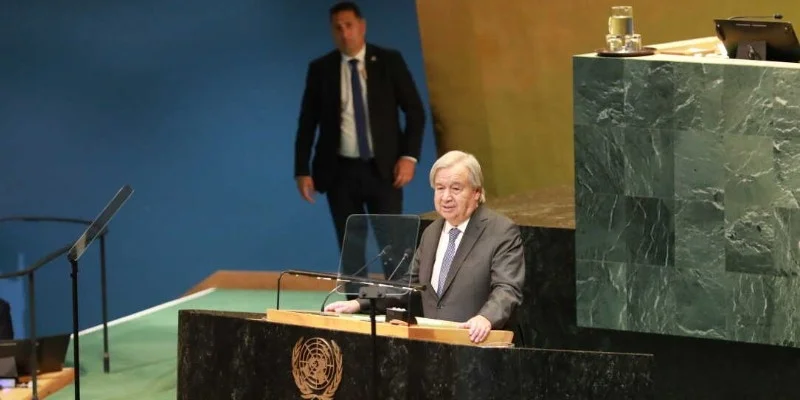
U.N. Secretary-General António Guterres called on world leaders Tuesday to end wars worldwide and establish comprehensive international rules for artificial intelligence. In his final opening address to the General Assembly, Guterres also urged the modernization of global institutions and reaffirmed support for a two-state solution to the Israeli-Palestinian conflict.
G7 Urges Iran to Stop Arming Houthis as Yemen Fighting Escalates
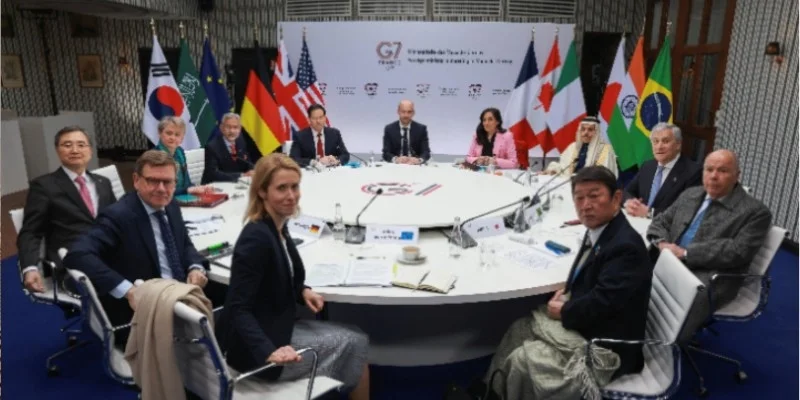
G7 foreign ministers have called on Iran to stop arming and supporting the Iran-backed Houthis in Yemen, while demanding an immediate end to attacks and threats against civilian shipping. The G7 also condemned Houthi attacks on Saudi Arabia, as renewed fighting along Yemen’s Red Sea coast has displaced more than 120,000 people.
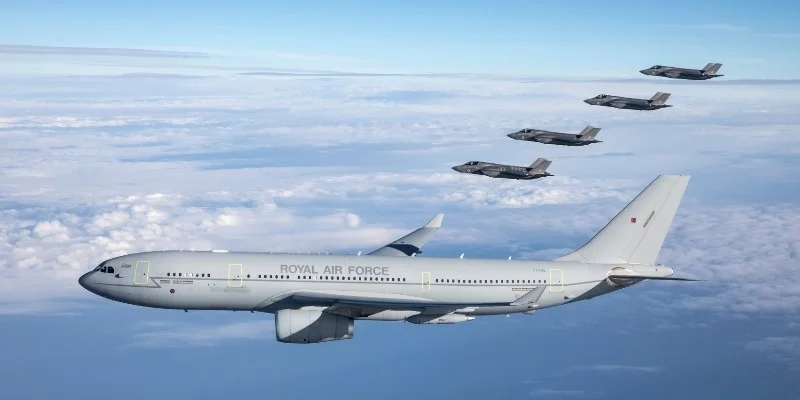
UK to Provide Defensive Air Refueling Support to Saudi Arabia Amid Houthi Attacks
The UK will provide Saudi Arabia with limited defensive air-refueling support following an escalation in Iran-backed Houthi drone and missile attacks. A Royal Air Force Voyager aircraft will operate from RAF Akrotiri in Cyprus, with the mission initially expected to last several weeks.