
Gulf States Agree to Deploy Joint Forces at New Military Command in Kuwait Amid Iran War
· 39 views
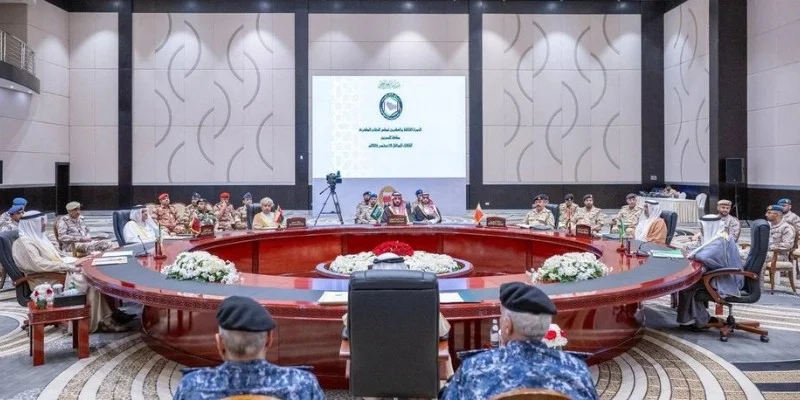
MANAMA (Terror Monitor) — The six member states of the Gulf Cooperation Council (GCC) have agreed to deepen military cooperation and establish an advanced headquarters for their Unified Military Command in Kuwait, with military forces from member countries to be allocated to the new command amid escalating regional security threats following the war involving Iran.
The decision was announced on Tuesday, November 10, following the 23rd session of the GCC Joint Defence Council, held in Bahrain's capital, Manama, with the participation of defence ministers from all six member states.
GCC Secretary-General Jasem Mohamed Albudaiwi said the defence ministers had approved the opening of an advanced command for the bloc's Unified Military Command in Kuwait and agreed to allocate appropriate military forces to it.
The six GCC members are Bahrain, Kuwait, Oman, Qatar, Saudi Arabia and the United Arab Emirates.
According to statements issued following the meeting, the decision is part of broader efforts to strengthen joint military cooperation, improve defence coordination and enhance the Gulf states' ability to respond to emerging security threats.
However, the GCC has not disclosed the number of troops that will be assigned to the new command, their composition, specific operational responsibilities or the date on which the facility will become operational.
Iran war drives Gulf military cooperation
The agreement comes amid heightened security concerns across the Gulf following the outbreak of war between the United States, Israel and Iran on February 28.
Since the beginning of the conflict, Gulf Arab countries have faced repeated Iranian missile and drone attacks, with several military installations, energy facilities, ports and civilian infrastructure reportedly affected.
Most GCC countries host major American military installations and maintain longstanding security partnerships with Washington. These facilities have also become a major factor in regional tensions, as Tehran has described its retaliatory operations as targeting American military assets in the region.
The conflict has disrupted commercial aviation and maritime transportation, while raising concerns about the security of vital energy infrastructure and oil and gas exports from the Gulf.
The Strait of Hormuz, one of the world's most important maritime routes for international energy supplies, has also become a major focus of regional security concerns.
GCC Secretary-General Albudaiwi said the security of the member states was a shared responsibility and emphasised that stronger military coordination would improve their ability to protect their territories, populations, strategic assets and national interests.
He also condemned Iranian attacks against GCC countries, saying they had caused damage to civilian facilities and infrastructure.
New command will operate under existing GCC military structure
The advanced command in Kuwait will operate under the GCC's existing Unified Military Command rather than replace the bloc's established military headquarters.
The six countries agreed to establish the Unified Military Command at a GCC summit in Kuwait in December 2013. Its purpose was to coordinate joint military operations, strengthen defence capabilities and improve cooperation among the armed forces of member states.
The command's headquarters in Riyadh, Saudi Arabia, was officially inaugurated in November 2021 in a ceremony attended by senior military officials and defence ministers from GCC countries.
The decision to establish an additional command facility in Kuwait represents a further step towards expanding the bloc's military presence and operational coordination.
Kuwait's geographical position at the northern end of the Persian Gulf, bordering Iraq and Saudi Arabia and facing Iran across the Gulf, gives the proposed facility strategic importance.
According to Reuters, the GCC announcement did not provide further details about the new headquarters or the forces that would be deployed there.
Gulf states seek a more integrated missile defence system
The latest agreement follows growing calls among Gulf leaders for a more coordinated regional defence structure, particularly after Iranian missile and drone attacks exposed weaknesses in existing security arrangements.
At an extraordinary GCC consultative summit held in Saudi Arabia's Jeddah on April 28, the leaders of the six member states called for accelerated implementation of a joint early-warning system against ballistic missile threats.
GCC Secretary-General Albudaiwi said at the time that the leaders had emphasised the importance of strengthening military integration and accelerating the completion of the regional missile-warning project.
The April summit also addressed the impact of the Iran war on energy infrastructure, aviation, maritime transportation and regional supply chains.
Despite years of military cooperation and joint exercises, the six countries have faced challenges in developing a fully integrated defence system.
Differences in military capabilities, weapons systems, command structures and national security priorities have complicated efforts to establish a unified operational framework.
The latest decision could help improve coordination between the member states, although it remains unclear whether the new command will also integrate their air-defence networks or establish a common operational response mechanism.
Houthi attacks add to Saudi security concerns
The meeting in Manama also took place against the backdrop of renewed attacks by Yemen's Iran-aligned Houthi movement against Saudi Arabia.
GCC Secretary-General Albudaiwi condemned Houthi attacks targeting the kingdom and expressed solidarity with Saudi Arabia, describing the attacks as violations of its security and sovereignty.
According to Euronews, the Saudi-led coalition in Yemen reported intercepting two missiles fired towards Riyadh, another ballistic missile heading towards southern Saudi Arabia and a drone over the kingdom's Eastern Province on Tuesday.
Saudi Arabia has repeatedly accused the Houthis of threatening its territory and critical infrastructure through missile and drone operations.
The developments have further increased concerns among Gulf governments about the potential expansion of the regional conflict and the involvement of Iran-aligned armed groups operating in neighbouring countries.
GCC's history of collective defence
The Gulf Cooperation Council was established in May 1981, two years after Iran's Islamic Revolution and during the early stages of the Iran-Iraq War.
The organisation was created to promote political, economic and security cooperation among Bahrain, Kuwait, Oman, Qatar, Saudi Arabia and the United Arab Emirates.
In 1982, the member states established the Peninsula Shield Force as a joint military formation intended to strengthen collective defence and respond to external security threats.
The force has historically been reported to have access to approximately 40,000 personnel, although this does not mean that all of them are permanently deployed together.
In March 2011, Peninsula Shield forces, led by Saudi Arabia and including troops from the UAE, entered Bahrain during widespread anti-government protests, at the request of the Bahraini government.
The deployment was controversial because it involved an internal political crisis rather than an external military attack.
In December 2013, GCC leaders agreed to establish a Unified Military Command to improve military coordination, oversee joint operations and strengthen the collective defence capabilities of the six member states.
The command's headquarters were subsequently inaugurated in Riyadh in 2021.
The decision to establish an advanced command in Kuwait now represents another effort by the Gulf states to translate longstanding commitments to collective defence into a more coordinated military structure.
With regional tensions continuing and concerns growing over the security of energy infrastructure, maritime routes and civilian populations, the effectiveness of the new arrangement will depend on the forces assigned to it, the level of intelligence sharing and the extent to which member states are prepared to coordinate their military responses.
Related Articles
Russia-Ukraine Talks in Abu Dhabi End Without Breakthrough, but Prisoner Swap Agreed
Russia and Ukraine Agree to Largest Prisoner Exchange After Abu Dhabi Peace Talks, No Breakthrough on War Ending
Iran Rules Out Transfer of Enriched Uranium Abroad, Threatens US Bases as Tehran Demands UN Action Over $20 Million Reward
Iran has ruled out transferring any enriched uranium abroad, including to Russia, and warned that renewed US military attacks would trigger strikes against American bases worldwide. Tehran has also urged the UN to condemn Washington's $20 million reward for intelligence on Iran's nuclear programme, warning of espionage and sabotage risks.
Sanaa Accuses Pakistan of Bombing Yemen Alongside Saudi Arabia, Warns of Serious Consequences
Sanaa has accused Pakistan's military of participating in Saudi-led airstrikes against Yemen on November 6, warning that the alleged involvement of Pakistani fighter jets could damage relations between the two countries. Islamabad has not independently confirmed the allegation.
US Indicts Three Iran-Backed Operatives Over Nearly 20 Terrorist Attacks Across Europe and America
The US has indicted three Iranian-backed operatives over their alleged involvement in nearly 20 terrorist attacks and attempted plots across Europe and the United States, including a planned attack on a British airbase housing American troops.