
Iran Rules Out Transfer of Enriched Uranium Abroad, Threatens US Bases as Tehran Demands UN Action Over $20 Million Reward
· 480 views
TEHRAN (Terror Monitor) — Iran has categorically ruled out transferring any of its enriched uranium or other nuclear material outside the country, while warning that any renewed US military attack would trigger retaliatory strikes against American military bases, including those located far from Iranian territory.
Mohsen Rezaei, Secretary of Iran's Supreme National Security Council (SNSC), made the remarks in an interview with Lebanon-based Al Mayadeen television, excerpts of which were reported by Iranian media on Wednesday.
"Even the smallest amount of enriched nuclear material will not be taken out of Iran," Rezaei said, reiterating Tehran's position that all its enriched nuclear material would remain inside the country.
According to Iran's Tasnim News Agency, Rezaei said Tehran had also informed its Russian partners that the material would not be transferred abroad and would instead be retained for domestic use.
He argued that Iran needed enriched nuclear material for the development of nuclear-powered ships and submarines.
His remarks effectively ruled out any arrangement involving the transfer of Iran's enriched uranium stockpile to Russia or another country as part of a potential agreement with Washington.
Reuters reported that Russia had previously offered to take Iran's enriched uranium out of the country as part of a possible diplomatic arrangement, but Moscow has maintained that the final decision rests with Tehran.
The International Atomic Energy Agency (IAEA) estimated that Iran possessed approximately 440.9 kilograms of uranium enriched to 60 percent purity before US and Israeli strikes on Iranian nuclear facilities in June 2025. The quantity that survived those attacks remains unknown.
Uranium enriched to 60 percent is far above the level required for most civilian nuclear applications and represents a relatively short technical step from the approximately 90 percent enrichment generally associated with weapons-grade uranium.
Western governments have repeatedly expressed concerns that Iran's nuclear programme could provide the basis for developing nuclear weapons. Tehran maintains that its nuclear activities are peaceful and that it has the right to develop nuclear technology for civilian purposes.
Iran warns of strikes against distant US military bases
Rezaei also issued a fresh warning to Washington, saying Iran would target American military installations if the United States launched another military attack.
He stressed that potential retaliatory operations would not be limited to US bases located near Iran and could extend to American military facilities much farther away.
The warning comes amid continuing tensions between Tehran and Washington over the future of the war, the reopening of maritime routes and the conditions for resuming diplomatic negotiations.
Rezaei said any agreement to end the conflict must cover all military fronts across West Asia, particularly Lebanon.
He described a comprehensive cessation of hostilities as one of Iran's fundamental conditions for ending the war.
Iran has also demanded an end to the naval blockade, the release of its frozen financial assets and guarantees that the United States and its allies will not launch further military attacks.
The Iranian official further indicated that Tehran was not prepared to accept a temporary ceasefire that would leave other regional fronts, particularly Lebanon, outside the arrangement.
His comments suggest that Iran wants any potential settlement to address the broader regional conflict rather than focus exclusively on direct hostilities between Iran, the United States and Israel.
Araghchi urges UN and IAEA to condemn US $20 million reward
Separately, Iranian Foreign Minister Abbas Araghchi has called on the United Nations and the International Atomic Energy Agency to condemn a US government initiative offering rewards of up to $20 million for information about Iran's nuclear programme.
In a letter dated November 10, addressed to UN Secretary-General António Guterres, the president of the UN Security Council and IAEA Director General Rafael Grossi, Araghchi described the American initiative as dangerous and warned that it could encourage espionage, sabotage and attacks against Iranian nuclear facilities and personnel.
The letter followed an announcement by the US Department of State under its Rewards for Justice programme, offering up to $20 million, along with possible relocation, in exchange for information concerning Iran's nuclear programme.
The American initiative seeks information about nuclear facilities, equipment, associated personnel and members of Iran's scientific community.
According to the US government's official Rewards for Justice website, the offer covers information about individuals and organisations associated with Iran's nuclear programme, as well as the movement of relevant equipment and materials.
Araghchi argued that the initiative could expose Iranian nuclear scientists, technical personnel and other employees to serious security threats.
He warned that encouraging individuals to provide sensitive information about nuclear installations could create opportunities for espionage and sabotage, potentially endangering both facilities and the people working there.
The Iranian foreign minister also argued that the American move could undermine the credibility of the IAEA's safeguards system and complicate Iran's ability to fulfil its routine international nuclear-monitoring obligations.
He said Iran could not reasonably be expected to implement normal safeguards procedures while its nuclear personnel and facilities were potentially exposed to threats arising from such an initiative.
Tehran asks Guterres and Grossi to intervene
In his letter, Araghchi urged the UN Secretary-General and the Security Council to hold Washington accountable for the announcement and issue a clear condemnation of the initiative.
He also called on IAEA Director General Rafael Grossi to raise the matter before the agency's Board of Governors and take measures to prevent the disclosure or misuse of sensitive nuclear information.
Araghchi maintained that the US initiative represented a threat not only to Iran's nuclear infrastructure but also to the international framework designed to ensure the peaceful use of nuclear technology.
The foreign minister's appeal comes amid a wider confrontation between Iran and Western governments over Tehran's nuclear activities, international inspections and the future of diplomatic negotiations.
Washington says reward is intended to obtain nuclear intelligence
The US Department of State announced the reward on November 6 through its Rewards for Justice programme.
Washington says the initiative is intended to obtain information about Iran's nuclear infrastructure, including facilities, equipment and individuals associated with the programme.
The offer also includes the possibility of relocation for individuals providing qualifying information.
The US government has argued that gaps in international monitoring have made it increasingly difficult to establish the full status of Iran's nuclear programme and its associated infrastructure.
The IAEA has previously expressed concerns about its ability to maintain continuity of knowledge regarding Iran's nuclear material and related activities following restrictions on inspections and the destruction of nuclear facilities.
Iran, meanwhile, has repeatedly accused Washington and Israel of targeting its nuclear programme through military operations, sabotage and other covert activities.
Nuclear programme remains central to US-Iran confrontation
The latest statements highlight the continuing disagreement between Tehran and Washington over the future of Iran's nuclear programme as efforts to end the wider conflict remain uncertain.
The United States and Israel have sought restrictions on Iran's nuclear activities, while Tehran insists that its right to peaceful nuclear technology must be recognised.
Iran's refusal to transfer enriched uranium abroad could become a major obstacle in any future diplomatic agreement, particularly given previous discussions involving Russia as a possible destination for the material.
At the same time, Washington's $20 million intelligence reward has added another point of confrontation, with Tehran seeking international condemnation of what it describes as an attempt to encourage espionage and endanger nuclear personnel.
With Iran insisting that its enriched nuclear material will remain inside the country and warning of retaliation against US military installations in the event of renewed attacks, the latest developments underscore how difficult it may be to reach a comprehensive settlement between the two countries.
Related Articles
Iran Threatens to Strike US Military Bases Across Europe, Warns of Wider War Beyond Middle East
Iran has threatened to strike US military bases across Europe and other distant regions if Washington launches fresh attacks, warning that even islands previously considered beyond the reach of Iranian missiles could become targets. Tehran has also vowed to continue underground ballistic missile production and rejected transferring any enriched uranium abroad, as tensions with the United States remain high.
Israeli Airstrike on Gaza’s Nasser Hospital Kills Six, Including Surgeon
An Israeli airstrike on Nasser Hospital in southern Gaza has killed at least six Palestinians, including a surgeon and a 13-year-old boy, and wounded at least 28 others. Israel said it targeted a senior Hamas commander allegedly operating a military headquarters inside the hospital, but Palestinian reports said the commander was not among those killed.
Pakistan Vows Rapid Military Deployment to Saudi Arabia Under Makkah Defence Alliance
Pakistan says it is preparing for the rapid deployment of agreed military forces and defence capabilities to Saudi Arabia under the Makkah Joint Defence Alliance, reaffirming that its commitment to the Kingdom’s security and sovereignty is “absolute and non-negotiable.”
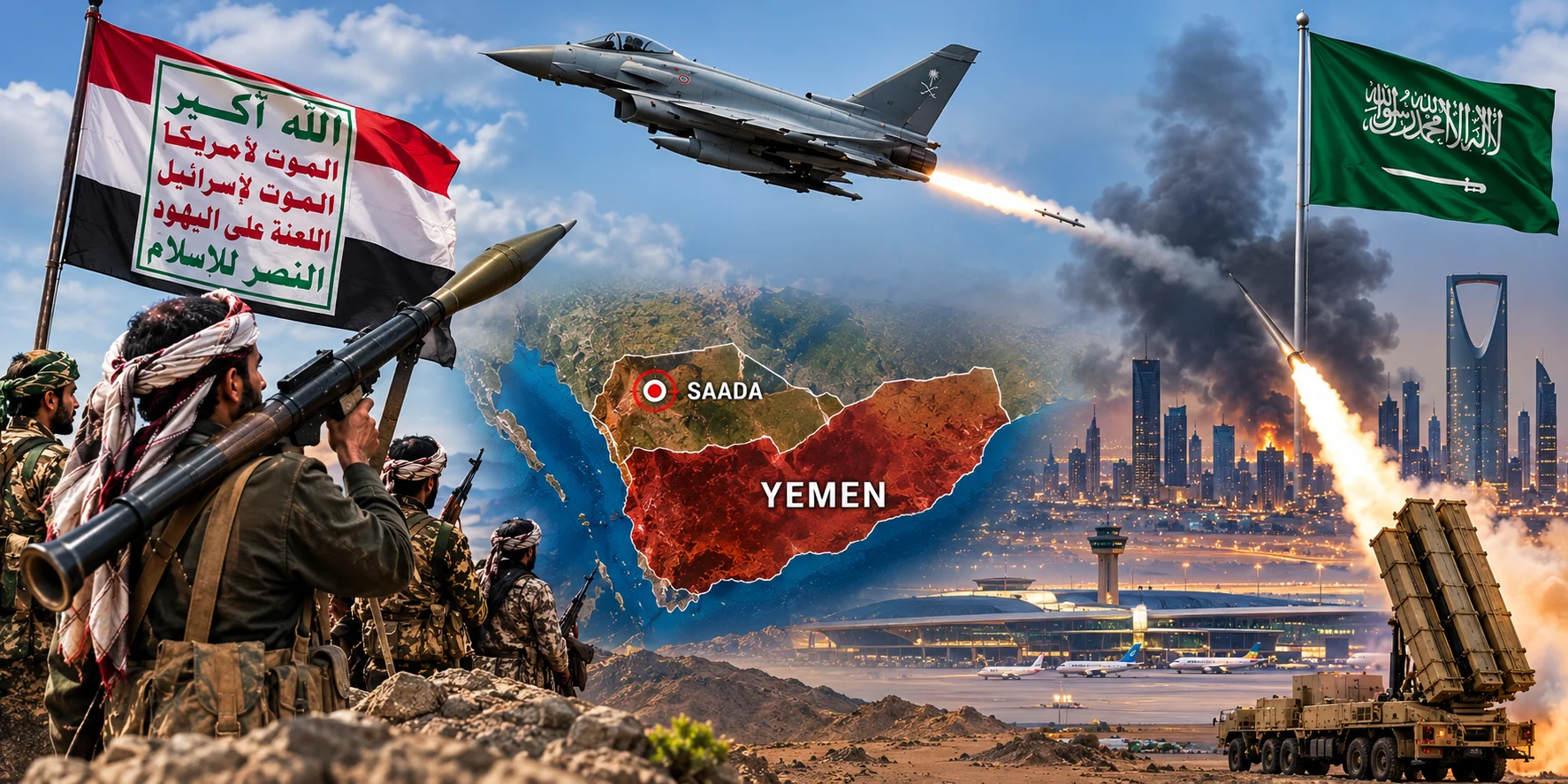
Houthis Launch Fresh Missile and Drone Attacks on Saudi Arabia as Missiles Strike Yemen’s Aden
Iran-backed Houthis Launch Fresh Missile and Drone Attacks on Saudi Arabia, Target Military Bases in Yemen’s Aden