
Iran Claims Missile Hit U.S. F-16 Over Gulf, CENTCOM Denies Attack as Tankers Struck in Hormuz
· 148 views
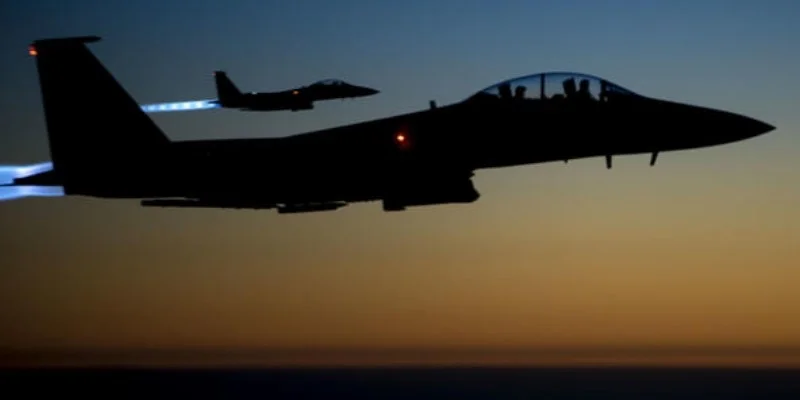
Washington, D.C./ Tehran (Terror Monitor) — Iran's military on Saturday claimed that its air defence systems fired a missile at a U.S. F-16 fighter jet over the Gulf on Friday evening, damaging the aircraft and forcing it to abort its mission and make an emergency landing, a claim strongly denied by the U.S. military.
The Iranian army said its air defence systems detected and targeted the American fighter aircraft while it was flying over the Gulf, with the missile reportedly exploding near the jet and causing damage.
According to Iranian state media, the aircraft was forced to abandon its mission and make an emergency landing at a nearby airport. Iranian reports did not immediately provide further details about the location of the alleged incident or the extent of damage to the aircraft.
However, the U.S. Central Command (CENTCOM) rejected the Iranian account, saying Tehran had not attacked an American F-16 fighter jet.
“Iran did not attack a U.S. F-16 fighter aircraft yesterday — at all,” CENTCOM said in a statement, adding that all U.S. military fighter jets deployed across the Middle East were safe and accounted for.
Reuters reported that the U.S. military had categorically denied Iran's claim, while Iranian authorities maintained that their air defence systems had targeted the aircraft.
The alleged incident comes amid escalating military confrontation between Washington and Tehran, with both sides continuing to exchange attacks and threats across the Gulf region.
Iran unveils new underground missile launcher
Separately, Iran showcased a new missile-launching system at an underground military facility, highlighting its continued ability to launch attacks if the conflict with the United States intensifies again.
Iranian state television broadcast footage from an underground missile installation where the Islamic Revolutionary Guard Corps (IRGC) unveiled a new launcher reportedly capable of firing two liquid-fuelled missiles simultaneously.
The newly displayed system appears to be more advanced than Iran's previously used dual-launcher configuration, which was designed to fire two solid-fuel missiles at the same time.
Liquid-fuelled missiles are generally capable of providing greater flexibility in propulsion and trajectory adjustments, although they typically require more preparation and handling before launch.
The location of the underground facility was not disclosed.
The broadcast appeared intended to demonstrate that Iran retains significant missile capabilities despite previous U.S. claims that its missile infrastructure and military production facilities had been severely damaged or destroyed during airstrikes.
Brigadier General Seyyed Majid Mousavi, commander of the IRGC Aerospace Force, said Iran's military capabilities had expanded significantly and that new weapons systems and operational capabilities had been incorporated into its combat structure.
The unveiling comes amid growing concerns that the military confrontation between Iran and the United States could intensify again despite ongoing diplomatic contacts through regional mediators.
At least three oil tankers attacked near Strait of Hormuz
Meanwhile, at least three oil tankers were attacked or damaged in and around the Strait of Hormuz on Saturday, in the latest incidents threatening commercial shipping through one of the world's most strategically important maritime routes.
The United Kingdom Maritime Trade Operations (UKMTO) reported that two tankers were struck in separate incidents while travelling out of the Persian Gulf through the Strait of Hormuz.
One vessel was hit in its stern, while another sustained damage to its engine room following an attack involving an unidentified projectile.
The incidents were reported in waters near Oman, with maritime authorities saying no casualties had been reported.
The UKMTO said the attacks had occurred separately and that the vessels were affected while navigating the strategically important waterway.
Iran did not immediately comment on the reports of the two projectile attacks.
In a separate incident, the Iranian Navy said a tanker had struck a naval mine east of the Strait of Hormuz before noon, causing a fire aboard the vessel.
Iranian state media reported that the tanker had entered a restricted maritime area and allegedly switched off its identification and navigation systems before the incident.
The Iranian military did not immediately provide details about the vessel's identity, the extent of damage or whether the fire had been brought under control.
The Associated Press reported that at least three oil tankers had been attacked or damaged around the Strait of Hormuz on Saturday, including the two vessels reported by the British maritime security centre and another tanker Iran said had struck a naval mine.
Iran claims intensified maritime operations
Iranian state media also reported that the country's military had conducted what it described as its most intense and varied operations in the Strait of Hormuz overnight.
The operations were reportedly aimed at restricting maritime traffic and preventing the U.S. military from escorting commercial vessels through the strategic waterway.
Iran has increasingly threatened shipping in the Strait of Hormuz amid Washington's pressure campaign and restrictions imposed on Iranian ports.
The waterway is one of the world's most critical energy transit routes, carrying a substantial share of global oil and liquefied natural gas shipments.
Any prolonged disruption to shipping through the strait could significantly affect international energy markets, fuel prices and global trade.
Iran seeks to pressure Washington through maritime disruption
The latest attacks on tankers are being viewed amid Tehran's efforts to increase pressure on Washington by disrupting commercial shipping and raising the economic cost of the confrontation.
Iran has threatened maritime traffic and warned that vessels passing through the Strait of Hormuz could face military risks as the United States maintains restrictions and military pressure on Iranian ports.
The United States has also increased its military presence in the region and has sought to protect commercial shipping through the waterway.
The attacks on tankers, the alleged targeting of an American fighter jet and Iran's unveiling of a new underground missile launcher underscore the growing military tensions across the Gulf.
With both sides continuing to issue warnings and conduct military operations, fears remain that further incidents involving aircraft, naval vessels, oil tankers or critical energy infrastructure could trigger a wider escalation across the Middle East.
Related Articles

Israeli Strikes Kill Seven Palestinians, Including Senior Hamas Security Official
Israeli airstrikes killed at least seven Palestinians in the Gaza Strip on Tuesday, including Hamas’s director of internal security and two police officers, as Israeli attacks on Hamas-run security installations continue despite the October 2025 ceasefire. Gaza’s Health Ministry says at least 74,746 Palestinians have been killed since the war began in October 2023.

Russian Attack on Zaporizhzhia Kills Two, Injures 40, Including Four Children
Russian attacks on Zaporizhzhia and the Kyiv region killed at least 13 people and injured dozens, including children, as rescuers pulled a seven-year-old boy alive from rubble after 14 hours.

Trump Administration Imposes New Sanctions on 30 Iran-Linked Individuals and Entities Over Shadow Banking Network
The United States has imposed fresh sanctions on eight individuals and 22 entities linked to Iran's alleged shadow banking system, targeting financial networks operating in Iran, the UAE, Turkey and Hong Kong. The US Treasury says its financial intelligence unit identified approximately $14.7 billion in potentially Iran-linked financial activity between January 2025 and August 2026.
Iran Says No Decision Made on NPT Withdrawal as Parliament Prepares Legislation
Iran's Foreign Ministry says Tehran will continue to honour its obligations under the Nuclear Non-Proliferation Treaty as long as it remains a member, while the head of parliament's National Security and Foreign Policy Commission says legislation for withdrawal has already been drafted and could be fast-tracked following a final national decision.