
Nigeria: Jihadists Kill and Abduct Dozens During Friday Prayers in Niger State
· 126 views

Minna (Terror Monitor) — Jihadists killed and abducted scores of people during attacks on villages in Nigeria’s central Niger State shortly after Friday prayers, with survivors and lawmakers reporting that some residents managed to escape after rival militant groups clashed.
The attacks took place in Dikera and nearby Binzi in the Borgu Local Government Area, close to Nigeria’s western border with Benin. The region has witnessed increasing activity by armed groups and militants operating across the porous borders between Nigeria and the Sahel.
Jibril Ahmad, a survivor from Dikera, said hundreds of fighters from the Lakurawa group attacked shortly after worshippers completed Friday prayers. He said the attackers were armed with guns, knives and machetes and killed some residents, accusing them of failing to follow what the militants described as the “true teachings” of Islam.
Federal lawmaker Jafaru Mohammed said nearby Binzi was also attacked, with numerous people killed and many others abducted and taken toward surrounding forests, including areas near Kainji Lake. The exact number of people killed or abducted remained unclear in the initial reports.
Conflicting Accounts Over the Attackers
Lakurawa is a relatively obscure jihadist group that some researchers have linked to Islamic State Sahel Province (ISSP), which operates across Burkina Faso, Mali and Niger.
However, another resident of Dikera identified Ansaru, another jihadist group, as being responsible for the initial attack. The conflicting accounts could not be independently verified, and Nigerian federal authorities and the military had not immediately issued a detailed statement on the assault.
Residents said Lakurawa fighters have previously imposed so-called taxes on farmers and herders in the area, including demands for livestock and agricultural produce.
Rival Jihadist Group Intervenes
The attack took an unexpected turn when fighters from another jihadist faction, known as Mahmuda, intervened and clashed with Lakurawa fighters.
According to Ahmad and Mohammed, the fighting between the rival groups allowed some residents and abducted people to escape. Mohammed said members of Mahmuda opposed Lakurawa’s ideology and confronted the group after learning about the attack.
Neither Ahmad nor Mohammed initially provided a confirmed death toll or exact number of abductees.
Niger State police confirmed that people had been abducted but said they had not received reports of deaths at the time of their initial statement. Police and security personnel were subsequently mobilized for assessment and rescue operations.
More Attacks Reported in the Area
Another resident, Abdullahi Ahmad, later alleged that militants returned to the area on Saturday to abduct additional people, reportedly seeking to use them as bargaining leverage ahead of an expected deployment of Nigerian troops.
He also alleged that militants planted landmines on a road leading out of Dikera. According to his account, a man and members of his family attempting to flee were killed when their vehicle struck one of the mines.
These details could not be independently verified.
The latest violence highlights the increasingly complex security situation in central and northwestern Nigeria, where jihadist groups, criminal gangs and other armed factions have expanded their activities beyond the traditional conflict zone in the northeast.
Nigeria’s Long-Running Jihadist Insurgency
Nigeria has been battling jihadist violence for around 17 years, with the insurgency initially concentrated in the northeast. Boko Haram and Islamic State West Africa Province (ISWAP) remain major armed groups in the region.
Mass abductions have become a major tactic used by jihadist and criminal groups in Nigeria. One of the most prominent cases was the 2014 abduction of hundreds of schoolgirls from Chibok by Boko Haram.
Meanwhile, northwestern and central parts of Nigeria have faced growing attacks by non-ideological criminal gangs, commonly referred to as bandits, who raid villages, abduct civilians and extort farmers and miners.
The spread of jihadist and criminal violence has placed additional pressure on Nigerian security forces, which are already dealing with several overlapping conflicts across the country.
Kidnapping has also developed into a lucrative criminal enterprise, involving both local gangs and transnational jihadist organizations.
Authorities have yet to establish a final toll for the latest attack, while security operations and efforts to locate those abducted are continuing.
Related Articles
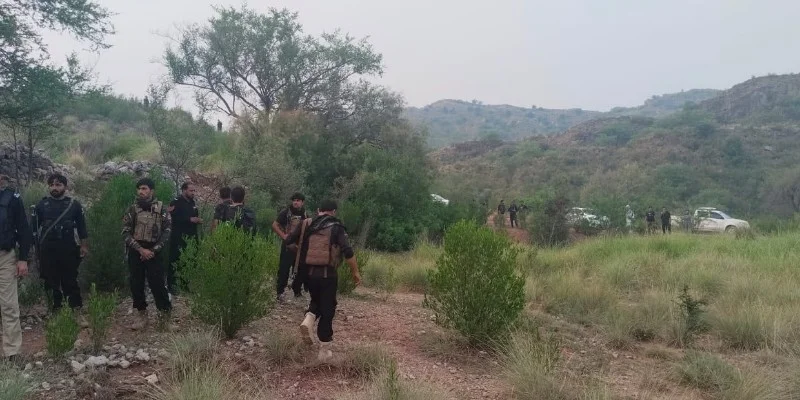
10 Militants Killed in Joint Police and Orakzai Scouts Operation in Pakistan’s Khyber Pakhtunkhwa
Pakistani police and Orakzai Scouts killed 10 terrorists affiliated with the banned Lashkar-e-Islam Pakistan and Hafiz Gul Bahadur group during a joint operation in Khyber Pakhtunkhwa’s Orakzai district. The operation followed a militant blockade on Sangra Main Road. Authorities said security operations would continue to eliminate terrorist threats and maintain law and order.
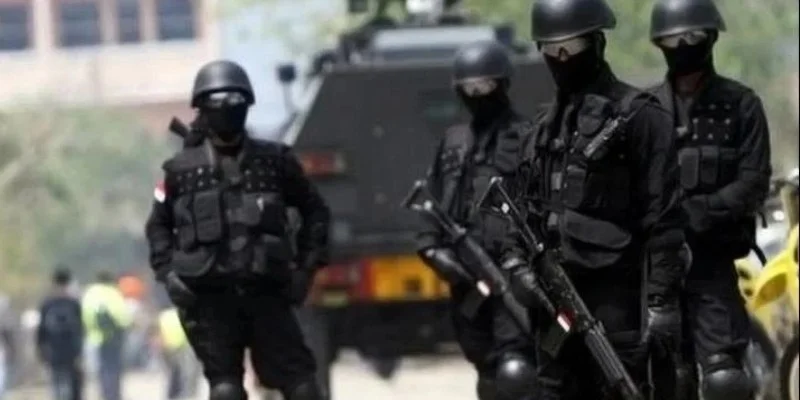
Pakistan Security Forces Kill Alleged Mastermind of Kohat Police Lines Suicide Attack in KP
Pakistani security forces and the Counter Terrorism Department (CTD) have killed an alleged mastermind of the suicide attack on Kohat Police Lines during a joint operation in Lakki Marwat district, Khyber Pakhtunkhwa. According to the CTD, the terrorist had links to the Gul Bahadur group and was involved in facilitating the attack using an explosives-laden vehicle. He was also allegedly linked to a bank robbery involving Rs6 million and plans to target a Pakistan Air Force installation
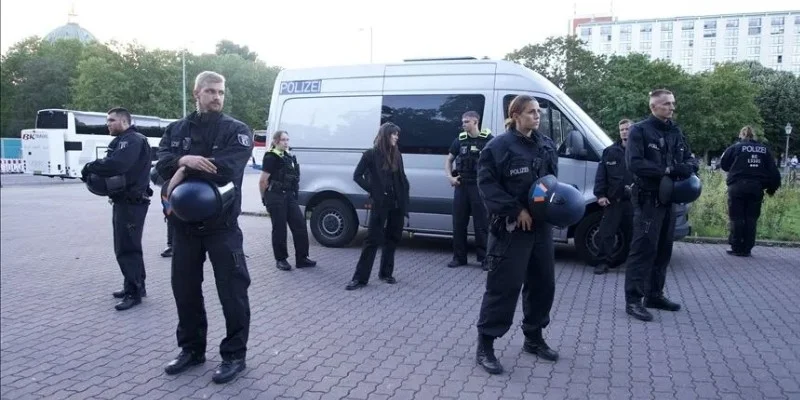
Germany Jails Two Men for Plotting Attacks on Jewish Leaders on Behalf of Iran’s Quds Force
A German court sentenced two men to eight-and-a-half and four-and-a-half years in prison for spying on Jewish and pro-Israel figures and preparing attacks allegedly directed by Iran’s Islamic Revolutionary Guard Corps’ Quds Force. The intended targets included German-Israeli Society President Volker Beck and Central Council of Jews in Germany President Josef Schuster.

Balochistan Commissioner Asadullah Kakar Abducted by Armed Terrorists in Pakistan
Rakhshan Division Commissioner Asadullah Kakar and his driver were abducted by armed terrorists in Balochistan, Pakistan, while travelling from Quetta to Kharan. Local administrative sources told Terror Monitor that the banned Balochistan Liberation Army was responsible for a series of recent high-profile kidnappings, with substantial ransom payments allegedly securing the release of previously abducted officials.