
Pakistan Says Troops in Saudi Arabia Will Remain on Defensive Mission Amid Houthi Attacks
· 1 views
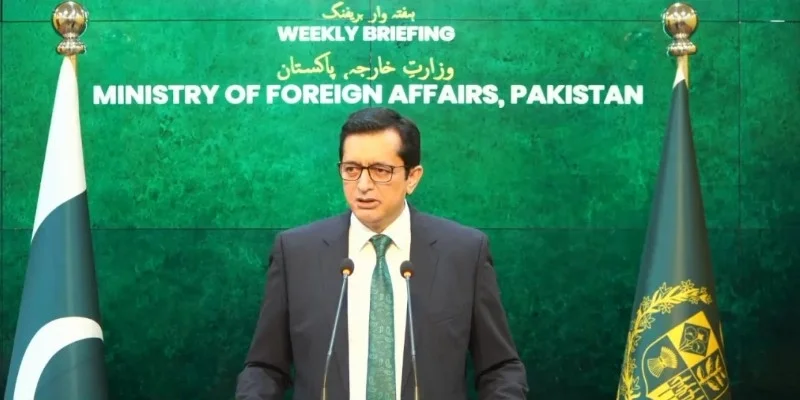
ISLAMABAD (Terror Monitor) — Pakistan has a substantial number of military personnel and resources stationed in Saudi Arabia for defensive purposes, the Foreign Ministry said on Friday, as attacks by Yemen’s Iran-backed Houthi rebels intensify and a newly established trilateral defence pact with Saudi Arabia and Türkiye comes under scrutiny.
Foreign Ministry spokesperson Sajjad Haider Khan told reporters that Pakistan already had a significant military presence in Riyadh but declined to disclose whether Islamabad had deployed additional troops following the escalation in hostilities or the activation of the joint defence agreement signed by the three countries in August.
“The forces will not cross the border into Yemen to launch attacks against the Houthis,” Khan said, according to the ministry’s Friday briefing. He added that Pakistani personnel would be used to defend Saudi territory and safeguard the kingdom’s sovereignty.
The statement comes as Saudi Arabia faces increasingly frequent attacks attributed to the Houthis, including strikes on Riyadh’s King Khalid International Airport and a Saudia Airlines aircraft on Thursday. Saudi civil aviation authorities said three Saudi nationals, including an airline pilot, were killed in the attacks, while several other people of different nationalities were injured. The Houthis claimed responsibility for a ballistic missile attack on the airport, although Saudi authorities did not identify those responsible in their statement.
Pakistan declines to disclose troop numbers
Khan said decisions concerning the number, timing and location of military deployments would be made by the trilateral alliance, which brings together Pakistan, Saudi Arabia and Türkiye.
He reiterated that Pakistan had maintained a military presence in Saudi Arabia since the 1980s and that deployments continued after Islamabad and Riyadh signed a bilateral defence agreement in 2025.
The exact number of Pakistani personnel currently stationed in the kingdom, the equipment available to them and the precise nature of their responsibilities under the new arrangement have not been publicly disclosed.
A Reuters report published on Thursday said Pakistan had agreed to deploy additional forces to Saudi Arabia under the trilateral agreement without a parliamentary vote. The report noted that the government had not specified the number of troops involved, their operational assignments, the command arrangements, the cost of the deployment or how long the forces would remain in the kingdom.
Reuters previously reported that Pakistan had sent approximately 8,000 troops to Saudi Arabia by May under its 2025 bilateral defence arrangement. The newly signed agreement with Türkiye and Saudi Arabia builds on decades of military cooperation between Islamabad and Riyadh.
Mecca defence pact activated amid regional escalation
Pakistan, Saudi Arabia and Türkiye signed the Mecca Joint Defence Agreement on August 7, committing themselves to collective deterrence and declaring that an armed attack against one member would be regarded as an attack against all three.
The agreement is intended to strengthen military coordination and provide a framework for responding to security threats against the signatories. However, its full text has not been publicly released, leaving important questions about the precise obligations of each country and the circumstances under which military forces would be deployed.
On Monday, the three countries said they had agreed to implement their collective defence commitments and ensure the rapid deployment of the military forces and capabilities required under the arrangement.
Türkiye has also begun providing defensive and technical support to Saudi Arabia, according to Reuters, including military equipment, intelligence sharing, weapons systems and assistance with air-defence planning. Officials said the support was largely being provided through bilateral arrangements while Türkiye’s parliament had yet to ratify the agreement.
The alliance is being tested as Saudi Arabia seeks additional support against Houthi missile and drone attacks. The group has intensified its military activity amid the wider regional conflict, raising concerns about the security of Saudi cities, critical infrastructure and international aviation.
Questions over parliamentary oversight in Pakistan
The reported decision to send additional forces has also raised questions about civilian oversight of Pakistan’s foreign and defence policy.
According to Reuters, Pakistan’s information ministry said the alliance had completed “all necessary government procedures” but did not clarify whether the cabinet or parliament had formally approved the deployment. The ministry described operational details as confidential.
The issue has drawn comparisons with 2015, when Pakistan’s parliament unanimously voted to keep the country out of a Saudi-led military intervention in Yemen. At the time, lawmakers supported defending Saudi territory and its holy sites while maintaining Pakistan’s neutrality in the conflict.
Reuters reported that the latest deployment decision highlights the military’s growing influence over foreign policy under Field Marshal Asim Munir, who serves as chief of the defence forces and army chief.
Constitutional changes adopted last year placed Munir in command of all three armed services until 2030, granted him the lifetime rank of field marshal and provided immunity from criminal prosecution, according to the Reuters report.
Analysts cited by the news agency said Pakistan’s expanding military commitments abroad could further strengthen the armed forces’ influence over national security and foreign policy decisions at home.
The government has not publicly disclosed the complete terms of the latest deployment, and the available information does not establish whether parliament was formally consulted.
Pakistan faces a diplomatic balancing act
The developments present Islamabad with a complicated strategic challenge. Pakistan has longstanding defence and economic ties with Saudi Arabia, which hosts a large Pakistani expatriate community. At the same time, Islamabad has maintained diplomatic engagement with Iran amid the broader regional conflict.
Direct Pakistani participation in offensive operations against the Houthis could complicate those diplomatic efforts and increase the risk of tensions with Tehran. The Foreign Ministry’s insistence that Pakistani forces will remain on Saudi territory and will not cross into Yemen therefore provides an important indication of Islamabad’s publicly stated position.
However, the distinction between defending Saudi territory and supporting Saudi military operations could become more difficult to maintain if attacks on the kingdom intensify or the alliance expands its activities.
The Houthis’ attacks on Riyadh have also raised concerns about civilian aviation and regional transport. The Associated Press reported that the airport attacks disrupted air travel, with airlines cancelling services amid heightened security concerns. The Saudi-led coalition, meanwhile, said it had destroyed three Houthi rocket-launching platforms that it described as a threat to regional security.
For now, Pakistan’s Foreign Ministry says the country’s military role in Saudi Arabia is defensive. But with the Mecca defence pact moving into operation, the precise scale of Pakistan’s commitments, the arrangements governing any additional deployment and the extent of parliamentary oversight remain important unanswered questions.
Related Articles
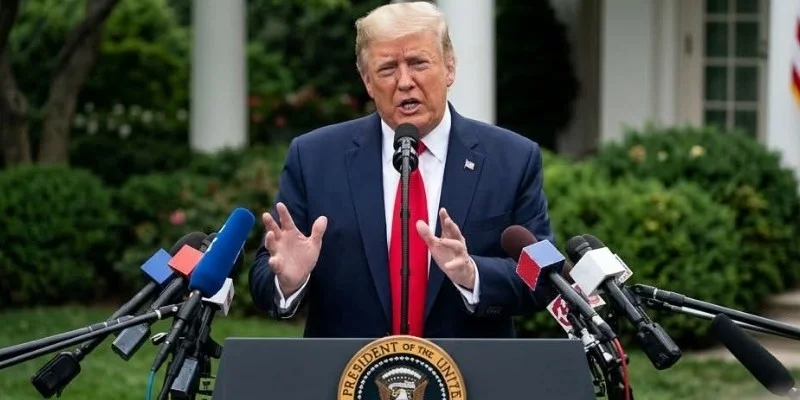
US President Trump Rules Out Attack on Iran Before Midterm Elections as Tehran Talks Continue
U.S. President Donald Trump has ruled out an attack on Iran before the November 3 midterm elections, saying Washington and Tehran are engaged in “constructive negotiations” while the U.S. blockade remains in place. Meanwhile, rising tensions around the Strait of Hormuz have pushed Brent crude above $104 a barrel, as Russian President Vladimir Putin pledges to help end the war.
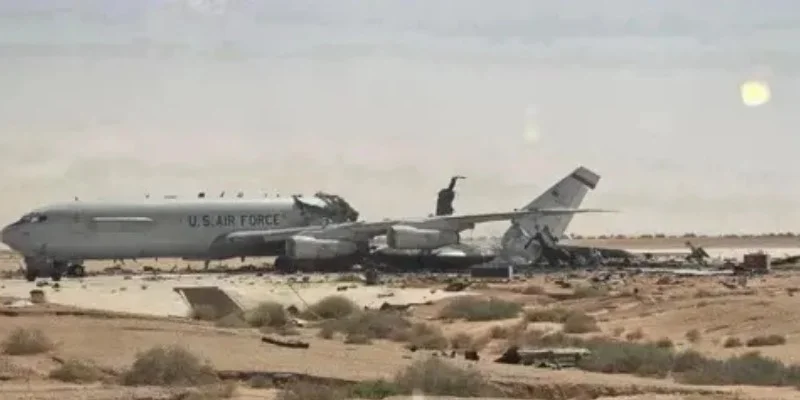
US Has Lost or Damaged 81 Military Aircraft in Iran War, With Costs Reaching $3.3 Billion
A new congressional report says at least 81 US military aircraft and drones were destroyed or damaged during Operation Epic Fury against Iran, with estimated replacement costs of $1.9 billion to $3.3 billion. Separately, the Congressional Budget Office estimated the war had cost approximately $38 billion by August 1, with monthly expenses potentially reaching $2 billion to $3 billion.

Three Killed in Houthi Attack on Riyadh Airport, Including Saudi Pilot
Three Saudi nationals, including Saudia Airlines pilot Captain Hamoud bin Ali Al-Kalthami, were killed in attacks on Riyadh’s King Khalid International Airport and an aircraft belonging to the national carrier. Several people of different nationalities were injured. Yemen’s Iran-backed Houthi rebels claimed responsibility for a ballistic missile attack on the airport, while the Saudi-led coalition said it had destroyed three Houthi rocket-launching platforms.

Nine Syrian Sailors Missing After Drone Strike Sinks Cargo Ship Off Bulgaria
Nine Syrian sailors and one Egyptian crew member remain missing after the Togo-flagged cargo ship Alfa Watan sank following a drone attack in Bulgaria’s exclusive economic zone in the Black Sea. Bulgarian authorities found no survivors and suspended the search, prompting Syria to demand an independent investigation into the incident and the decision to halt rescue operations.