
Pakistan, Türkiye Activate Makkah Defence Pact as Saudi Arabia Battles Iran-Backed Houthis
· 31 views
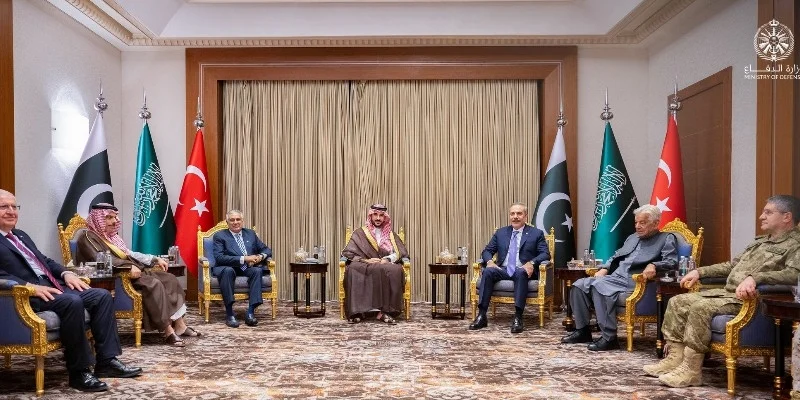
RIYADH (Terror Monitor) — Saudi Arabia, Pakistan and Türkiye have moved to implement the collective defence commitments of their newly established Makkah Defence Alliance, agreeing to provide agreed military forces and capabilities and ensure their rapid deployment to Saudi Arabia amid escalating attacks and a major Saudi-backed offensive against Iran-backed Houthis in Yemen.
The decision was taken at an emergency meeting of the Strategic-Political and Defence Committee of the Makkah Alliance in Riyadh on Monday, October 5. The meeting brought together senior political and military officials from the three countries to discuss security threats facing Saudi Arabia and the wider regional escalation.
The joint statement did not specify how many troops would be deployed or identify the military equipment and capabilities to be provided. It said the measures would be implemented under approved arrangements and in accordance with the national laws of the three member states.
The three countries condemned attempts to target the holy cities of Makkah and Madinah, as well as continuing attacks on Saudi cities and civilian and economic infrastructure. The joint statement itself did not name the Houthis, although Saudi Arabia separately accused the Iran-backed Houthi militia of carrying out attacks against the Kingdom, including attacks targeting Saudi cities, economic facilities and the two holy cities.
Collective Defence Commitment
The Makkah Joint Defence Agreement was signed on August 7 by Saudi Arabia, Pakistan and Türkiye. The agreement states that an armed attack against any one of the three members will be considered an attack against all, with the pact designed to strengthen collective deterrence and defence cooperation.
The latest decision represents the first major operational step toward putting the agreement's collective-defence provisions into practice.
Saudi Defence Minister Prince Khalid bin Salman said the committee had agreed to activate collective defence measures within the alliance's framework to confront attacks and those responsible for them. He also said the three countries had reaffirmed their unity and solidarity in facing attacks against Saudi Arabia and the holy sites.
Saudi Arabia's official statement said the alliance had decided to move immediately toward the practical implementation of collective-defence commitments, including measures to provide the agreed military forces and capabilities and ensure their rapid deployment inside the Kingdom.
Pakistan and Türkiye's Role
Pakistan's Foreign Ministry said the three countries would provide the agreed military forces and defence capabilities and ensure their rapid deployment in Saudi Arabia, subject to approved arrangements and national legislation.
Pakistan already has military personnel stationed in Saudi Arabia under long-standing defence cooperation arrangements. Reuters previously reported that Pakistan had deployed troops near the Saudi-Yemeni border as tensions with the Houthis increased.
However, Pakistani Defence Minister Khawaja Asif has indicated that Pakistan and Türkiye are currently playing a supporting role rather than taking part in direct combat operations in Yemen. Pakistan's contribution includes surveillance and intelligence-gathering activities, according to the Pakistani position cited in reports.
This distinction is significant because the Makkah agreement commits the three countries to collective defence, but the latest joint statement does not state that Pakistani or Turkish forces have entered combat inside Yemen.
Reuters had reported before the Riyadh meeting that Saudi Arabia's planned offensive against the Houthis was expected to be led primarily by Yemeni forces, with Saudi air support and intelligence assistance, while Pakistan and Türkiye were expected to provide military equipment and advisers rather than direct frontline combat forces.
Saudi-Backed Offensive in Yemen
The Makkah Alliance decision comes as Saudi-backed Yemeni government forces have launched a major offensive against the Iran-backed Houthis in Yemen.
The offensive, known as Operation Fajr al-Yemen, aims to retake territory controlled by the Houthis and restore the authority of Yemen's internationally recognized government.
Saudi-backed Yemeni forces have advanced along the Red Sea coast and claimed to have retaken strategic areas around Dhubab and Bab al-Mandab, a crucial maritime chokepoint connecting the Red Sea with the Gulf of Aden. Reuters reported that Yemeni government forces staged a rapid advance around Bab al-Mandab, while other international reports said Saudi-backed forces had retaken several areas around the strategic strait.
The Saudi-led coalition has confirmed that it is providing operational support to the Yemeni government forces. Saudi authorities have said the coalition is continuing military operations to restore Yemen's state institutions and end Houthi control.
The coalition has also said that Saudi forces are supporting the offensive with a large-scale air campaign. Reports have put the number of Saudi fighter aircraft involved at around 100.
The offensive has significantly escalated the Yemen conflict after a period of relative calm and has placed the strategically important Bab al-Mandab Strait at the centre of the fighting.
Houthi Attacks on Saudi Arabia
The Houthis have responded to the Saudi-backed offensive with missile and drone attacks against targets inside Saudi Arabia.
The group claimed that it targeted King Khalid International Airport in Riyadh, an Aramco refinery in Rabigh, Abha International Airport and the Khamis Mushait military base, among other locations.
There was initially no Saudi confirmation of several of the Houthi claims. Reuters reported that the Houthis claimed multiple operations against Saudi targets, including the Riyadh airport, the Rabigh Aramco refinery, Abha airport and Khamis Mushait, but that Saudi authorities had not immediately confirmed those specific claims.
Separately, Saudi authorities confirmed that airports in Jazan and Najran had been struck during the renewed fighting, with three people wounded. The attacks came amid the wider escalation involving Houthi missile and drone operations against Saudi territory.
Saudi Arabia has accused the Houthis of repeatedly targeting civilian and economic infrastructure as well as Saudi cities and vessels operating in the southern Red Sea and Bab al-Mandab.
Strategic Importance of Bab al-Mandab
The renewed fighting has international significance because Bab al-Mandab is one of the world's most important maritime chokepoints.
The strait connects the Red Sea with the Gulf of Aden and provides a key route for commercial shipping between Europe, the Middle East and Asia. Any prolonged disruption could affect global trade, energy shipments and insurance costs.
The Saudi-led coalition has said that Houthi activity around the Red Sea and Bab al-Mandab poses a threat to freedom of navigation and international trade.
The escalation also comes against the backdrop of broader regional tensions involving Iran and the United States, increasing concerns that the Yemen conflict could develop into a wider regional confrontation.
Alliance's First Major Test
The activation of the Makkah Defence Alliance represents a major test for the trilateral security arrangement only two months after it was signed.
The alliance also took an important institutional step by appointing retired Pakistani Lieutenant General Nauman Mahmood as its first secretary-general for a three-year term, with the move intended to strengthen the alliance's organizational structure and coordination.
The three governments have emphasized that their collective security commitments are intended to strengthen deterrence and protect their sovereignty and territorial integrity.
For Pakistan and Türkiye, however, the immediate challenge will be balancing their commitments under the Makkah pact with the need to avoid being drawn directly into the expanding war in Yemen. Pakistan has also been involved in diplomatic efforts concerning the conflict, including discussions with Iran over possible political engagement with the Houthis. Reuters reported that Iran had suggested political engagement with the group, an issue that Pakistan had said could be discussed by the Makkah pact members.
With fighting intensifying around Bab al-Mandab and Houthi attacks reaching Saudi cities and infrastructure, the Makkah Defence Alliance now faces its first major security crisis and its most significant test of collective defence since its creation.
Related Articles
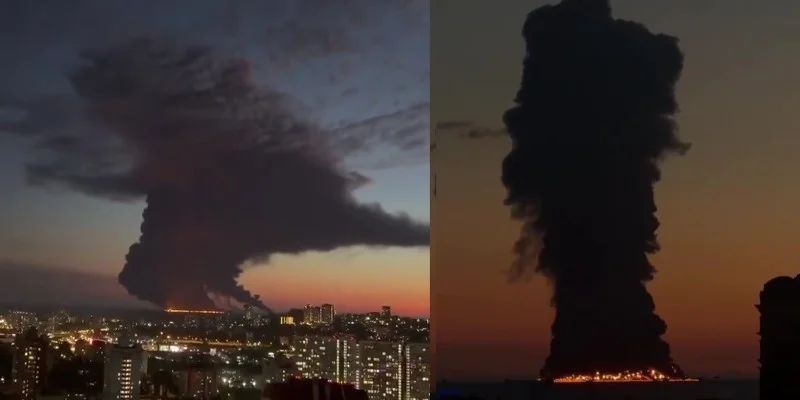
Russia Claims Nearly 900 Ukrainian Drones Downed as Moscow Region Hit in Major Attack
Russia says its air defenses shot down nearly 900 Ukrainian drones in a massive overnight assault, including hundreds targeting Moscow and its surrounding region. Two people were killed and nine injured, while a major fuel facility was reportedly hit and a bridge over the Dnipro River in Zaporizhzhia was also struck as both sides intensify long-range attacks.
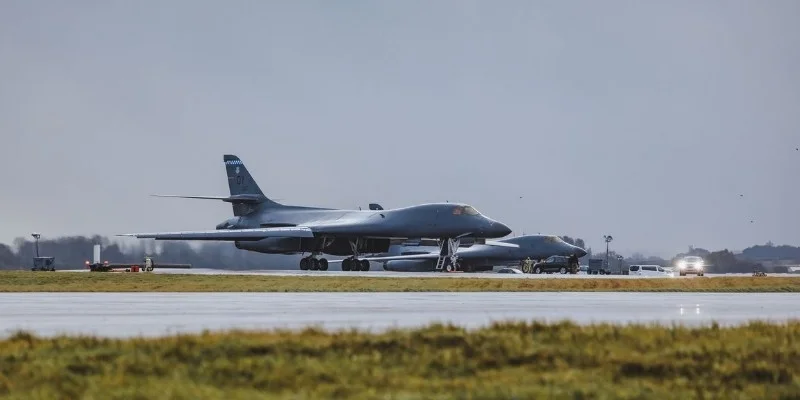
U.S. Moves All Bomber Aircraft From RAF Fairford Back to Permanent Bases
The United States has moved all of its bomber aircraft from RAF Fairford in Britain back to their permanent bases in the U.S., a U.S. official confirmed. The move follows a security incident near the airbase that led to the arrest of six people on terrorism-related suspicions, although authorities have not publicly linked the aircraft withdrawal to the incident.
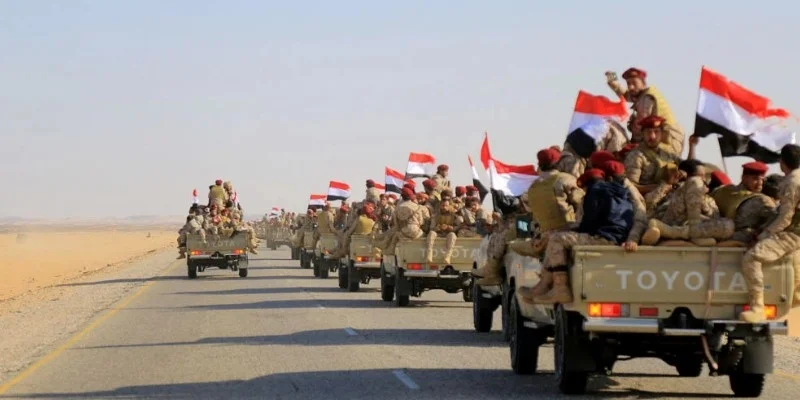
Yemen Launches ‘Fajr al-Yemen’ Operation as Forces Seize Control of Bab al-Mandab
Yemen’s internationally recognized government has launched the “Fajr al-Yemen” operation against Iran-backed Houthis, with government forces claiming control of Bab al-Mandab and Dhubab airfield and advancing toward Houthi-held Sanaa. Officials say thousands of Houthis have been detained, while 1,122 attacks have targeted Houthi positions. The reported casualties and circulating battlefield videos have not been independently verified.
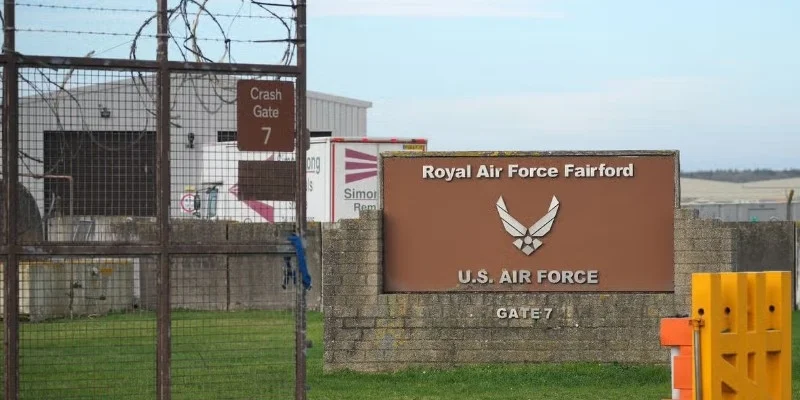
US Withdraws All Bombers from RAF Fairford After Suspected Terror Plot Targeting UK Air Base
All U.S. bombers have withdrawn from RAF Fairford in England and returned to their home bases in the United States following a suspected terror plot targeting the military installation, according to U.S. officials and media reports. British counterterrorism police have arrested six suspects, while investigators examine possible foreign-state involvement, including alleged links to Iran, which has denied responsibility.