
Russian Sabotage Operations Across Europe Rise 16%, Report Warns
· 67 views
London (Terror Monitor) — Russian-linked sabotage operations across Europe have increased significantly over the past year, with attacks increasingly targeting military-industrial facilities, transport networks and other critical infrastructure used to support Ukraine, according to a new report by the International Institute for Strategic Studies (IISS).
The London-based international think tank said sabotage incidents increased by 16 percent in the 12 months to September 2026, despite European authorities stepping up efforts to identify suspects, disrupt operations and arrest individuals allegedly working for Russian intelligence networks.
In its report, titled Russia’s Unconventional War on Europe: Sabotage, Deterrence and Future Scenarios, published on November 26, the IISS warned that Moscow's intelligence services continue to pose a persistent security threat to European countries supporting Kyiv.
The report found that although many sabotage operations are still carried out by relatively untrained recruits, Russian intelligence networks are increasingly relying on a more capable category of semi-skilled operatives.
These individuals have demonstrated the ability to use more sophisticated methods, including improvised explosive devices (IEDs), timed detonators, remote-controlled detonation systems and other complex techniques.
The think tank said the increasing use of arson and explosives indicates that the operational capabilities of some Russian-linked networks have improved.
According to the report, incidents involving arson and explosives have risen substantially, with the use of both methods roughly doubling over the reporting period.
The IISS warned that arresting individuals recruited to carry out sabotage operations may disrupt individual attacks but is unlikely to deter the Russian intelligence services believed to be coordinating and directing the wider campaign.
"Arrests remove proxies but are highly unlikely to deter the RIS (Russian intelligence services) that direct them," the report said.
Germany and Poland remain primary targets
The report identified Germany and Poland as the European countries most likely to remain major targets of Russian-linked sabotage operations because of their strategic importance to Ukraine's military supply chains.
Both countries play a central role in transporting military equipment, logistical supplies and other assistance to Ukrainian forces.
According to IISS data, Germany accounted for approximately 20 percent of recorded activity, while Poland represented 17 percent. The Baltic states accounted for another 12 percent.
The report said more than half of the incidents recorded between October 2025 and September 2026 involved attacks against critical infrastructure.
The military-industrial sector accounted for 28 percent of the recorded incidents, followed by transport infrastructure at 22 percent and energy facilities at seven percent.
The findings suggest that Russian-linked operations are increasingly focused on disrupting the industrial and logistical networks that enable European countries to sustain military assistance to Ukraine.
The report also identified several periods of increased activity, including a wave of incidents targeting Germany during the winter of 2024–25 and a subsequent concentration of operations against Polish transport and logistics infrastructure in late 2025.
Western governments accuse Moscow of hybrid warfare
Western governments and intelligence agencies have repeatedly accused Russia of conducting a broader campaign of sabotage, espionage, cyber operations and drone-related activities across Europe since its full-scale invasion of Ukraine in February 2022.
The alleged campaign is intended to weaken Western support for Kyiv, disrupt military deliveries, damage critical infrastructure and increase the economic and political costs of supporting Ukraine.
Moscow has repeatedly rejected accusations that Russian intelligence services are behind sabotage operations in European countries.
The IISS said the campaign has so far failed to achieve its broader strategic objective of substantially reducing European military assistance to Ukraine.
However, it warned that the possibility of a serious incident involving mass casualties cannot be ruled out as the capabilities of some operatives increase and the risk of miscalculation grows.
Britain warns defence companies supporting Ukraine
The latest IISS assessment comes as British security authorities have also warned companies involved in supporting Ukraine's military that they could face an increased risk of Russian-backed sabotage.
According to the Associated Press (AP), Britain's National Protective Security Authority, which operates within the country's domestic security framework, and the Ministry of Defence have issued warnings to companies providing material assistance to Ukrainian armed forces.
British officials have been privately briefing executives from defence and critical infrastructure companies about the growing threat.
The warning identifies arson, intimidation, espionage and information operations among the methods allegedly being used to undermine companies and individuals involved in supporting Ukraine.
Companies have been advised to strengthen security at their facilities, reduce unnecessary exposure of sensitive information online, identify locations that could be used for hostile surveillance and train employees to recognise suspicious activity.
The AP reported that the warning followed a series of attacks and disrupted plots across Europe.
Estonian authorities have linked an August 2026 arson attack on a defence company supplying military vehicles to Ukraine to Russian security services.
Britain has also previously blamed Russia for a 2024 plot to set fire to a London warehouse containing supplies intended for Ukraine. In September 2026, a British man was charged over an alleged plot involving Russian intelligence operatives to sabotage a drone factory in England.
Authorities in Poland, Romania and other NATO member states have also reported disrupting suspected Russian-backed sabotage operations.
The AP said it had tracked more than 210 incidents across Europe involving sabotage and other hostile activities that Western officials have linked to Russia since the beginning of the full-scale invasion of Ukraine.
Leipzig airport incident raises further concerns
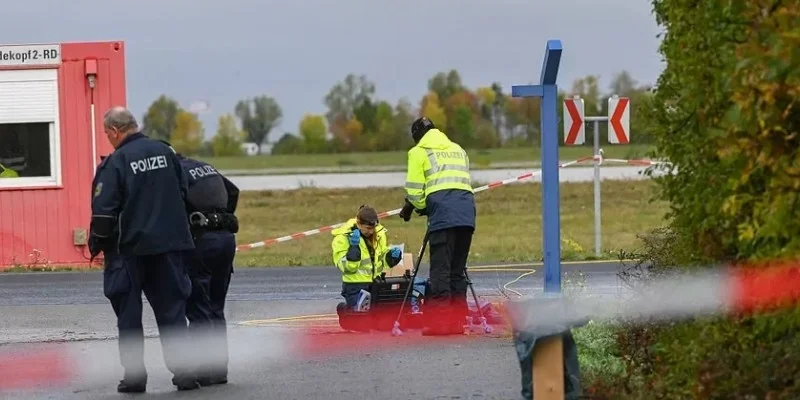
Reuters also reported that the IISS assessment comes amid concerns over suspicious drone activity around Leipzig airport in Germany, an important logistics hub for NATO and Ukraine.
In August 2026, a drone carrying explosives was reportedly discovered near a Ukrainian Antonov cargo aircraft at the airport. Investigators have also examined suspicions that another drone struck a DHL aircraft after airport operations were suspended.
The incidents have intensified concerns about the vulnerability of European transport infrastructure and military supply routes to sabotage and other forms of hybrid warfare.
Moscow rejects British accusations
Russia has denied allegations that it is planning attacks or sabotage operations against Britain.
The Russian Embassy in London has said Moscow has no plans to attack the United Kingdom or conduct sabotage activities on British territory.
However, British intelligence officials have warned that Russia's use of covert operations, proxies and other forms of hybrid warfare represents an increasingly serious security challenge.
The IISS said European governments face a difficult task in countering the threat because operations are often conducted through intermediaries, making it difficult to establish responsibility before an attack takes place.
The report concluded that while arrests, intelligence cooperation and improved security measures have helped disrupt individual operations, European countries need a more coordinated response to deter the intelligence networks believed to be directing the campaign.
Related Articles

Saudi-Led Coalition Urges Evacuation of Yemen’s Ras Isa Port Amid Escalating Tensions
The Saudi-led military coalition has urged civilians to evacuate Yemen’s Houthi-controlled Ras Isa port on the Red Sea, citing safety concerns amid escalating military tensions. The warning was followed by a Houthi threat to target Jeddah and all other Saudi ports along the Red Sea coast. The developments came as the coalition announced a military response to Houthi attacks, raising concerns over further disruption to regional maritime traffic.

Pakistan, Saudi Arabia and Türkiye Reaffirm Collective Defence Commitment, but Key Military Arrangements Remain Unclear
Pakistan, Saudi Arabia and Türkiye have reaffirmed their commitment to collective defence under the Makkah Joint Defence Agreement during a high-level meeting in Islamabad. However, the three countries have yet to publicly define the alliance’s military response procedures, force deployment arrangements and joint command structure, as officials and defence experts continue consultations on implementing the pact.

Saudi Arabia Intercepts Cruise Missile Targeting Riyadh as Houthis Report Airstrikes on Sanaa
Saudi Arabia says its air defences intercepted a Houthi cruise missile targeting Riyadh, while the Iran-backed group reports Saudi airstrikes on Sanaa that allegedly wounded 13 people. The latest exchange comes amid escalating cross-border attacks on Saudi cities, airports and energy infrastructure.
Israeli Strike Kills Two Doctors Without Borders Staff at Gaza Clinic; MSF Demands Accountability
An Israeli drone strike on an MSF clinic in Gaza City killed two unarmed staff members working as watchmen, according to the humanitarian organization. MSF said the facility was clearly marked and its location had been shared with the Israeli military, while Israel alleged the men were Hamas members posing as humanitarian workers.