
Pakistan, Saudi Arabia and Türkiye Reaffirm Collective Defence Commitment, but Key Military Arrangements Remain Unclear
· 52 views
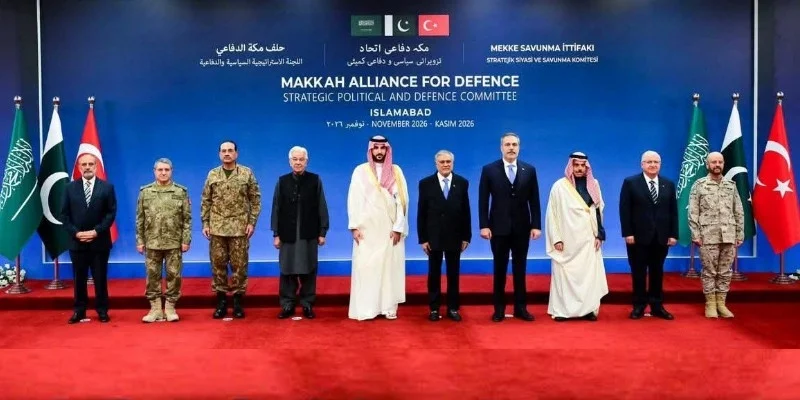
Islamabad (Terror Monitor) —Pakistan, Saudi Arabia and Türkiye have reaffirmed their commitment to collective defence under the Makkah Joint Defence Agreement, but key operational arrangements, including military response procedures, troop deployments and the establishment of a joint command structure, remain to be fully defined.
The issue was discussed during the second meeting of the Strategic Political and Defence Committee (S-PDC) of the Makkah Alliance for Defence, held in Islamabad on November 27, 2026.
The meeting brought together senior political, defence and military officials from the three countries to review regional security developments and assess progress in implementing the trilateral agreement.
In a joint statement issued after the meeting, the three governments reiterated their commitment to collective defence, mutual solidarity, and respect for each other's sovereignty and territorial integrity.
They also condemned continued attacks by Iran-backed Houthi rebels targeting civilians and civilian infrastructure in Saudi Arabia and reaffirmed their determination to support the kingdom in safeguarding its security under the agreement.
The three countries further agreed to strengthen cooperation in defence industries, joint technological development, military training and capacity-building to improve the collective capabilities and interoperability of their armed forces.
However, the joint statement did not announce a final agreement on how the three countries would respond militarily if one of them came under attack, how forces would be deployed, or whether a permanent joint military command structure would be established.
Instead, the committee reviewed progress in implementing collective defence commitments and agreed to continue political and military consultations in accordance with the national laws of the participating countries.
Operational framework remains a key challenge
Military and diplomatic experts say the Islamabad meeting was primarily aimed at developing a clearer understanding of the alliance's collective defence obligations and determining how the three countries could contribute their respective military capabilities.
Retired Lieutenant General Naeem Khalid Lodhi said the initial phase of cooperation could involve intelligence-sharing among the three countries.
However, he cautioned that it would not be possible to finalise all operational arrangements through one or two meetings.
"All the operational mechanisms of the agreement cannot be settled in one or two meetings. Progress in this regard will take time," Lodhi said.
The agreement provides for intelligence-sharing through mutually agreed secure channels, subject to information security, data protection and confidentiality requirements.
It also provides for logistical assistance, including weapons, ammunition, fuel, spare parts and other military equipment, depending on availability and compatibility.
Nevertheless, experts say detailed arrangements will be needed to determine how these provisions would operate during an actual security crisis.
Saudi Arabia's security and the changing regional environment
The agreement has gained importance amid growing regional tensions, particularly following the escalation of the conflict involving the United States, Israel and Iran.
The security situation has also raised questions about the extent to which Gulf countries can rely on external security guarantees and how regional powers can develop their own defence arrangements.
Former Pakistani ambassador Aizaz Chaudhry said Arab countries were increasingly recognising that the United States could not necessarily provide them with permanent and sustainable security guarantees.
However, he said the central question for the Makkah alliance was what each member country could realistically offer its partners.
According to Chaudhry, Pakistan could not automatically be expected to fight a war on Saudi Arabia's behalf simply because Riyadh requested military assistance.
Similarly, Saudi Arabia could not be expected to provide Pakistan with unconditional financial support whenever Islamabad needed it.
He said the nature and extent of assistance would depend on the circumstances, making the development of a clear operational framework a particularly sensitive issue.
The agreement itself provides for assistance following an external armed attack on any member, while allowing the participating countries to assess the required support objectively and determine its nature and scope, including the use of available military capabilities.
Military capabilities and joint defence planning
Beyond determining how one country would assist another during a crisis, the three partners will also need to coordinate their defence strategies, military capabilities and operational planning.
Defence analyst Dr Maria Sultan said the Islamabad meeting was significant in the context of changing regional conflicts and competition among global powers.
She said the three countries would need to conduct a joint assessment of emerging security threats and determine how their respective defence capabilities could be utilised collectively.
According to Sultan, this would require coordination not only in military deployments and operational planning but also in defence production, supply chains and logistical arrangements.
Retired Lieutenant General Naeem Khalid Lodhi also highlighted differences in the military resources and capabilities available to the three countries.
He said it would be necessary to determine how these resources could be used collectively, adding that joint military training and decisions about which capabilities each country could make available to its partners would be important components of the process.
He said these arrangements would require further consultations and would gradually take shape.
Lodhi said discussions had begun on defining the nature and limits of cooperation under the agreement, but the process was not yet complete.
He added that agreements of this nature required time to develop into effective operational arrangements, and that the responsibilities and contributions of each partner would become clearer through continued consultations.
What the agreement actually provides
The Makkah Joint Defence Agreement was signed in the Saudi holy city of Makkah on August 7, 2026, by Pakistani Prime Minister Shehbaz Sharif, Saudi Crown Prince Mohammed bin Salman and Turkish President Recep Tayyip Erdogan.
Under Article 2, an external armed attack against any one of the three countries is to be considered an attack against all parties.
The agreement requires the other members to provide immediate assistance to the country under attack, using the mutual assistance capabilities available to them.
It also states that the nature and scope of assistance, including the use of military capabilities, would be determined following an objective assessment of the assistance required.
The agreement further provides for regular consultations on international security matters, joint assessments of potential threats, intelligence cooperation, military training, personnel exchanges and joint exercises.
Its provisions also cover defence industrial cooperation, technology-sharing, joint research and development, and the production of military equipment.
Article 10 specifically provides for logistical assistance between the parties, including weapons, ammunition, fuel, spare parts and other equipment, subject to availability and compatibility.
However, the agreement does not publicly establish a detailed permanent joint operational command or specify the exact military response that would automatically follow an attack on a member state.
Its implementation is also subject to international law and the domestic legal requirements of the participating countries.
Saudi-based secretariat and Pakistan's role
The Islamabad meeting also welcomed progress towards establishing and operationalising the alliance's permanent secretariat in Saudi Arabia.
Retired Pakistani Lieutenant General Nauman Mahmood has been appointed as the alliance's first secretary-general for an initial three-year term.
The appointment gives Pakistan an important institutional role in the development of the alliance, with the secretariat expected to coordinate its activities and support consultations among member countries.
Under Article 8 of the agreement, the Strategic Political and Defence Committee comprises the foreign ministers, defence ministers and chiefs of the armed forces of the three countries.
The committee is mandated to provide strategic direction to the alliance, strengthen defence and security cooperation, and address obstacles that may arise during the implementation of the agreement.
It is also authorised to establish subcommittees and negotiate additional arrangements or protocols when required.
Türkiye completes ratification of the agreement
Türkiye's formal approval of the agreement was another significant development ahead of the Islamabad meeting.
The Turkish parliament approved the agreement on November 5 by 279 votes to 119, following a debate over its scope, oversight and potential military implications.
President Recep Tayyip Erdogan formally approved the ratification on November 26, with the decision published in Türkiye's Official Gazette on November 27, completing the country's domestic ratification process.
During parliamentary deliberations, some opposition lawmakers raised concerns about the possibility of the agreement drawing Türkiye into regional conflicts and the circumstances under which Turkish military personnel could be deployed abroad.
Turkish officials have maintained that the agreement is defensive in nature and is not intended to target any third country.
According to reporting by The Associated Press, Turkish officials have also indicated that Ankara is considering military assistance to Saudi Arabia but does not intend to deploy Turkish troops to Yemen to fight the Houthis.
Pakistan has similarly described the agreement as defensive and not directed against any country, including Iran.
A series of meetings to operationalise the alliance
The Islamabad meeting was the second formal meeting of the Strategic Political and Defence Committee since the agreement was signed.
The committee's inaugural meeting took place in Istanbul on August 31, 2026.
A subsequent emergency meeting was held in Riyadh on October 5, during which the three countries discussed accelerating the practical implementation of their collective defence commitments, including arrangements for the rapid deployment of agreed military forces and capabilities to Saudi Arabia.
The meetings also focused on institutionalising the alliance and establishing its permanent secretariat.
According to The Associated Press, the agreement provides for the rapid deployment of mutually agreed military forces and capabilities, while the deployment arrangements remain subject to the participating countries' national legal requirements.
The pact is designed to strengthen strategic and military cooperation among three countries with significant but different defence capabilities: Türkiye, a major NATO military power; Saudi Arabia, a key Gulf state and major oil exporter; and Pakistan, the only nuclear-armed country among the three.
The agreement also provides for withdrawal by any member after the first ten years, subject to at least three months' advance written notification through diplomatic channels.
A strategic partnership beyond military cooperation
Analysts say the significance of the Makkah agreement extends beyond conventional military cooperation.
The three countries bring different strategic interests, military resources, defence industries and regional relationships to the alliance.
Pakistan has extensive military experience and nuclear capabilities, Türkiye has an increasingly developed defence industry and advanced military technology, while Saudi Arabia has substantial financial resources and strategic importance in the Gulf.
Combining these capabilities could provide the three countries with a stronger framework for regional security cooperation.
However, differences in their foreign policies, national security priorities and relationships with other international powers could complicate the development of a unified defence strategy.
For now, the Islamabad meeting has reaffirmed the political commitment to collective defence without publicly resolving all the practical questions surrounding its implementation.
Further consultations will be required to establish how the alliance would function during an actual military crisis, what assistance each member would be expected to provide, and how decisions on military deployments and joint operations would be coordinated.
Related Articles
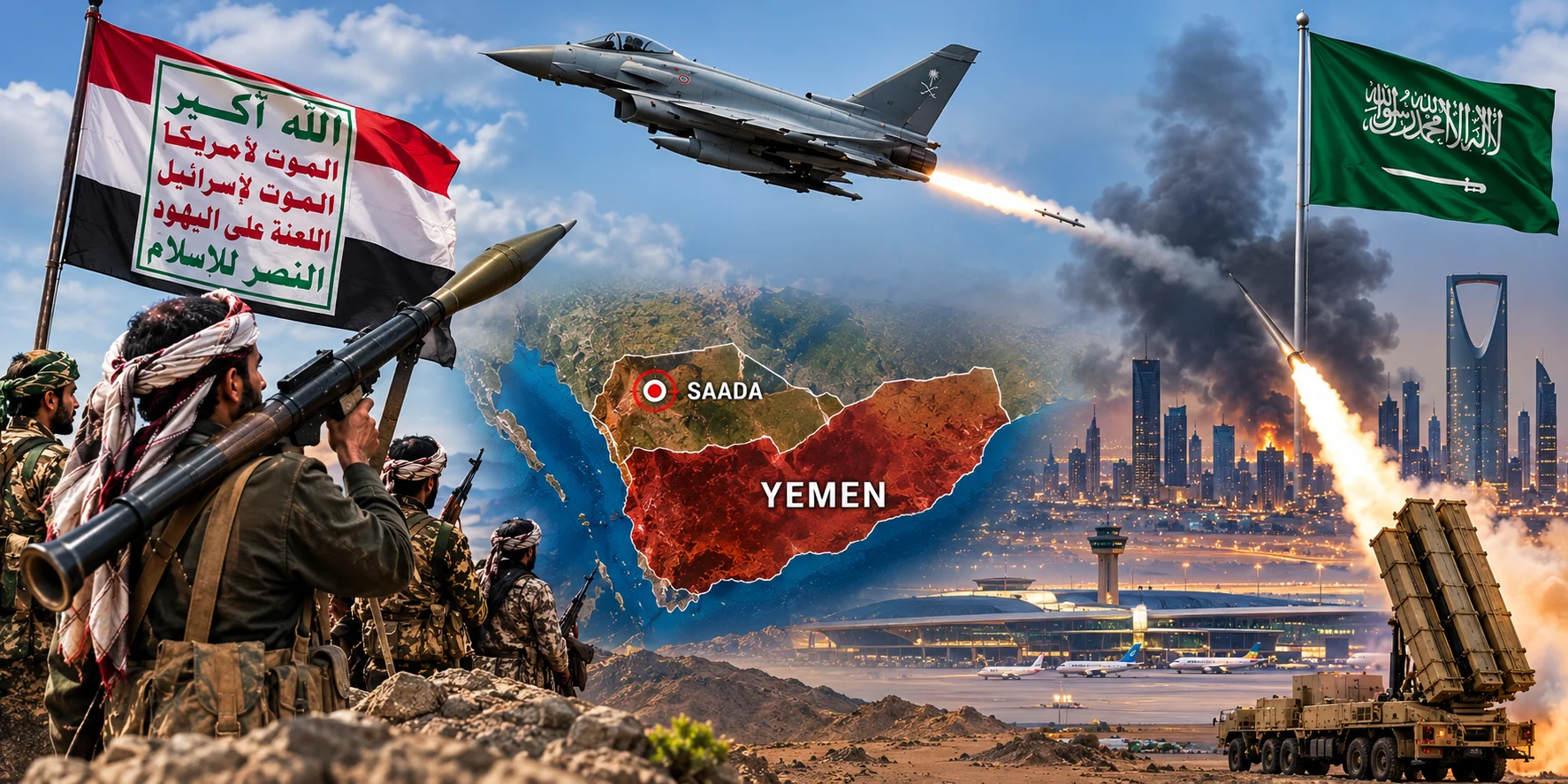
Saudi Arabia Intercepts Cruise Missile Targeting Riyadh as Houthis Report Airstrikes on Sanaa
Saudi Arabia says its air defences intercepted a Houthi cruise missile targeting Riyadh, while the Iran-backed group reports Saudi airstrikes on Sanaa that allegedly wounded 13 people. The latest exchange comes amid escalating cross-border attacks on Saudi cities, airports and energy infrastructure.
Israeli Strike Kills Two Doctors Without Borders Staff at Gaza Clinic; MSF Demands Accountability
An Israeli drone strike on an MSF clinic in Gaza City killed two unarmed staff members working as watchmen, according to the humanitarian organization. MSF said the facility was clearly marked and its location had been shared with the Israeli military, while Israel alleged the men were Hamas members posing as humanitarian workers.
Saudi Coalition Intercepts Houthi Cruise Missile Targeting Riyadh as Yemen Conflict Escalates
Saudi Arabia’s military coalition says it intercepted a Houthi cruise missile heading toward Riyadh, as renewed hostilities between the two sides intensify. The latest escalation follows a Houthi attack on the Jazan oil refinery that killed a worker and injured several others, while Houthi-affiliated media have reported 11 deaths in alleged Saudi airstrikes in Yemen, including children.
CENTCOM Says Iran ‘No Longer Has a Navy,’ Rejects Iranian Commander’s Claims About U.S. Carrier and Strait of Hormuz
The U.S. Central Command has dismissed a series of claims by Iranian Navy Commander Rear Admiral Shahram Irani as false, insisting that Iran no longer has a functioning navy and that the USS Abraham Lincoln aircraft carrier was never struck by Iranian forces. The exchange comes as Washington and Tehran continue to challenge each other’s control over the strategically vital Strait of Hormuz amid an ongoing naval blockade.