
Trump Announces ‘Task Force Iron Gate’ to Block Iran’s Land Supply Routes as Explosions Reported Across Southern Iran
· 37 views
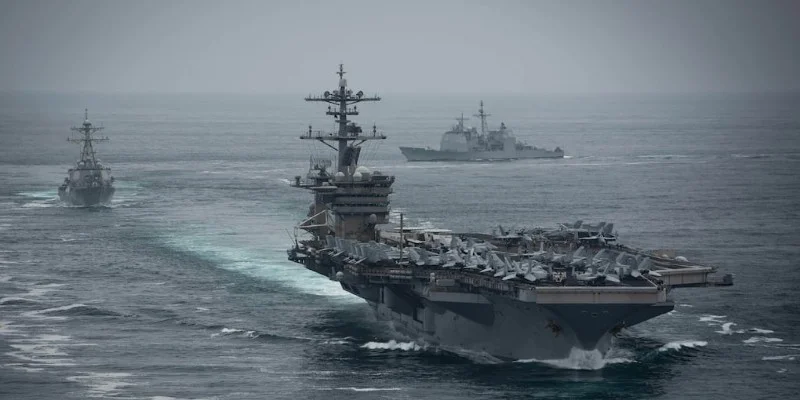
Washington, D۔C. /Tehran (Terror Monitor) — US President Donald Trump has announced that a new American military initiative, known as Task Force Iron Gate, is fully operational against Iran, extending Washington's existing naval blockade to the country's land borders and the Caspian Sea in an effort to prevent Tehran from obtaining weapons, sanctioned materials and other supplies.
Trump said the United States had already imposed a highly effective naval blockade on Iran and that the new initiative would further restrict the movement of goods into the country through alternative routes.
"Task Force Iron Gate is in full force and effect in the Islamic Republic of Iran," Trump wrote on his Truth Social platform on Sunday. He added that, combined with what he described as the strongest naval blockade in history, very little could enter or leave Iran.
Speaking to reporters, Trump said the new restrictions meant that nothing could enter Iran through land routes, while the existing naval blockade was preventing supplies from arriving by sea.
"The blockade has been very effective," he said.
Trump further claimed that Iran had been left without sufficient financial resources, that inflation had reached 300 per cent and that the government was struggling to pay its personnel. These economic claims have not been independently verified.
The US president argued that Tehran would eventually adopt what he described as a reasonable position and agree to negotiations.
He also expressed reluctance to destroy Iran's remaining infrastructure, including bridges and power plants, warning that such attacks would impose a long-term reconstruction burden on the Iranian population.
"If we destroy their facilities, bridges and power plants, the people will have to bear the cost of rebuilding them, and I don't like that," Trump said.
He added that the United States had identified potential infrastructure targets but suggested that he would prefer a diplomatic settlement rather than further destruction.
Pentagon establishes 20-member Task Force Iron Gate
The announcement follows an order issued on Saturday by US Central Command (CENTCOM) Commander Admiral Brad Cooper to establish Task Force Iron Gate.
According to CENTCOM, the new unit will consist of approximately 20 military and civilian personnel and will be headquartered at the command's headquarters in Tampa, Florida.
The task force will coordinate with other US government agencies to prevent the movement of advanced weapons systems, dual-use technologies, sanctioned materials and what Washington describes as illicit financial flows across Iran's land borders and the Caspian Sea.
The initiative is designed to close potential supply routes that could allow Iran to replenish its military capabilities despite restrictions imposed on maritime trade.
Iran shares land borders with Afghanistan, Armenia, Azerbaijan, Iraq, Pakistan, Turkey and Turkmenistan, while the Caspian Sea provides another potential route for commercial and military-related shipments.
CENTCOM said the new initiative would strengthen the existing naval blockade and further restrict Tehran's ability to finance military activities, rebuild weapons factories and replenish its armed forces.
The task force will work through coordination between US military authorities and other government agencies rather than operating as a conventional combat unit stationed along Iran's borders.
Explosions reported across southern Iran
Meanwhile, explosions were reported in several locations across southern Iran, including Qeshm Island, Bandar Abbas, Sirik, Jask and other areas of Hormozgan Province, raising concerns about a renewed escalation of military activity around the strategically important Strait of Hormuz.
Iranian media reported hearing explosions on Saturday evening, while residents also reported blast sounds in parts of Khuzestan Province, including Susangerd.
The circumstances surrounding several of the reported explosions remained unclear, with Iranian media offering differing accounts of their possible causes.
Iran's semi-official Tasnim News Agency reported that two missiles had struck Qeshm Island, although it did not provide confirmed information about casualties or the extent of the damage.
Tasnim subsequently reported that Qeshm had been targeted but denied reports of additional US strikes in Bandar Abbas and Sirik.
Iranian state television, meanwhile, said authorities had not confirmed missile attacks on the reported locations and suggested that some of the explosions could have been connected to Iranian military activities in the Strait of Hormuz.
The reports also included suspected military launches near Haftkel and Sirik, although these accounts have not been independently verified.
Trump confirms limited US strikes on Qeshm Island
The latest reports of explosions follow Trump's confirmation that American forces had carried out limited strikes against an Iranian air defence installation.
Speaking to reporters in Florida on Friday, Trump said US forces had destroyed what he described as a newly established Iranian anti-aircraft system.
"They built a little bit of an anti-aircraft device, and we knocked it out in about 15 minutes, maybe five," he said.
Iranian state media had reported explosions in the Suza area of Qeshm Island around the same period.
The US president described the operation as limited and defensive, rather than the beginning of a renewed large-scale military campaign.
The latest developments have therefore raised questions about whether the explosions reported across southern Iran represent further military action, Iranian security operations or a combination of incidents.
Reuters reported that Iranian officials had not confirmed missile strikes following the latest explosions, while Tasnim's reporting pointed to an attack on Qeshm. The full extent of the damage remains unclear.
Khor Mor gas field hit by drone attack in Iraqi Kurdistan
In a separate development highlighting the widening regional security crisis, a drone attack targeted the Khor Mor gas field in Iraq's Kurdistan Region on Sunday, triggering a major fire and forcing the suspension of production.
Reuters reported that the attack struck an LPG storage tank at the facility in Sulaymaniyah province, according to two sources in the regional electricity ministry.
Smoke was seen rising from the site, while employees were evacuated to shelters inside the facility amid concerns about further attacks.
The Kurdistan Regional Government's natural resources and electricity ministries described the incident as a terrorist attack and said they were working to limit its impact.
Iraqi Prime Minister Ali al-Zaidi said preliminary assessments indicated that there had been no casualties.
No group had claimed responsibility for the attack, and there was no confirmed evidence establishing a connection between the incident and the explosions reported in southern Iran.
The Kurdistan Region's electricity ministry said the disruption to gas supplies had resulted in the loss of approximately 2.8 gigawatts of electricity generation capacity, affecting power supplies across the region.
The Khor Mor facility is one of the region's major natural gas production sites and plays a critical role in supplying fuel to power plants.
Strait of Hormuz tensions intensify
The latest developments have coincided with growing tensions over maritime traffic through the Strait of Hormuz, one of the world's most important energy transportation routes.
The US military said its forces had disabled a commercial vessel in the Gulf of Oman after it attempted to breach the American blockade of Iranian ports.
According to US Central Command, an American aircraft fired at the vessel's stern after its crew ignored repeated warnings to stop, leaving the ship unable to continue its journey.
Iran's Revolutionary Guard Navy, meanwhile, said two oil tankers had caught fire after striking mines while attempting to use what it described as an unauthorised route through the Strait of Hormuz. Iranian media later reported that a third tanker had also suffered an explosion and caught fire.
Reuters said it was unable to independently verify the reported strikes on the vessels.
The maritime confrontation has further disrupted commercial shipping and raised concerns about global energy supplies.
Diplomatic efforts continue despite military pressure
Despite the escalating military and economic pressure, Trump has indicated that Washington remains open to negotiations with Tehran.
In an interview with CNN on Sunday, the US president said he was highly unlikely to order fresh attacks against Iran if negotiations made sufficient progress.
He said the possibility of further military action would depend on whether Iran agreed to what he described as a strong agreement.
US Secretary of State Marco Rubio also said Washington remained open to a diplomatic solution, although he warned that a breakthrough was not imminent because of disagreements over Iran's demands.
Qatar has continued its mediation efforts between Washington and Tehran. A senior Iranian official previously told Reuters that Iran had submitted a nuclear proposal to the United States through Qatar.
Tehran's demands reportedly include sanctions relief, access to frozen Iranian assets and compensation for wartime damage, while Washington insists that Iran's nuclear programme must be addressed in any agreement.
The combination of the expanded American blockade, the establishment of Task Force Iron Gate, reported explosions in southern Iran and renewed attacks on commercial shipping has added another layer of uncertainty to an already volatile regional conflict.
Related Articles
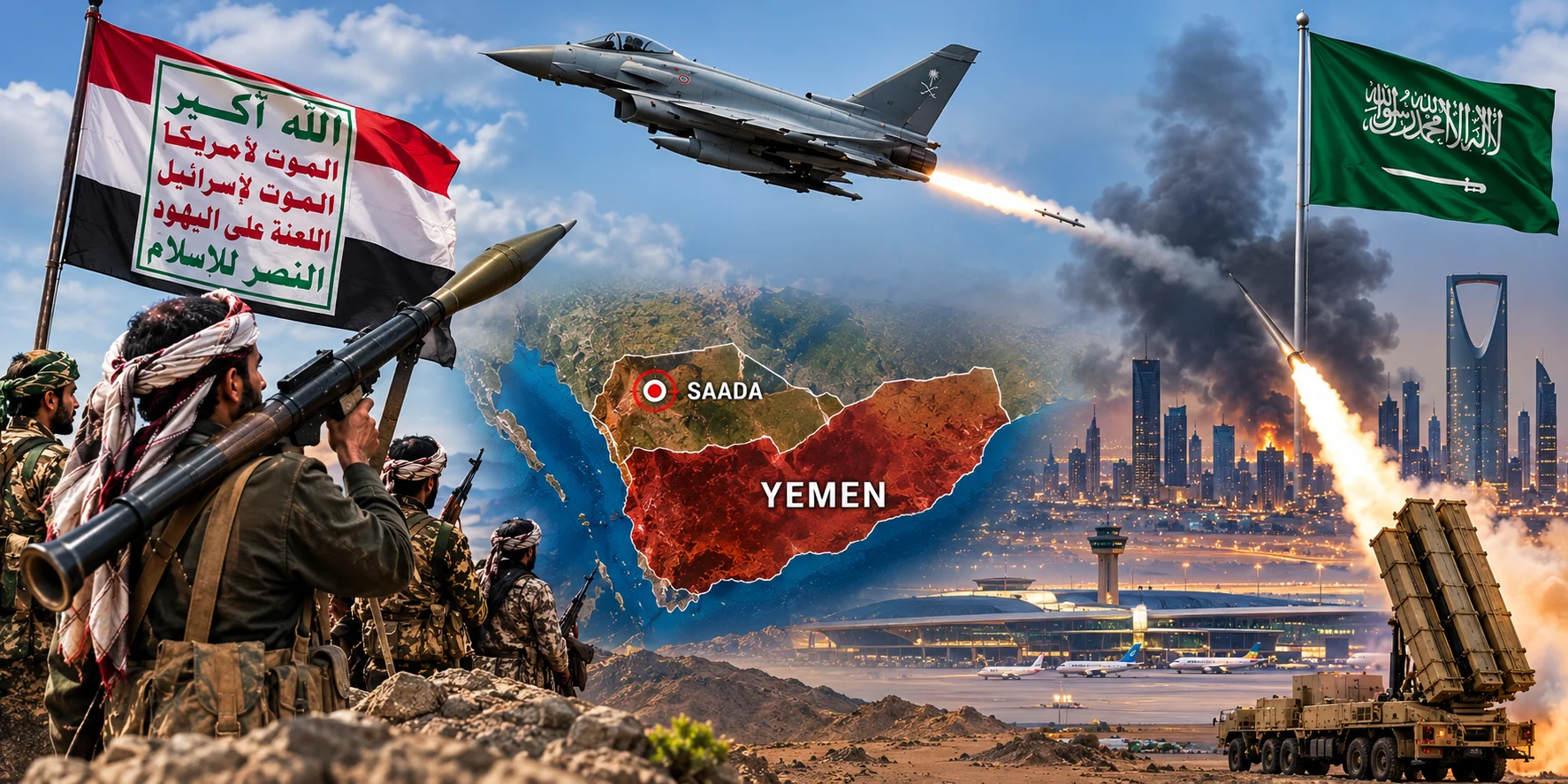
Houthis Claim 83 Killed in Saudi-Led Coalition Airstrikes Across Yemen in 24 Hours
Iran-backed Houthis claim that 83 people were killed and around 50 injured in Saudi-led coalition airstrikes across Yemen over the past 24 hours, while Saudi authorities say they are reviewing reports of civilian casualties.

“Our Mission Regarding Iran Is Not Over Yet”: Israeli Defense Minister
Israel’s Defense Minister Israel Katz has urged national unity against what he described as a renewed Iranian nuclear threat, warning that Israel’s mission against Tehran is not over, as opposition leader Gadi Eisenkot receives a mandate to form a new government following Netanyahu’s electoral setback.
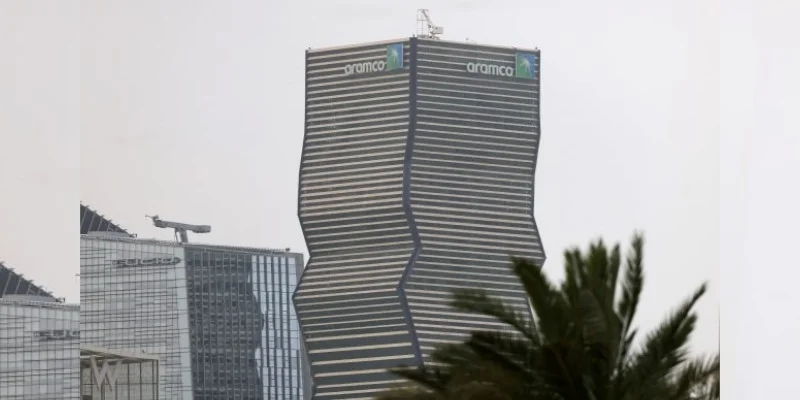
Houthis Claim Missile and Drone Attacks on Riyadh, Aramco Tower Damaged
Yemen’s Iran-backed Houthis claim four missile and drone operations targeting Riyadh, including the King Abdullah Financial District. An Aramco office tower sustained damage, while Saudi Arabia says no casualties were reported and its air defences intercepted several incoming missiles.
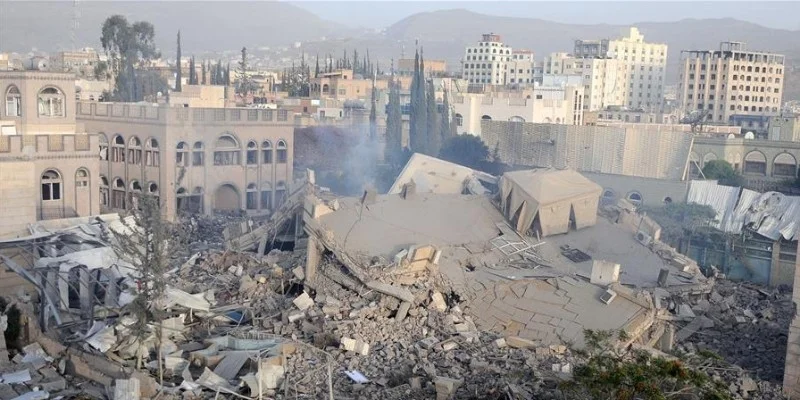
Houthis Say Saudi Airstrikes Kill 33, Injure 39 Near Yemen’s Sanaa
Houthi-run media reports that Saudi airstrikes near Yemen’s Sanaa have killed at least 33 people and wounded 39 others, mostly women and children. Saudi Arabia says it is investigating the reports.