
Trump Rules Out Nuclear Strike on Iran, Cites Russia-China Disarmament Talks
· 54 views
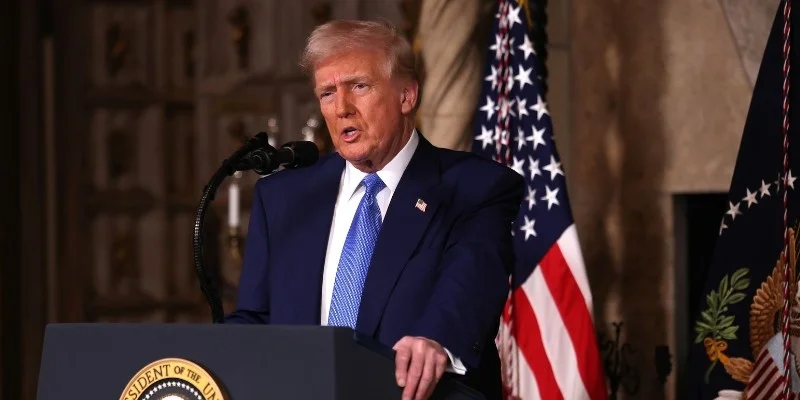
Washington, D.C. (Terror Monitor) — US President Donald Trump has ruled out using nuclear weapons against Iran and said he does not anticipate deploying American ground troops in the country, while revealing that Washington is holding discussions with Russia and China on nuclear disarmament.
In an interview with US broadcaster Newsmax, Trump said the United States did not need to use nuclear weapons against Iran, despite growing speculation over possible renewed military operations targeting Iranian nuclear facilities and energy infrastructure.
“I wouldn’t use nuclear. We don’t have to,” Trump said, adding that the United States possessed the world’s most powerful nuclear arsenal.
His remarks came after CNN reported that the US military had developed potential strike plans involving the GBU-43/B Massive Ordnance Air Blast (MOAB), widely known as the “Mother of All Bombs,” to target Iranian energy infrastructure and nuclear facilities if Trump ordered a resumption of military operations.
Trump clarified that the weapon was conventional rather than nuclear and stressed that its destructive power did not make it an atomic bomb.
“The Mother of All Bombs is not nuclear. It’s not nuclear at all. This is just an extremely large bomb,” he said.
When asked whether he was considering sending American ground troops into Iran, Trump responded that he did not foresee such a deployment.
“No, I don’t see that. I don’t see it,” he said.
However, Trump did not rule out further conventional airstrikes against Iranian targets. He specifically referred to Pickaxe Mountain, a heavily fortified site associated with Iran’s nuclear programme, suggesting that the United States might need to strike the location.
US Military Weighs Use of ‘Mother of All Bombs’
Trump’s comments followed a CNN report published this week stating that the Pentagon had developed additional military options for potential operations against Iran.
According to CNN, citing multiple US officials familiar with the planning, the proposed options include using the MOAB against Iranian energy infrastructure and nuclear facilities if the president decides to resume combat operations.
The GBU-43/B MOAB is one of the most powerful conventional bombs in the US arsenal. It uses a massive explosive payload to produce extensive blast effects but does not rely on a nuclear reaction.
Trump was the first US president to authorise the weapon’s operational use, when American forces deployed it against an Islamic State group complex in Afghanistan in April 2017.
The possibility of deploying the bomb against Iran has raised questions about its effectiveness against deeply buried nuclear facilities, particularly those protected by substantial layers of rock.
CNN reported that military planners had considered the weapon as part of a broader set of strike options. However, its inclusion in those plans does not mean Trump has authorised its use.
The president did not confirm that he had approved the deployment of the MOAB in Iran.
His comments indicate that Washington continues to consider conventional military options while publicly ruling out the use of nuclear weapons and expressing no intention of sending ground troops into the country.
Trump Says US Is Discussing Nuclear Disarmament With Russia and China
In the same Newsmax interview, Trump revealed that the United States was discussing nuclear disarmament with Russia and China, the three countries possessing the world's largest nuclear arsenals.
He said he would like to see nuclear weapons eliminated if an agreement could be reached.
“The whole thing is a shame, because I’d love to denuclearise if possible,” Trump said. “We’re actually talking to Russia about that, and we’re talking to China about that denuclearisation.”
Trump did not provide details about the discussions, including when they began, who was participating or whether the three countries were considering a formal agreement.
He also did not announce any concrete commitments to reduce the number of nuclear warheads held by the United States, Russia or China.
The president's comments nevertheless signal his stated interest in pursuing discussions on reducing the world's nuclear arsenals at a time when tensions among major powers remain high.
According to Reuters, Trump has previously spoken about the prospect of nuclear disarmament involving Washington, Moscow and Beijing, but the latest interview did not establish whether the discussions had progressed towards formal negotiations or specific proposals.
Trump Predicts China Could Catch Up With US Nuclear Capabilities
Trump argued that China currently possesses fewer nuclear warheads than the United States and Russia but is rapidly expanding its nuclear capabilities.
He predicted that Beijing could catch up with Washington within the next five years, although he did not provide a detailed assessment or explain precisely which measure of nuclear capability he was referring to.
Trump suggested that China's comparatively smaller arsenal was one reason Beijing had been less willing to participate in nuclear disarmament negotiations.
“China is way behind, but they’ll catch us within five years,” he said.
He added that China appeared less interested in reducing its nuclear arsenal but maintained that discussions were continuing.
China has historically resisted joining trilateral nuclear arms-control negotiations with Washington and Moscow, arguing that its arsenal remains substantially smaller than those of the two established nuclear superpowers.
In 2020, Beijing rejected a US proposal to join nuclear disarmament negotiations with Russia, maintaining that the three countries did not possess comparable nuclear capabilities.
Trump's latest remarks did not indicate that China had changed its position or agreed to participate in a formal trilateral arms-control process.
Russia and the United States Hold the World's Largest Nuclear Stockpiles
Estimates published by the Stockholm International Peace Research Institute (SIPRI) highlight the substantial disparity between the nuclear arsenals of Russia and the United States and China's growing stockpile.
According to SIPRI's 2026 estimates, the three countries possess the following total nuclear warheads:
Russia: Approximately 5,420 warheads.
United States: Approximately 5,042 warheads.
China: Approximately 620 warheads.
The figures include warheads in different categories, including deployed weapons, stored warheads and those awaiting dismantlement. They should not be interpreted as the number of weapons immediately available for use.
Russia has the largest total inventory, followed by the United States and China. The United States, however, has more deployed nuclear warheads than Russia, according to the institute's estimates.
The figures underscore the challenge of reaching a comprehensive disarmament agreement, particularly as China expands its arsenal and Washington and Moscow continue to maintain thousands of nuclear warheads.
Expiration of New START Adds to Arms-Control Uncertainty
Trump's comments also come amid uncertainty surrounding the future of US-Russian nuclear arms control.
The New Strategic Arms Reduction Treaty, commonly known as New START, was signed by the United States and Russia in 2010 and entered into force in 2011. It imposed limits on deployed strategic nuclear warheads and delivery systems.
The treaty was extended once, for five years, in 2021. It expired in February 2026, leaving the two countries without the treaty's previous binding limits.
Any new agreement would require further negotiations and political decisions by both governments.
Trump has not outlined a replacement framework or provided details of a potential agreement involving Russia and China.
A trilateral arrangement would also face significant challenges because the three countries have different nuclear force structures, security priorities and approaches to arms control.
Nevertheless, Trump's public expression of interest in denuclearisation places nuclear arms control back in the diplomatic discussion at a time when the international security environment remains volatile.
Nuclear Disarmament Talks Amid Continuing Tensions With Iran
Trump's statements bring together two major issues confronting his administration: the possibility of renewed military action against Iran and the long-term challenge of reducing nuclear weapons.
While ruling out the use of nuclear weapons against Tehran, the president maintained that the United States might still need to take further conventional military action against Iranian nuclear facilities.
At the same time, he expressed a desire to negotiate reductions in the nuclear arsenals of the United States, Russia and China.
No details have been released indicating that the discussions with Moscow and Beijing are connected to the conflict with Iran or that they would directly affect Washington's military decisions.
For now, Trump has publicly ruled out a nuclear strike and said he does not foresee sending US ground troops into Iran, while leaving open the possibility of further conventional attacks.
His comments on nuclear disarmament, meanwhile, have not yet been accompanied by a detailed proposal, a timetable or confirmed commitments from Russia and China.
Related Articles
Saudi Arabia Intercepts Four Drones Over Riyadh and Other Regions as Egypt Offers to Defend Kingdom
Saudi Arabia said it intercepted and destroyed four drones over Riyadh, the Eastern Province and southern regions on Saturday amid continuing attacks attributed to Iran-backed Houthi rebels. Egyptian President Abdel Fattah al-Sisi said Cairo was ready to defend Saudi Arabia if requested, subject to parliamentary approval.
Germany Warns Europe Is in Iran’s Crosshairs, Vows to Counter Tehran’s Hostile Activities
German Foreign Minister Johann Wadephul warned that Europe is in Iran’s crosshairs following a court ruling that sentenced two men for plotting attacks against Jewish and pro-Israel figures on behalf of Iranian intelligence. He also warned of growing Russian threats and urged the European Union to maintain sanctions against Moscow.
Saudi Arabia Intercepts Six Aerial Threats as Houthi Attacks Escalate; Riyadh Golf Tournament Postponed
Saudi Arabia’s Saudi-led coalition says it has intercepted six aerial threats, including drones, cruise missiles and a ballistic missile, amid escalating Iranian-backed Houthi attacks. The PIF Saudi International golf tournament has been postponed indefinitely following a deadly attack on Riyadh’s international airport. Pakistan strongly condemned the attacks and reaffirmed its support for Saudi Arabia’s sovereignty and security.
Pentagon Prepares Plans to Strike Iran’s Energy and Nuclear Facilities as Trump Says War Could End Soon
The Pentagon has prepared plans for potential strikes on Iran’s energy infrastructure and nuclear facilities if President Donald Trump orders a resumption of military operations, CNN reported. Trump has also called for shooting those responsible for leaking information about US military operations, while predicting that the war with Iran will end “very soon” and oil prices will fall sharply afterward.