
UN Court Rules Myanmar Committed Genocide Against Rohingya Muslims in Historic Judgment
· 28 views
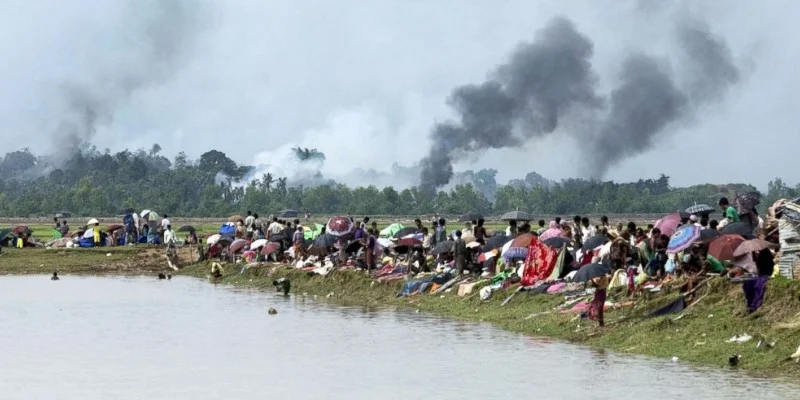
The Hague (Terror Monitor) — The International Court of Justice (ICJ), the United Nations’ highest judicial body, has delivered a landmark judgment holding Myanmar responsible for genocide against the Rohingya Muslim minority during the military crackdown in 2017, concluding that the evidence pointed to an intention to destroy a substantial part of the community.
In its judgment delivered on Thursday, November 19, the court said the only reasonable inference from the evidence was that Myanmar’s military operations in northern Rakhine State were carried out with genocidal intent against the Rohingya population.
Presiding over the proceedings at the Great Hall of Justice in The Hague, ICJ President Judge Yuji Iwasawa read out the detailed ruling during a session that lasted approximately three hours. The court examined evidence concerning mass killings, sexual violence, attacks on children, the destruction of villages and assaults on Rohingya civilians attempting to escape the military campaign.
The judges found that Myanmar’s security forces had killed thousands of Rohingya civilians, committed widespread sexual violence and subjected children to extreme forms of violence. The court also examined evidence of attacks against people fleeing the crackdown.
The ruling represents a historic development in international law, marking the first time the ICJ has found a state responsible for committing genocide.
The court’s assessment focused not only on the number of people killed but also on the nature and scale of the military operation, the systematic pattern of abuses and the circumstances surrounding the violence. Under international law, genocide involves acts committed with the specific intention of destroying, in whole or in part, a national, ethnic, racial or religious group.
The judges concluded that the evidence established that the Rohingya were targeted as a protected ethnic and religious group and that the military campaign was intended to destroy a substantial part of that population.
The case was brought by The Gambia in November 2019, accusing Myanmar of violating the 1948 Genocide Convention through its military operations against the Rohingya. The proceedings were supported by the 57-member Organisation of Islamic Cooperation.
Myanmar has repeatedly rejected the genocide allegations, maintaining that its military operations in 2017 were legitimate counterterrorism measures launched in response to attacks by Rohingya insurgents against security posts.
The military crackdown began after coordinated attacks by the Arakan Rohingya Salvation Army on security installations in August 2017. Myanmar’s military subsequently launched operations across northern Rakhine State, triggering mass displacement and widespread reports of atrocities.
The violence forced hundreds of thousands of Rohingya to flee across the border into Bangladesh. Approximately one million members of the community were driven from their homes during and around the 2017 crisis, with many settling in overcrowded refugee camps in Cox’s Bazar. Their safe and voluntary return to Myanmar has remained unresolved.
The ICJ had previously confirmed its jurisdiction to hear the case in July 2022. Public hearings on the merits took place in January 2026, with several countries intervening in the proceedings to address the interpretation and application of the Genocide Convention.
The court’s judgment is legally binding and final, with no possibility of appeal. It also carries significant implications for Myanmar’s international obligations, including the requirement to prevent genocide, investigate alleged perpetrators and ensure that such crimes are not repeated.
The ruling is expected to intensify international pressure on Myanmar to ensure accountability for the atrocities and address the continuing plight of Rohingya refugees.
Reuters, the Associated Press and Agence France-Presse have reported extensively on the case and the court proceedings, describing the judgment as a major milestone in efforts to establish legal accountability for the 2017 violence.
The decision also adds to the international legal scrutiny of alleged genocide and other mass atrocities in conflict zones, reinforcing the principle that governments can be held accountable under international law for crimes committed against protected populations.
Related Articles
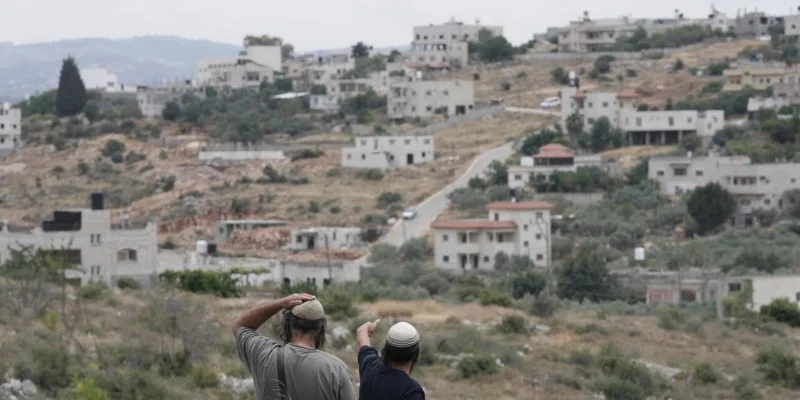
Masked Israeli Settlers Attack European Diplomatic Delegation in West Bank
Masked Israeli settlers attacked a European diplomatic delegation in the occupied West Bank village of Taybeh on Saturday, damaging a Belgian consulate vehicle and allegedly assaulting a French mayor. Belgium demanded accountability, while the Israeli military condemned the violence and launched an investigation. Prime Minister Benjamin Netanyahu’s office urged caution, saying the full circumstances remained under investigation.
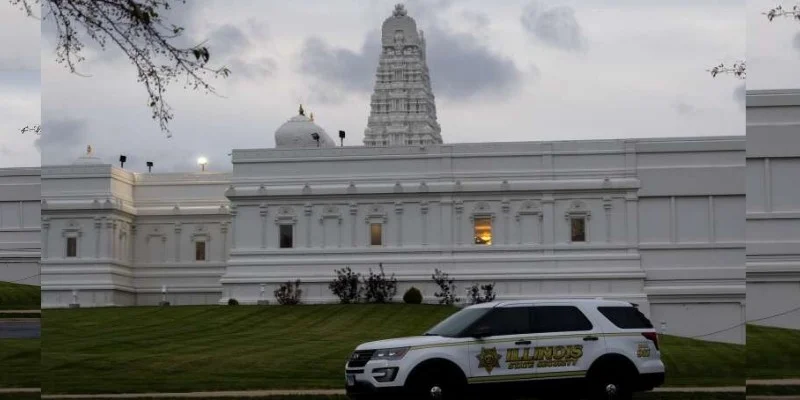
Illinois Teen Arrested Over Alleged Mass Shooting Plot Targeting Hindu Temple Near Chicago
A 19-year-old man from Palatine, Illinois, has been arrested over an alleged mass shooting plot targeting a Hindu temple in Aurora, near Chicago. Prosecutors say Alexandros Paporakis shared a white supremacist manifesto and messages indicating that his rifle had malfunctioned. Police recovered a rifle, loaded magazines, hundreds of rounds of ammunition and body armor from his home. He faces felony charges of making a terrorist threat and unlawful weapon possession.

Blasphemy Case: Saudi Supreme Court Overturns Death Sentence of Sri Lankan National
Saudi Arabia’s Supreme Court has overturned the death sentence imposed on 27-year-old Sri Lankan worker Anojan Sivarasa over a Facebook comment deemed insulting to Islam and the Prophet Muhammad. Sri Lanka’s Deputy Foreign Minister Arun Hemachandra confirmed the decision on Wednesday, following diplomatic and legal efforts to save Sivarasa’s life. However, his release and the status of his original five-year prison sentence remain unclear.
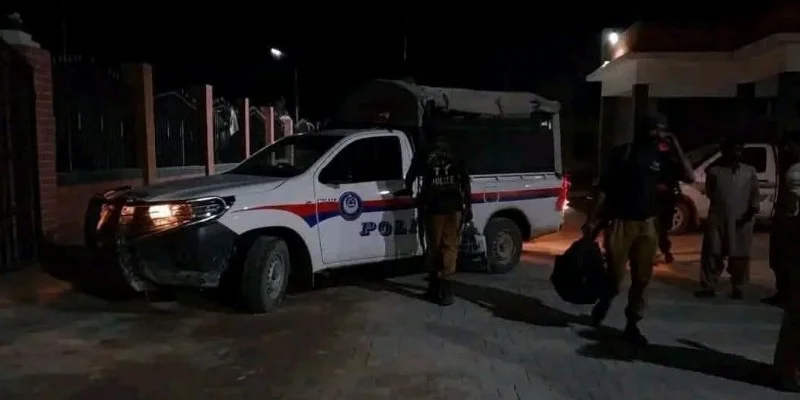
Pakistan: Three Killed, Five Injured in Separate Blast and Shooting Incidents in Balochistan
Three people, including two children, were killed and five others injured in separate incidents in Pakistan’s Balochistan province. Two children died and three were injured when an unidentified object exploded in Panjgur district, while a Hazara Shia man was killed and two others wounded in a shooting on Quetta’s Western Bypass, police said.