
U.S. Launches ‘Economic Outcast’ Campaign Against Iran, Unveils Sweeping Sanctions
· 71 views
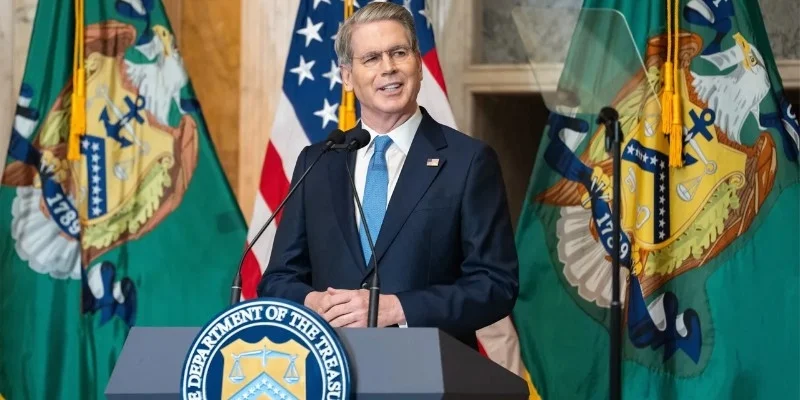
Washington (Terror Monitor) — U.S. Treasury Secretary Scott Bessent has described Washington’s newly announced sanctions against Iran as “the largest financial action in history,” calling the campaign an “economic D-Day” and warning that the United States will seek to sever Iran’s economic ties with the global financial system.
Bessent said countries that maintain financial partnerships with Iran could also face isolation from the international economic system.
The latest threat against Tehran comes as the White House has repeatedly adjusted its Iran policy and extended various deadlines during efforts to end the conflict.
In response to the new U.S. sanctions, Iranian Economy Minister Ali Madani-Zadeh said Tehran had prepared a two-year plan to counter the measures, which he said would become another failure for Washington.
The conflict has pushed global oil prices higher. Iran has warned that if the confrontation continues, it could halt all oil exports from the region.
According to Reuters, the Iranian government has also issued a new warning to the shipping industry, saying vessels passing through the Strait of Hormuz should not use the waterway without Iranian permission.
Around one-fifth of the world’s oil and gas consumption passes through the Strait of Hormuz, and shipments through the strategic waterway have been significantly disrupted since the conflict began in late February.
‘Operation Economic Outcast’
During a press conference on Monday, Bessent outlined what he called “Operation Economic Outcast,” saying the United States was launching a broad economic offensive against Iran’s global financial connections.
He said Iran now faced two choices: complete global isolation or a return to normal relations and an opportunity to reintegrate into the global economy.
“The United States is no longer simply trying to contain the Iranian threat; it is going to eliminate it completely,” Bessent said.
The Treasury secretary said the department had identified networks, facilitators and financial channels that Iran has allegedly used to evade sanctions and continue its oil trade.
The Treasury Department said it had taken formal action against five sectors: digital assets, technology, gold, aviation and shipping.
It also said sanctions had been imposed on approximately 60 entities, individuals and vessels.
Bessent said the Treasury Department had identified what he described as the key sources of revenue for the Iranian government and the Islamic Revolutionary Guard Corps (IRGC), and that Washington was prepared to target them.
He said the U.S. campaign was designed to economically isolate Iran and increase pressure on the government in Tehran.
Bessent warned that countries and entities continuing to support the Iranian government could themselves become targets of U.S. measures.
Asked whether China could face secondary sanctions, Bessent said, “No one will be exempt from U.S. secondary sanctions.”
He said the campaign would continue until Iran was fully isolated internationally.
Bessent also said President Donald Trump had taken steps against Iran that, in his view, no previous U.S. president had taken.
He said Washington was not merely attempting to manage the Iranian threat but was pursuing a policy aimed at eliminating it.
Washington Targets Iran’s Economic Lifelines
Bessent said the U.S. campaign was intended to cut off the financial and economic channels supporting the Iranian government.
He said Washington was “cutting off all the arteries” keeping the Iranian government afloat and that the campaign would continue until the desired economic pressure was achieved.
According to Bessent, companies and institutions have been given a period of time to wind down their economic relations with Iran. He warned that those continuing to conduct business with Tehran after the deadline could face U.S. measures.
The Treasury Department said it was also engaging with governments in third countries as part of the pressure campaign.
According to the department, joint teams from the Treasury, State and Defense departments are consulting governments around the world to end activities involving Iran that Washington has identified as problematic.
U.S. officials said specific deadlines were being set for governments and entities to comply. Failure to follow the directives could result in sanctions, including restrictions on or the complete loss of access to the U.S. financial system.
Iran Vows Retaliation
Iran has vowed to retaliate against the sweeping new U.S. economic sanctions and expressed hope that its major trading partners would resist Washington’s pressure campaign.
Following Bessent’s announcement, Iranian Economy Minister Ali Madani-Zadeh said Tehran was fully prepared to confront the U.S. sanctions.
“We are fully prepared to counter American sanctions,” he said in remarks to Iranian state television.
He accused Washington and its allies of planning an “economic terrorist attack” against Iran, but said Tehran had its own means of responding.
He warned that Iran’s response would no longer be purely defensive, saying its adversaries should expect retaliation.
Madani-Zadeh also said China and Russia had rejected U.S. measures and expressed hope that other countries would resist Washington’s pressure.
IRGC spokesman Brigadier General Hossein Mohebbi also issued a strong response, warning that if Iran’s critical infrastructure were targeted, Tehran could strike major U.S. interests and vital energy routes.
According to Iranian state broadcaster Press TV, Mohebbi said Iran would respond forcefully to any threat against its infrastructure.
The latest escalation in economic and military tensions between the United States and Iran has increased international concern over the Gulf, global oil supplies and the future of shipping through the strategically vital Strait of Hormuz.
Related Articles
Russia Says Overnight Strikes Hit Ukraine’s Largest Steel Plant, Power Infrastructure and Cargo Ship
Russia said its forces struck Ukraine’s largest steel plant in Kryvyi Rih, power infrastructure and another steelworks overnight, along with a cargo vessel in the Black Sea allegedly carrying military supplies. Separately, a Ukrainian drone attack in Russia’s Belgorod region killed a woman and wounded a man, according to TASS.
Myanmar Military Airstrike Kills 11 Civilians, Including Women and Children, in Rebel-Held Village
At least 11 people, including six women and two children, were killed in a Myanmar military airstrike in Yesagyo Township, southwest of Mandalay, according to a resistance fighter. The attack destroyed three houses as Myanmar’s civil war continues following the 2021 military coup.
Saudi Arabia Intercepts Four Drones Over Riyadh and Other Regions as Egypt Offers to Defend Kingdom
Saudi Arabia said it intercepted and destroyed four drones over Riyadh, the Eastern Province and southern regions on Saturday amid continuing attacks attributed to Iran-backed Houthi rebels. Egyptian President Abdel Fattah al-Sisi said Cairo was ready to defend Saudi Arabia if requested, subject to parliamentary approval.
Germany Warns Europe Is in Iran’s Crosshairs, Vows to Counter Tehran’s Hostile Activities
German Foreign Minister Johann Wadephul warned that Europe is in Iran’s crosshairs following a court ruling that sentenced two men for plotting attacks against Jewish and pro-Israel figures on behalf of Iranian intelligence. He also warned of growing Russian threats and urged the European Union to maintain sanctions against Moscow.