
Yemen Announces Major Military Offensive to Retake Houthi-Controlled Areas; Government Claims 700 Fighters Killed
· 2,661 views
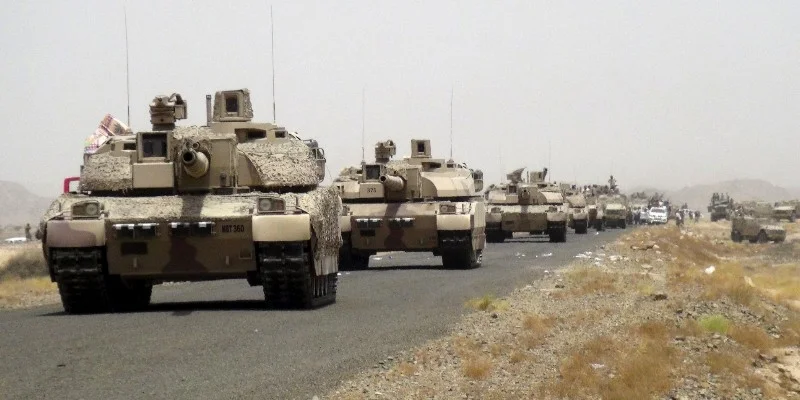
SANAA (Terror Monitor) — Yemen’s internationally recognized, Saudi-backed government has announced a major military offensive aimed at retaking territories controlled by the Iran-backed Houthi movement, as government-aligned forces claim to have killed at least 700 Houthi fighters in a series of operations across multiple fronts.
Rashad al-Alimi, chairman of Yemen’s Presidential Leadership Council, announced the campaign in a televised address to the nation on Sunday, directing the armed forces, security agencies and allied military formations to continue operations until all areas under Houthi control are recovered and state authority is restored throughout the country.
Al-Alimi said all state institutions would remain on high alert until the operation was completed and what he described as a decisive victory had been achieved.
The announcement comes amid reports of intensified fighting on several fronts, Houthi advances near the strategic city of Taiz, and growing concerns over the security of key coastal positions near the Bab al-Mandab Strait and Red Sea shipping routes.
Yemeni Forces Claim Hundreds of Operations Against Houthis
Colonel Majid Abdullah al-Nazili, spokesperson for Yemen’s armed forces, said government-aligned forces conducted 257 targeted operations on Saturday against Houthi positions, movements and military installations.
In a statement published on the social media platform X, the spokesperson said the operations involved warplanes, drones, artillery, missiles and rocket launchers.
According to the statement, the attacks targeted positions across Sanaa, Midi, Baqim, Al-Jawf, Marib, Al-Bayda and Lahij. In Taiz, forces reportedly focused on Houthi command-and-control centers, gatherings of fighters, military convoys, ammunition depots and supply lines.
The spokesperson claimed preliminary estimates indicated that at least 700 Houthi fighters had been killed in the operations. He also said 170 military vehicles, strategic military targets and other equipment had been destroyed.
The figures could not be independently verified, and no independently confirmed casualty assessment was immediately available.
Additional Operations Reported in Al-Bayda and Taiz
In a separate statement issued on Sunday, the Yemeni military spokesperson claimed that government-aligned forces had conducted another 97 operations against Houthi positions in Al-Bayda and Taiz.
According to the statement, the attacks killed 260 Houthi fighters and destroyed 44 military vehicles, other vehicles and supply assets allegedly used to transport reinforcements and weapons.
It was not immediately clear whether the reported casualties and equipment losses in the second statement were included in, or additional to, the earlier figures. The claims had not been independently verified.
Houthi Advances Near Taiz Raise Fears of a Siege
Despite the reported government operations, the Houthis have continued advancing on several fronts, according to Reuters, raising concerns that the internationally recognized government could face additional territorial losses.
The report said the Houthis had recently made rapid advances in coastal areas near the strategic Bab al-Mandab Strait, capturing important positions. Over the preceding 48 hours, Houthi forces were also reported to have advanced against government and local forces near key mountain positions outside Taiz.
The Houthis are reportedly moving toward a strategically important land route connecting Taiz with Aden, the temporary seat of the internationally recognized government.
If the movement gains control of the remaining major route linking the two cities, Taiz could face an intensified siege, further complicating the government's ability to reinforce its forces and supply positions in the area.
Taiz, Yemen’s third-largest city, is strategically important because of its location between northern Houthi-controlled territories and government-held areas farther south. Al-Alimi himself is from Taiz.
A renewed Houthi advance toward the city could therefore have significant military and political consequences for the Saudi-backed government.
Saudi Air Support Planned for Yemeni Ground Offensive
According to Reuters, planning for the proposed offensive envisages Yemeni government-aligned forces conducting ground operations, with Saudi Arabia providing air support.
Under the reported arrangement, Yemeni forces would lead the advance against Houthi positions, while Saudi aircraft would support operations against military targets and help disrupt the movement's supply lines and reinforcements.
The report also indicated that Saudi Arabia's regional allies would not participate directly in the operation.
Two possible approaches have reportedly been considered.
The first would involve limited military strikes around the Bab al-Mandab Strait, with the objective of challenging Houthi control of strategically important coastal positions and protecting access to vital maritime routes.
The second option would involve coordinated attacks against Houthi positions in Al-Bayda, Marib, Taiz and Al-Jawf, potentially opening several fronts simultaneously.
Reports have suggested that the operation could begin in the coming days or at a later stage. However, its final timetable, the number of troops involved and the precise scope of the campaign have not been independently confirmed.
Separate reports have also referred to preparations involving approximately 100,000 Yemeni troops, but the scale and operational details of the proposed deployment remain subject to verification.
Saudi Arabia's Role in Yemen's Long-Running Civil War
Saudi Arabia intervened militarily in Yemen in 2015, leading a coalition in support of the internationally recognized government after the Houthis consolidated their control over Sanaa and displaced the government from the capital.
The conflict developed into a prolonged war between the Iran-backed Houthi movement and forces aligned with the internationally recognized government, which received military and political support from Saudi Arabia and its partners.
The Houthis currently control Sanaa and large parts of northern and northwestern Yemen. The internationally recognized government operates primarily from Aden, while its allied forces maintain positions across parts of southern and eastern Yemen.
A truce reached in 2022 significantly reduced fighting, but it did not produce a comprehensive political settlement. The underlying conflict remained unresolved, leaving the country vulnerable to renewed military escalation.
Recent developments have unfolded amid wider regional tensions involving Iran and the United States. Although the regional confrontation has raised concerns about the potential expansion of hostilities, the precise relationship between those tensions and the latest fighting in Yemen requires further verification.
Bab al-Mandab and Red Sea Shipping Routes at Risk
The Bab al-Mandab Strait connects the Red Sea with the Gulf of Aden and the wider Indian Ocean. It is a critical maritime passage for international trade and shipping between Europe and Asia.
Any escalation around the strait could have consequences beyond Yemen, particularly if fighting threatens commercial shipping or disrupts access to the Red Sea.
For the Saudi-backed government, regaining strategically important coastal positions could strengthen its military position and limit Houthi influence near major shipping routes. For the Houthis, maintaining control or expanding their presence in these areas could provide strategic leverage in the wider conflict.
A military campaign focused on the Bab al-Mandab region could therefore carry significant regional and economic implications, depending on its scale and the response of the opposing forces.
Humanitarian Crisis Could Worsen
Yemen continues to face a severe humanitarian crisis after years of conflict, displacement and economic disruption. Large numbers of people remain dependent on humanitarian assistance, while access to food, medicine and other essential supplies is limited in many areas.
Further fighting could force additional civilians to flee their homes, disrupt aid deliveries and damage infrastructure needed to sustain local communities.
Taiz, Marib and other contested areas could face particular risks if the conflict expands across multiple fronts. Restrictions on transport routes could also increase the difficulty of delivering food and medical supplies to vulnerable populations.
Humanitarian organizations have repeatedly warned that renewed hostilities could deepen food insecurity and place additional pressure on an already fragile aid response.
Wider War Fears Grow
Al-Alimi's announcement signals the government's intention to intensify its campaign against the Houthis and attempt to reverse their territorial gains. The reported operations and claims of heavy Houthi losses suggest an escalation in military pressure, although the full extent of the fighting remains unclear.
The outcome will depend on the ability of government-aligned forces to advance on the ground, the scale of any Saudi air support, and the Houthis' capacity to defend their positions and maintain supply routes.
A coordinated offensive across several provinces could reopen multiple fronts in Yemen's civil war and increase the risk of a broader conflict. However, the reported plans have not yet been fully confirmed, and the military balance remains uncertain.
Verification note: Casualty figures, destroyed vehicles and operational totals in this report are attributed to statements by Yemen's government-aligned armed forces and have not been independently verified. Details concerning the timing, troop strength and international participation in the proposed offensive should be treated as reported plans rather than confirmed operational decisions.
Related Articles

Saudi Arabia Intercepts Two Houthi Drones, Two Cruise Missiles Targeting Riyadh
Saudi Arabia’s military coalition says it intercepted two Houthi drones targeting Riyadh and southern regions, along with two cruise missiles aimed at the capital, as Yemen’s Iran-backed rebels claim 87 Saudi air and missile strikes across Yemen in the past 24 hours.

CENTCOM Chief Visits Israel, Holds Talks With IDF Chief and Mossad Director Amid Rising Tensions With Iran
U.S. CENTCOM chief Admiral Brad Cooper visits Israel and meets IDF Chief Eyal Zamir and Mossad Director Roman Gofman amid escalating tensions with Iran and Iranian attacks across the Gulf region.

Putin Discusses Ukraine War With Xi Ahead of Historic Trilateral Summit With Trump in China
Putin discusses the Ukraine war with Xi Jinping ahead of a historic trilateral summit with Donald Trump in China, as the three leaders prepare for unprecedented talks on global security and geopolitical tensions.
Saudi Arabia Executes Two More Shia Men as Death Toll Reaches 211 in 2026 Amid Iran War
Saudi Arabia executes two more Shia men as human rights groups accuse the kingdom of exploiting the Iran war to intensify repression, bringing the 2026 death toll to 211.