
Yemen Government Forces Withdraw from Bab al-Mandab Area, Giving Houthis Strategic Advantage
· 107 views
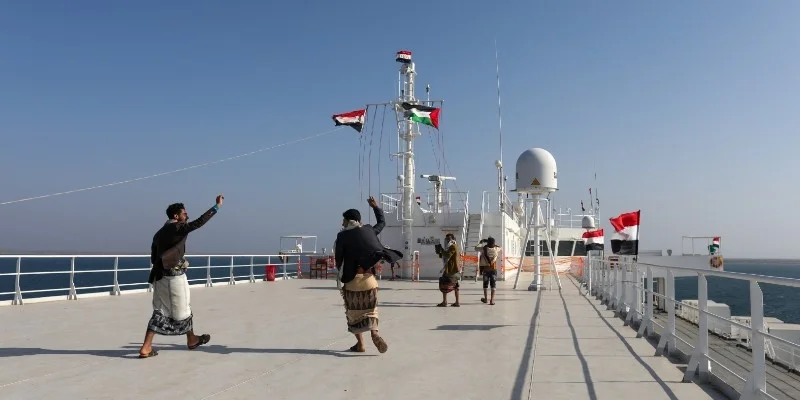
ADEN (Terror Monitor) — Forces fighting alongside Yemen’s internationally recognised, Saudi-backed government announced on Sunday that they were withdrawing from a strategically important area near the Bab al-Mandab Strait, a move that could give Iran-backed Houthi rebels greater influence over one of the world’s most critical maritime shipping routes.
The withdrawal marks a significant development in Yemen’s escalating conflict and raises concerns about the security of international shipping, particularly as Iran is also disrupting maritime traffic through the Strait of Hormuz in the Persian Gulf.
The two waterways are vital to global energy supplies and commercial trade. Increased pressure on both could further restrict routes used by Gulf countries to transport oil and other goods to international markets.
In a statement, southern Yemeni forces said they were withdrawing their troops from the Dhubab airfield and the Bab al-Mandab area, west of Taiz province, and redeploying them towards Aden, the temporary seat of the internationally recognised government.
The forces said the decision was intended to prioritise the security of Aden and neighbouring provinces, strengthen military fronts and respond to emerging security threats.
The announcement comes as Houthi fighters continue expanding their military pressure on government-held territories in southern Yemen, after making advances towards strategic positions overlooking the country's Red Sea coastline.
The Houthis control the capital, Sanaa, much of northern Yemen and several of the country's most densely populated areas. Their latest advances have raised concerns that they could extend their influence further south and strengthen their position near the Bab al-Mandab Strait.
Government counteroffensive suffers major setback
The withdrawal represents a major setback for a six-week military campaign launched by government forces in October to recapture strategic coastal areas from the Houthis.
The rebels had advanced along Yemen’s western coastline in September, seeking to establish control over the entire Yemeni Red Sea coast. Their rapid offensive brought them within striking distance of Bab al-Mandab, one of the world's most strategically important maritime chokepoints.
Reuters reported that government forces had initially recaptured several important positions around the strait, including Dhubab, but failed to dislodge the Houthis from the key coastal city of Mocha and other surrounding areas.
The latest redeployment raises the possibility of further Houthi advances towards Aden, which has served as the headquarters of Yemen’s internationally recognised government since the rebels seized Sanaa in 2014 and forced the government to relocate south.
The Yemeni military's spokesperson, Majid al-Nuzaili, called on the international community to help restore government control over Bab al-Mandab and the country's western coastline, describing the waterway as essential to international maritime navigation and global trade.
Strategic importance of Bab al-Mandab
The Bab al-Mandab Strait connects the Red Sea with the Gulf of Aden and the Indian Ocean. It is a critical passage for commercial vessels travelling between Asia and Europe through Egypt's Suez Canal.
Any disruption to shipping through the strait could force commercial vessels to take longer and more expensive routes around the Cape of Good Hope in southern Africa, increasing transportation costs and putting additional pressure on global supply chains.
The situation is particularly concerning because Iran is simultaneously disrupting maritime traffic through the Strait of Hormuz, another major shipping route used by Gulf oil exporters.
Together, the two developments could significantly restrict the ability of Gulf countries to transport crude oil and other commodities to international markets.
Houthis intensify attacks on Saudi Arabia
The renewed fighting has also opened another dangerous front in the wider regional war involving Iran, the United States and Israel.
The Houthis have continued launching attacks against Saudi Arabia, a major US ally and the world's largest crude oil exporter. Saudi Arabia had experienced a period of relative calm during the early months of the wider conflict with Iran, but the latest Houthi attacks have again threatened its airports, ports and energy infrastructure.
According to Reuters, the Houthis claimed responsibility for attacks targeting a pumping station on Saudi Arabia's East-West oil pipeline, an oil facility in Yanbu and an Aramco building in Riyadh on November 12. The Saudi-led coalition subsequently announced that it had intercepted two Houthi drones.
Yanbu is particularly important because Saudi Arabia has been using its Red Sea export facilities to transport crude oil while shipping through the Strait of Hormuz remains disrupted.
In response to Houthi attacks, Saudi Arabia has carried out strikes against Houthi positions inside Yemen, further increasing the risk of a wider regional confrontation.
Yemen's humanitarian crisis worsens
The escalation has also intensified the humanitarian emergency in Yemen, which has been engulfed in civil war since 2014, when the Houthis seized the capital, Sanaa, and forced the internationally recognised government to retreat towards the south.
The conflict, which had largely remained frozen following a United Nations-brokered truce in 2022, escalated again in July 2026 amid the wider regional war involving Iran.
Fighting has particularly intensified in the western governorate of Taiz, where government forces and Houthi fighters are battling for control of strategic positions and supply routes.
According to reporting by Reuters and Al Jazeera, Taiz city remains under a Houthi siege, with humanitarian conditions deteriorating as aid deliveries are blocked and civilians face severe restrictions on movement.
The city is hosting approximately half of the 300,000 people displaced across Yemen by the latest wave of fighting, according to the reports.
Meanwhile, the International Committee of the Red Cross (ICRC) announced on Sunday that the Houthis had released approximately 600 detainees held in connection with the armed conflict, in a unilateral release facilitated with the organisation's support.
The latest military developments threaten to deepen Yemen's prolonged conflict, further destabilise the Red Sea region and increase risks to international maritime trade at a time when global shipping routes are already facing severe disruption.
Related Articles

Saudi Arabia Intercepts Two Houthi Drones, Two Cruise Missiles Targeting Riyadh
Saudi Arabia’s military coalition says it intercepted two Houthi drones targeting Riyadh and southern regions, along with two cruise missiles aimed at the capital, as Yemen’s Iran-backed rebels claim 87 Saudi air and missile strikes across Yemen in the past 24 hours.

CENTCOM Chief Visits Israel, Holds Talks With IDF Chief and Mossad Director Amid Rising Tensions With Iran
U.S. CENTCOM chief Admiral Brad Cooper visits Israel and meets IDF Chief Eyal Zamir and Mossad Director Roman Gofman amid escalating tensions with Iran and Iranian attacks across the Gulf region.

Putin Discusses Ukraine War With Xi Ahead of Historic Trilateral Summit With Trump in China
Putin discusses the Ukraine war with Xi Jinping ahead of a historic trilateral summit with Donald Trump in China, as the three leaders prepare for unprecedented talks on global security and geopolitical tensions.

Saudi Arabia Executes Two More Shia Men as Death Toll Reaches 211 in 2026 Amid Iran War
Saudi Arabia executes two more Shia men as human rights groups accuse the kingdom of exploiting the Iran war to intensify repression, bringing the 2026 death toll to 211.