
9/11 Mastermind Khalid Sheikh Mohammed’s Trial Set to Begin in June 2028
· 95 views

Washington (Terror Monitor) — The long-delayed military trial of Khalid Sheikh Mohammed, whom the U.S. government considers one of the principal planners of the September 11, 2001 terrorist attacks, is scheduled to begin on June 5, 2028, nearly 27 years after the attacks that killed almost 3,000 people.
A U.S. military judge overseeing the case has ordered the proceedings against Khalid Sheikh Mohammed and three other defendants to begin on June 5, 2028. However, further delays remain possible as several legal and administrative issues have yet to be resolved, including disputes over the admissibility of evidence obtained during years of U.S. detention and interrogation.
The case has been tied up in legal proceedings for years, particularly over the treatment of the defendants in CIA custody and whether statements obtained during that period can be used in court.
The September 11 Attacks
On September 11, 2001, 19 al-Qaeda hijackers seized four commercial airliners in the United States.
Two aircraft were deliberately crashed into the World Trade Center towers in New York City, causing both buildings to collapse. A third plane struck the Pentagon, the headquarters of the U.S. Department of Defense, near Washington, D.C.
The fourth aircraft, United Airlines Flight 93, crashed into a field in Pennsylvania after passengers attempted to regain control of the plane.
Nearly 3,000 people were killed in the attacks, which triggered a major transformation in U.S. counterterrorism and foreign policy and led to the American-led war in Afghanistan.
Khalid Sheikh Mohammed, commonly known as KSM, is accused of playing a central role in conceiving and organizing the plot.
Who Is Khalid Sheikh Mohammed?
Khalid Sheikh Mohammed was born in Kuwait on April 14, 1965. His father was an imam, and his family was of Pakistani origin.
He traveled to the United States in the 1980s to pursue higher education and studied mechanical engineering in North Carolina. He graduated in December 1986.
His subsequent activities took him to Afghanistan and Pakistan, where he became involved with militant networks fighting Soviet forces during the Afghan war.
He later emerged as a senior al-Qaeda operative and developed close links with Osama bin Laden.
Khalid Sheikh Mohammed was also the maternal uncle of Ramzi Yousef, one of the principal perpetrators of the 1993 World Trade Center bombing.
From the 1993 World Trade Center Bombing to 9/11
In February 1993, Ramzi Yousef and his associates detonated a truck bomb beneath the World Trade Center in New York. The attack killed six people and injured hundreds, but failed to bring down the towers.
Khalid Sheikh Mohammed reportedly played an advisory and financial-support role in the plot.
The attack nevertheless demonstrated that militants could carry out major attacks on U.S. soil.
In 1994, Khalid Sheikh Mohammed and Ramzi Yousef were also involved in a broader aviation plot known as Operation Bojinka, which envisioned the destruction of multiple U.S.-bound passenger aircraft.
The plot was disrupted in the Philippines in January 1995 after a fire at an apartment where bomb-making activities were reportedly taking place. Investigators recovered materials and computer files that helped expose the wider conspiracy.
Yousef later fled to Pakistan, where he was arrested in 1995 in a joint operation involving Pakistani intelligence and the FBI.
Khalid Sheikh Mohammed escaped capture.
The Meeting With Osama bin Laden
According to accounts of the 9/11 plot, Khalid Sheikh Mohammed presented Osama bin Laden with an ambitious plan during a meeting in Afghanistan in the mid-1990s.
The original concept reportedly involved hijacking a large number of commercial aircraft and using them against prominent American targets.
Bin Laden eventually supported a scaled-down version of the proposal, reducing the number of aircraft and selecting specific targets.
The plot subsequently evolved into the September 11 attacks.
Several operatives who had lived or studied in Western countries were recruited for the operation. Some later traveled to the United States and received flight training.
Khalid Sheikh Mohammed is alleged to have played a central coordinating role, including arranging finances, communications and logistical support for the operation.
The September 11 Operation
Investigations into the attacks concluded that Khalid Sheikh Mohammed was one of the principal architects of the operation.
He reportedly maintained extensive communications with members of the network while attempting to keep the plot secret from much of al-Qaeda's wider membership.
In August 2001, he was reportedly informed that September 11 had been selected as the date for the operation.
On that day, four aircraft were hijacked and used in coordinated attacks against targets in New York, Washington and Pennsylvania.
The attacks killed nearly 3,000 people and fundamentally changed U.S. national security policy.
Arrest in Rawalpindi
Khalid Sheikh Mohammed remained at large for approximately 17 months after the 9/11 attacks.
On March 1, 2003, he was arrested at a house in Rawalpindi, Pakistan, following information provided by an informant.
After his capture, he was transferred into U.S. custody and placed in the CIA's secret detention program.
He was subsequently held at a number of undisclosed detention facilities before being transferred to the U.S. detention facility at Guantanamo Bay in 2006.
CIA Interrogation and Allegations of Torture
The treatment of Khalid Sheikh Mohammed in CIA custody has become one of the central legal issues surrounding his military trial.
A U.S. Senate investigation into the CIA's detention and interrogation program documented the use of harsh interrogation techniques against him.
Khalid Sheikh Mohammed was reportedly subjected to waterboarding 183 times. Waterboarding is a technique in which a detainee is restrained and exposed to water in a manner intended to create the sensation of drowning.
Human rights organizations have described such methods as torture.
The years of detention and interrogation have complicated the prosecution's case because defense lawyers have challenged the admissibility of statements and other evidence obtained during or following the CIA detention program.
Years of Legal Delays
Khalid Sheikh Mohammed and the other defendants have faced military proceedings at Guantanamo for many years, but the case has repeatedly been delayed.
One of the major issues has been whether statements made after the defendants were subjected to CIA interrogation techniques can be used as evidence.
In 2024, Khalid Sheikh Mohammed and two other defendants reached a pretrial agreement with prosecutors under which they were prepared to plead guilty in exchange for prosecutors withdrawing the possibility of seeking the death penalty.
The agreement sparked opposition from some relatives of the September 11 victims.
Then-U.S. Defense Secretary Lloyd Austin moved to withdraw the agreements, leading to further legal disputes over their validity.
The case subsequently continued through appeals and other legal proceedings.
Trial Set for 2028
The latest order setting June 5, 2028 as the start date represents another attempt to move the long-running case toward trial.
However, the date does not necessarily guarantee that proceedings will begin as scheduled.
The court still faces questions concerning evidence, classified information, the defendants' treatment in CIA custody and other procedural matters.
If the trial eventually begins, it will mark one of the most significant legal proceedings arising from the September 11 attacks and could become a major test of the U.S. military commission system.
For the families of the nearly 3,000 people killed on September 11, the case has already lasted more than two decades.
Guantanamo Bay Remains Open
Khalid Sheikh Mohammed remains detained at Guantanamo Bay, the controversial U.S. detention facility established after the September 11 attacks.
The facility has faced sustained criticism from human rights organizations, which have called for its closure and for detainees to either be prosecuted through a lawful judicial process or transferred to other countries where appropriate.
Despite years of debate over its future, Guantanamo remains open and continues to hold a small number of detainees.
The scheduled 2028 trial date therefore represents another chapter in one of the longest-running terrorism cases in modern U.S. history — almost three decades after the attacks that brought Khalid Sheikh Mohammed to the center of the 9/11 investigation.
Related Articles

Pakistan’s Counterterrorism Department Arrests 8 Suspected Terrorists in Punjab Raids
Pakistan’s Counter Terrorism Department (CTD) arrested eight suspected terrorists during intelligence-based operations across Punjab, recovering 465 grams of explosives, two hand grenades, detonators and banned organization literature. Seven cases have been registered, while investigations continue.
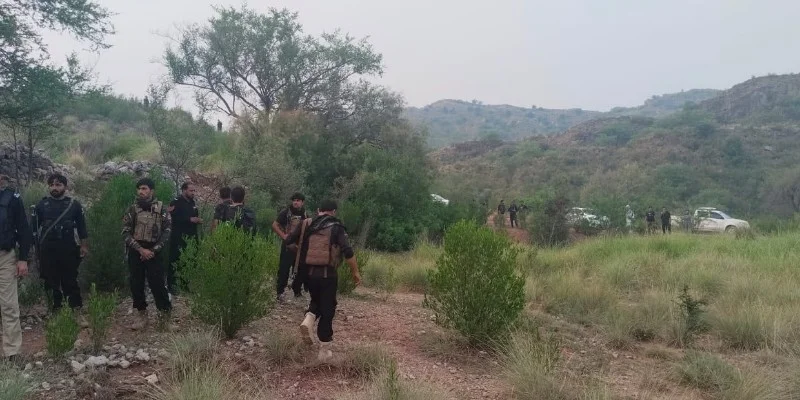
10 Militants Killed in Joint Police and Orakzai Scouts Operation in Pakistan’s Khyber Pakhtunkhwa
Pakistani police and Orakzai Scouts killed 10 terrorists affiliated with the banned Lashkar-e-Islam Pakistan and Hafiz Gul Bahadur group during a joint operation in Khyber Pakhtunkhwa’s Orakzai district. The operation followed a militant blockade on Sangra Main Road. Authorities said security operations would continue to eliminate terrorist threats and maintain law and order.
Pakistan Security Forces Kill Alleged Mastermind of Kohat Police Lines Suicide Attack in KP
Pakistani security forces and the Counter Terrorism Department (CTD) have killed an alleged mastermind of the suicide attack on Kohat Police Lines during a joint operation in Lakki Marwat district, Khyber Pakhtunkhwa. According to the CTD, the terrorist had links to the Gul Bahadur group and was involved in facilitating the attack using an explosives-laden vehicle. He was also allegedly linked to a bank robbery involving Rs6 million and plans to target a Pakistan Air Force installation

Germany Jails Two Men for Plotting Attacks on Jewish Leaders on Behalf of Iran’s Quds Force
A German court sentenced two men to eight-and-a-half and four-and-a-half years in prison for spying on Jewish and pro-Israel figures and preparing attacks allegedly directed by Iran’s Islamic Revolutionary Guard Corps’ Quds Force. The intended targets included German-Israeli Society President Volker Beck and Central Council of Jews in Germany President Josef Schuster.