
Erdogan Urges Trump to Avoid Fresh Strikes on Iran as China Steps Up Mediation Efforts
· 124 views
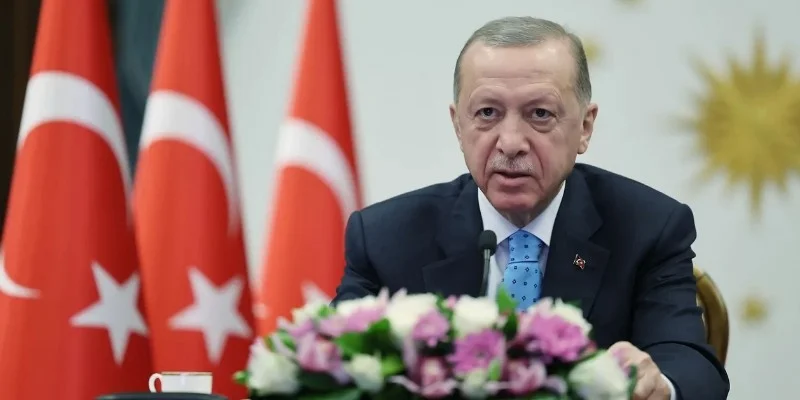
ANKARA (Terror Monitor) — Turkish President Recep Tayyip Erdogan has urged the United States to avoid launching a new wave of military attacks against Iran, saying Ankara has directly conveyed its concerns to President Donald Trump and remains committed to resolving the conflict through diplomatic channels.
Erdogan's remarks came amid renewed diplomatic efforts by regional and international powers to prevent another escalation of the eight-month-long US-Iran war, as China dispatched its special Middle East envoy to Tehran and senior officials in the United Arab Emirates warned that the region could face prolonged instability.
Speaking to journalists aboard his aircraft while returning from Azerbaijan on Monday, November 9, Erdogan said Turkey did not want another round of attacks against Iran or further destabilisation of the Middle East.
According to a statement released by the Turkish presidency, Erdogan said he had discussed the situation with Trump during a recent telephone conversation and explained Ankara's concerns about the possibility of renewed military action.
"We do not want a new wave of attacks against Iran or our region to be dragged into further instability," Erdogan said.
He stressed that Turkey had consistently maintained that the dispute with Iran could be resolved through dialogue and diplomacy rather than military force.
"Unfortunately, we are once again seeing developments moving in a negative direction. We are making every effort to prevent this," he added.
The Turkish president also said Ankara had informed the parties involved that it was ready to contribute to efforts aimed at opening the way for peace negotiations.
Erdogan warned that a renewed confrontation would have consequences extending far beyond the countries directly involved, affecting Turkey, the Gulf states, Iraq, Syria and countries across Europe and Asia.
His comments reflected growing regional concerns that renewed American military action could further destabilise the Middle East and disrupt international energy and maritime trade.
China sends special envoy to Tehran
In a parallel diplomatic development, China's Special Envoy for Middle East Affairs, Zhai Jun, held meetings with senior Iranian officials in Tehran as Beijing stepped up its efforts to contain the conflict.
Zhai met Ali Bagheri Kani, deputy secretary of Iran's Supreme National Security Council, and Majid Takht-Ravanchi, Iran's deputy foreign minister for political affairs. He also held discussions with Mohammad Alibek, director general for Gulf Affairs at Iran's Foreign Ministry.
According to China's Foreign Ministry, the discussions focused on bilateral relations and the deteriorating security situation in the Middle East.
Zhai emphasised the longstanding friendship between China and Iran, warning that conflicts in the region had continued for too long and were spreading beyond their original geographical boundaries.
He reiterated Beijing's position that the use of force could not resolve international disputes and stressed the importance of respecting the sovereignty and security of all countries.
China called for political solutions, regional cooperation and renewed efforts to restore stability.
The visit follows a meeting between Iran's Ali Bagheri Kani and Chinese Foreign Minister Wang Yi in Beijing the previous week.
According to China's Foreign Ministry, Zhai's regional diplomatic tour will also include visits to Oman and Saudi Arabia, two countries that have maintained diplomatic contacts with both Washington and Tehran.
His visit has drawn attention to China's potential diplomatic role in efforts to reduce tensions, although Beijing has not formally announced a mediation agreement between the United States and Iran. AA News +2
UAE warns of prolonged regional instability
Meanwhile, Anwar Gargash, diplomatic adviser to UAE President Sheikh Mohamed bin Zayed Al Nahyan, warned that the Middle East could face an extended period of uncertainty, with a comprehensive political settlement between Washington and Tehran remaining difficult to achieve.
Speaking at a geopolitical conference in Abu Dhabi on Monday, Gargash said the region should prepare for a prolonged period of instability in which neither a decisive resolution to the conflict nor the establishment of a stable regional order could be guaranteed.
According to Reuters, Gargash said the consequences of the US-Iran war could persist for a long time.
He added that the UAE had opposed the American military campaign against Iran from the outset.
Gargash said the continuing uncertainty would require the Emirates to invest further in its defence capabilities, maintain credible deterrence and strengthen its international security partnerships.
His remarks reflected concerns among Gulf governments that even if large-scale military operations were halted, the political and security consequences of the conflict could continue for years.
Trump signals renewed strikes are unlikely but keeps military option open
In the latest development on Monday, Trump said he believed the war with Iran was militarily "effectively over" following a meeting with Qatari Prime Minister Sheikh Mohammed bin Abdulrahman Al Thani at the White House.
According to the Associated Press, Trump said Washington was maintaining the existing military situation while seeking a longer-term agreement to prevent Iran from advancing its nuclear programme.
He described the situation as having positive momentum towards ending the conflict and indicated that renewed American strikes appeared unlikely if negotiations progressed.
However, Trump also stressed that the United States remained prepared to resume military action if circumstances required it.
In an interview with Reuters on Monday, Trump said Saudi Arabia and Qatar preferred a peaceful resolution to the conflict, but warned that Washington was ready to launch further strikes if necessary.
"We're ready to go anytime we want," Trump told Reuters, while indicating that he was currently satisfied with maintaining the US naval blockade against Iran.
Diplomatic negotiations face major obstacles
Reuters reported on Monday that diplomatic efforts involving Qatar and other regional countries were continuing, although officials did not expect an immediate breakthrough.
Iran has proposed an arrangement involving an end to the US blockade of its ports, sanctions relief and the resumption of oil exports in exchange for reopening the Strait of Hormuz to international shipping. Further negotiations on Iran's nuclear programme would follow.
However, Washington and Tehran remain divided over the sequence of implementation and the future of Iran's stockpile of highly enriched uranium.
The United States wants Iran to surrender or transfer the stockpile abroad and permit international inspections of key nuclear facilities, while Tehran has resisted such demands.
Qatar has emerged as a key diplomatic intermediary, maintaining contacts with both sides and facilitating discussions aimed at preventing a renewed military confrontation.
The latest diplomatic activity involving Turkey, China, Qatar, Saudi Arabia and the UAE highlights growing regional efforts to prevent another round of fighting.
While Washington has signalled that it may give diplomacy more time, its continued military readiness and the unresolved disagreements over Iran's nuclear programme and the Strait of Hormuz remain major obstacles to a lasting settlement.
Related Articles
Russia-Ukraine Talks in Abu Dhabi End Without Breakthrough, but Prisoner Swap Agreed
Russia and Ukraine Agree to Largest Prisoner Exchange After Abu Dhabi Peace Talks, No Breakthrough on War Ending
Iran Rules Out Transfer of Enriched Uranium Abroad, Threatens US Bases as Tehran Demands UN Action Over $20 Million Reward
Iran has ruled out transferring any enriched uranium abroad, including to Russia, and warned that renewed US military attacks would trigger strikes against American bases worldwide. Tehran has also urged the UN to condemn Washington's $20 million reward for intelligence on Iran's nuclear programme, warning of espionage and sabotage risks.
Gulf States Agree to Deploy Joint Forces at New Military Command in Kuwait Amid Iran War
The six Gulf Cooperation Council (GCC) states have agreed to deploy military forces under an expanded joint command structure in Kuwait amid escalating tensions with Iran. The move aims to strengthen regional defence coordination and protect Gulf territories, strategic assets and vital energy infrastructure.
Sanaa Accuses Pakistan of Bombing Yemen Alongside Saudi Arabia, Warns of Serious Consequences
Sanaa has accused Pakistan's military of participating in Saudi-led airstrikes against Yemen on November 6, warning that the alleged involvement of Pakistani fighter jets could damage relations between the two countries. Islamabad has not independently confirmed the allegation.