
FBI Arrests US Energy Department Employee for Allegedly Supporting Iran-Backed Houthis
· 195 views

Washington, D.C. (Terror Monitor) — A U.S. Department of Energy employee has been arrested on federal charges of attempting to provide material support to the Iran-backed Houthi movement in Yemen, including allegedly acquiring materials for explosives and drones and using his technical expertise to assist the group, the U.S. Department of Justice announced.
The suspect, identified by U.S. authorities as Ashton Hamed Ellaboudy of Richland, Washington, was arrested on October 1, 2026. He is accused of attempting to provide material support or resources to the Houthis, which the United States has designated as a foreign terrorist organization. If convicted, he could face a maximum sentence of 20 years in federal prison.
Assistant Attorney General for National Security John A. Eisenberg said the suspect allegedly traveled overseas and attempted to use his specialized knowledge to help the Houthi movement.
According to the Justice Department, Ellaboudy allegedly obtained materials used in the manufacture of explosive devices and drones capable of delivering explosives. Investigators also accused him of providing expert advice and technical assistance based on his background in electrical engineering.
“These allegations are so deeply disturbing that they almost defy imagination,” Eisenberg said, emphasizing the seriousness of the alleged conduct.
FBI Counterterrorism Division Assistant Director Jarod Brown said the suspect had allegedly betrayed the United States by attempting to assist a designated foreign terrorist organization. The FBI investigated the case with support from its Inland Northwest Joint Terrorism Task Force.
Alleged Travel to Yemen
According to the criminal complaint, investigators examined an overseas trip Ellaboudy allegedly made in September 2025. He reportedly traveled from Richland, Washington, to Oman before attempting to enter Yemen using an official passport previously issued to him during his employment with the U.S. Army Corps of Engineers.
Prosecutors allege that he intended to travel to Sanaa, Yemen's capital, which is controlled by the Houthis, but was unable to reach the city.
After returning to the United States, Ellaboudy allegedly told Customs and Border Protection officers that he had traveled abroad on official government business. Investigators subsequently contacted his Department of Energy supervisor, who reportedly said that he had not been authorized to undertake official travel to the region.
The criminal complaint further alleges that Ellaboudy communicated with an FBI confidential human source posing as someone connected to the Houthi movement. The source reportedly sought communications equipment for a mobile communications center in Yemen.
Investigators allege that Ellaboudy provided technical advice on electrical power and communications systems, including assistance with testing and modifying solar-powered generators and communications equipment. He also allegedly supplied diagrams and guidance on integrating the systems and researched additional equipment that could improve the group's communications capabilities.
Investigation Into Explosives and Drone Materials
The FBI reportedly began investigating Ellaboudy after receiving information that he had purchased precursor chemicals, components and other materials commonly used to manufacture homemade explosive devices.
According to the complaint, the investigation also examined his alleged acquisition of drone components and other equipment potentially suitable for remotely operated aerial systems.
The complaint states that investigators learned Ellaboudy had taken sick leave from his employment in December 2024, saying he had been exposed to highly concentrated nitric acid, a chemical with industrial uses that can also be used in the production of explosives.
Authorities have not alleged that the case involved a plot to attack the Department of Energy's Hanford Site. The Hanford Field Office reportedly said the matter did not involve an attempt to harm the facility or its workforce and that there was no threat to the site's safety or security.
The case is being handled by the U.S. Attorney's Office for the Eastern District of Washington and the Justice Department's National Security Division.
The allegations have not been proven in court. Ellaboudy is presumed innocent unless and until he is proven guilty beyond a reasonable doubt. If convicted of the charged offense, he could face up to 20 years in federal prison.
The case comes amid continued U.S. efforts to prevent the transfer of technical expertise, equipment and other resources to the Iran-backed Houthi movement, particularly materials and systems that could support explosives, unmanned aerial vehicles or military communications.
Related Articles

NATO Allies to Discuss Future of US Troop Presence in Europe as Pentagon Reviews Deployment
NATO’s European allies hold talks with Pentagon policy chief Elbridge Colby in Brussels over the future of US troop deployments in Europe as Washington reviews its military presence on the continent. Meanwhile, Germany and Norway announce a new weapons package for Ukraine, with Berlin contributing $300 million to strengthen Kyiv’s air defence capabilities.
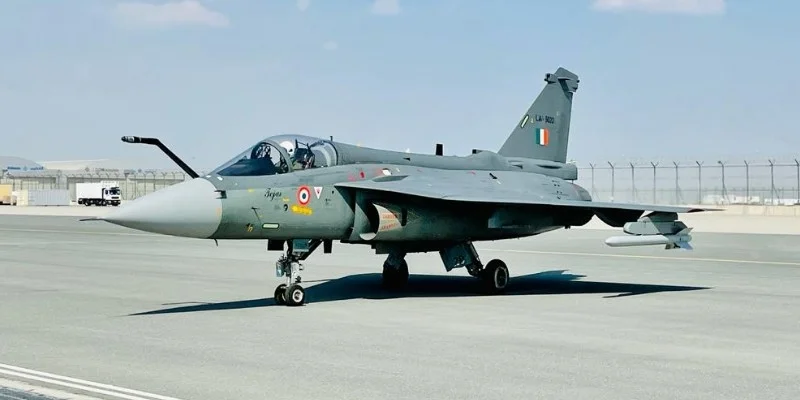
India to induct first Tejas Mk1A fighter squadron by March 2027, Air Force chief says
India's Air Force chief says the long-delayed indigenous Tejas Mk1A fighter jet will enter service with a full squadron by March 2027, as New Delhi seeks to address a shortage of combat aircraft and modernise its ageing fighter fleet.

Italy Backs Germany’s Participation in Next-Generation Fighter Jet Programme
Italy has reaffirmed its support for Germany joining the UK-Italy-Japan Global Combat Air Programme (GCAP), rejecting reports that Rome sought to block Berlin’s participation. Italy said its proposal for initial observer status was intended to accelerate Germany’s path to full membership while protecting the programme’s development schedule and its target of delivering a next-generation fighter by 2035.
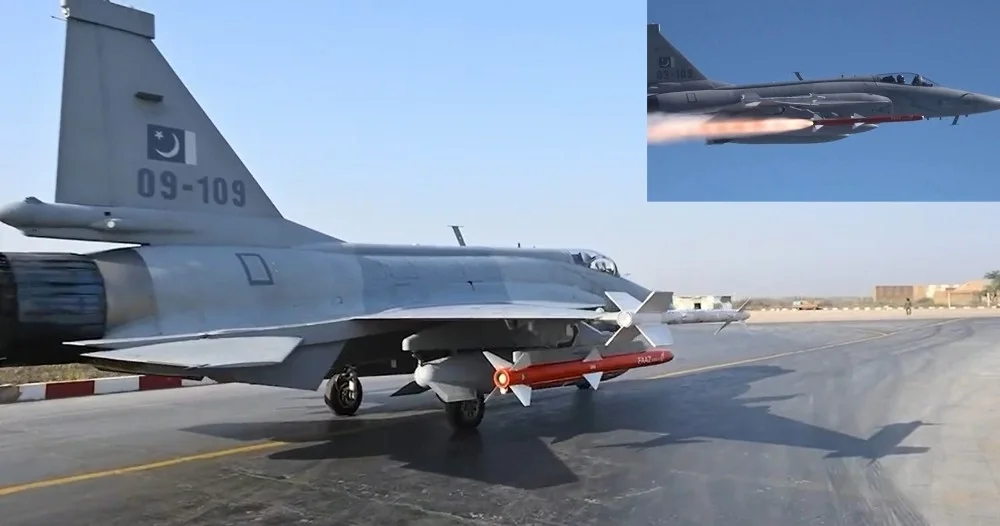
Pakistan Successfully Tests First Indigenous FAZ Air-to-Air Missile: ISPR
Pakistan has successfully tested its first indigenously developed FAZ air-to-air missile, with the ISPR saying the advanced weapon will enhance the Pakistan Air Force's operational capabilities and strengthen the country's defense posture.