
Germany Tests Secret NATO War Plan as Fears of Possible Russian Attack Grow
· 34 views
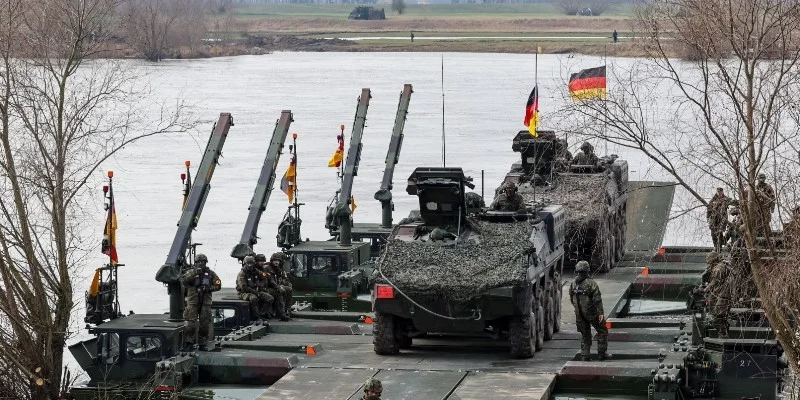
BERLIN (Terror Monitor) — Germany is strengthening its national defense preparations and testing its ability to serve as a critical logistical hub for NATO forces through military exercises designed to simulate a potential crisis on the alliance’s eastern flank.
The preparations are being coordinated under the classified Operations Plan Germany (Operationsplan Deutschland), a strategic framework intended to organize military movements and civilian support in the event of a major security crisis or war involving NATO.
One of the latest exercises, Red Storm Charlie, was conducted in Hamburg from September 24 to 26, bringing together approximately 1,700 participants, including 500 military personnel, alongside police, emergency services, government agencies and private-sector organizations.
According to German public broadcaster Deutsche Welle (DW) and information published by the German armed forces, the exercise was designed to test how effectively military and civilian authorities could coordinate the movement of troops and equipment under challenging conditions.
Exercise Simulates Deteriorating Security on NATO’s Eastern Flank
The scenario for Red Storm Charlie centered on a worsening security situation along NATO’s eastern flank, where alliance members are concerned about the possibility of Russian military aggression.
During the exercise, NATO forces—represented by German troops—arrived at Hamburg, Germany’s largest seaport, before moving eastward through the city as part of a simulated deployment toward the alliance’s eastern territories.
The exercise incorporated potential obstacles, including sabotage, drone-related threats, demonstrations and other disruptions that could interfere with military transportation.
Military personnel, police officers and civilian emergency organizations practiced responding to these incidents while coordinating the movement of personnel and equipment through an active urban environment.
The exercise was not simply a conventional military drill conducted on a closed training ground. It involved Hamburg’s transport infrastructure, port facilities and civilian organizations to test how military operations could be carried out while ordinary economic and public services continued to function.
The Bundeswehr said the exercise aimed to strengthen cooperation between military units, government authorities, emergency services and private companies. It also built on earlier exercises, Red Storm Alpha in 2024 and Red Storm Bravo in 2025.
Secret Operations Plan Germany
Red Storm Charlie forms part of the broader Operations Plan Germany, a classified document that outlines how Germany would organize military movements, logistical support and cooperation with civilian institutions during a major emergency or a NATO collective-defense operation.
The plan is intended to integrate Germany’s national defense preparations with NATO’s wider military planning framework.
According to DW, the document specifies how allied forces could enter Germany, which ports they might use and how troops and equipment would travel through the country toward the alliance’s eastern flank.
Security expert Aylin Matlé of the German Council on Foreign Relations told DW that the plan contains detailed provisions governing the arrival and movement of allied forces.
Germany’s role would extend beyond providing territory for military transit. Authorities would also need to coordinate transportation, accommodation, food supplies, security and other logistical requirements for incoming troops.
The plan also addresses movements in the opposite direction, including the evacuation of wounded military personnel and civilians from areas affected by a conflict.
Germany Could Become a Transit Route for 800,000 NATO Troops
Germany’s geographical position makes it a critical link between NATO members in western and southern Europe and the Baltic region.
The Baltic states are considered particularly exposed to potential Russian aggression. In the event of a major military crisis, NATO could need to move substantial forces from across its 32-member alliance toward its eastern flank.
That deployment would depend heavily on Germany’s ability to move troops, weapons, military vehicles and supplies across its territory.
Marcel Bohnert, a German army officer who contributed to an early version of the Operations Plan Germany, told DW that planning calculations envisage the movement of approximately 800,000 soldiers and 200,000 military and support vehicles through Germany within six months.
Bohnert said the preparations involve ensuring that military personnel can use Germany’s roads and ports safely while receiving the logistical support required for onward deployment.
These figures represent planning assumptions for a potential major crisis, not an announcement that NATO has ordered such a deployment.
The scale of the projected movement illustrates the logistical demands Germany could face if NATO needed to reinforce its eastern flank rapidly.
Pistorius Warns That Russia Is Testing Germany’s Response
German Defense Minister Boris Pistorius has warned that the threat posed by Russia is becoming increasingly serious and immediate.
Addressing the Bundestag, Germany’s federal parliament, on September 23, Pistorius said the security threat had become more visible and that Moscow was testing Germany’s response.
His remarks followed an incident at Leipzig/Halle Airport in early August, when an explosive-laden drone was discovered near the airport’s runway area.
German authorities attributed the incident to Russia, although Moscow has rejected allegations of involvement.
The incident raised concerns about the potential use of drones and other unconventional methods to disrupt critical infrastructure.
According to DW, the German military is continuously reviewing and updating the Operations Plan Germany, incorporating lessons from exercises such as Red Storm Charlie.
Bohnert also described the plan as a potential deterrent, arguing that the ability to mobilize forces quickly and organize military movements efficiently could discourage further aggression.
Reuters Reports Growing Concerns About Hybrid Warfare
Concerns about Germany’s vulnerability to sabotage and other unconventional threats have also been highlighted by Reuters.
In a report published on October 12, Reuters quoted German Interior Minister Alexander Dobrindt as warning that Germany was facing a “shadow war” extending beyond the threats experienced during the Cold War.
Dobrindt argued that the threat required stronger domestic intelligence capabilities, while Germany’s domestic intelligence chief, Sinan Selen, warned about alleged Russian activities involving disinformation, sabotage and other forms of hybrid operations.
Reuters reported that the German government was considering expanding the powers of intelligence agencies as officials responded to growing security concerns.
Russia has rejected Western allegations that it is conducting sabotage campaigns against European countries, describing such accusations as baseless.
The concerns underline why German defense planning increasingly considers threats that fall short of conventional warfare, including attacks on transport infrastructure, cyber operations, disinformation and attempts to disrupt military logistics.
Ageing Infrastructure Poses a Major Challenge
Despite its central position in NATO’s defense planning, Germany faces significant infrastructure challenges that could complicate large-scale military deployments.
Matlé told DW that ageing and deteriorating infrastructure was one of the country’s major vulnerabilities.
Bridges, roads, railways and other transport links would need to accommodate heavy military vehicles and large quantities of equipment moving across the country.
Some infrastructure dates back to the Cold War and was not designed to handle the weight or dimensions of modern military equipment, she said.
Germany would therefore need to accelerate repairs and modernization to ensure that critical transport routes remained usable during a crisis.
The challenge is particularly significant because military movements would have to take place alongside civilian transportation, commercial shipping and ordinary economic activity.
Hamburg’s port, railway connections, highways and airport make it an important transportation center in peacetime. In a major security crisis, the same infrastructure could become essential for moving NATO forces and supplies toward eastern Europe.
The effectiveness of Germany’s defense preparations would consequently depend not only on military readiness but also on the resilience of its civilian transport network.
Balancing Secrecy With Civilian Cooperation
Another challenge is maintaining the secrecy of sensitive military plans while ensuring sufficient cooperation from civilian authorities, businesses and the public.
The Operations Plan Germany is a classified document exceeding 1,000 pages, according to DW. It contains sensitive information about how military movements and logistical arrangements could be organized during a crisis.
Keeping details such as specific transportation routes confidential is intended to reduce the risk of sabotage or other interference.
However, Germany could not implement the plan without extensive civilian participation.
Local and regional authorities, police forces, emergency services, transport operators, port companies and other businesses would all have responsibilities in a major national emergency.
Bohnert told DW that some elements of the planning framework must be accessible to relevant civilian partners to secure the support needed from society, ministries and government institutions.
Red Storm Charlie was designed in part to test this coordination and identify weaknesses before a real emergency occurs.
During the exercise, journalists accredited to cover the operation were reportedly not given details of routes and locations until shortly before activities began because of concerns about possible disruption or sabotage.
AfD and Concerns Over Classified Information
Debate over the secrecy of the Operations Plan Germany intensified following electoral gains by the far-right Alternative for Germany (AfD) in the eastern state of Saxony-Anhalt.
Some security experts have raised concerns about whether sensitive information could be at risk if politicians from the party gained access to classified defense planning documents.
The AfD is widely regarded as more sympathetic toward Russia than Germany’s mainstream political parties. However, concerns about the possible transfer of sensitive information remain allegations rather than established evidence of such conduct.
Germany’s Defense Ministry has rejected the suggestion that an individual state government could access the complete plan.
According to DW, federal states receive only relevant excerpts of the document, with access to sensitive information restricted according to operational requirements and the principle of need to know.
The arrangement is intended to allow regional authorities to prepare for their responsibilities without giving them unrestricted access to the country’s military contingency planning.
Germany’s Role in NATO’s Future Defense
The preparations reflect Germany’s growing emphasis on national defense and its responsibilities as a central logistical corridor for NATO.
The Operations Plan Germany is intended to ensure that military forces can move across the country efficiently while civilian authorities maintain essential services and respond to emergencies.
Exercises such as Red Storm Charlie allow the Bundeswehr and its civilian partners to test their readiness against scenarios involving sabotage, transportation disruptions and other potential threats.
However, the scale of the logistical challenge remains substantial. Germany would need reliable infrastructure, effective coordination among public and private institutions, secure transportation routes and the ability to sustain large numbers of troops and vehicles over an extended period.
As NATO continues to prepare for possible crises along its eastern flank, Germany’s ability to function as a secure and efficient transit hub could become a decisive factor in the alliance’s collective-defense planning.
Terror Monitor will continue to follow developments in Germany’s defense preparations, NATO’s eastern-flank security and the wider confrontation between Russia and Western countries.
Related Articles
Pakistan Successfully Tests Fateh-II Hypersonic Ballistic Missile With Extended Range
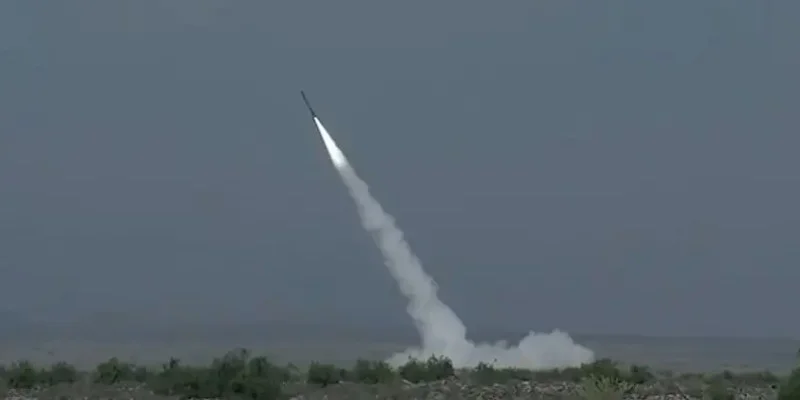
Pakistan’s military has successfully tested the extended-range variant of its Fateh-II hypersonic ballistic missile, the ISPR announced Tuesday. The missile features advanced navigation and avionics systems, can change its trajectory during flight and is designed to strike designated targets with high precision, according to the military.

Taiwan President Announces Major Defense Spending Increase Amid Rising Chinese Military Pressure
Taiwan President Lai Ching-te has announced plans to increase defense spending to NT$1.1 trillion, equivalent to more than 3% of GDP, to counter growing Chinese military pressure and deter a potential conflict across the Taiwan Strait. Lai stressed that Taiwan's goal was to prevent war, not provoke one, as Taipei seeks to modernize its armed forces and awaits approval of a $14 billion U.S. arms package that includes Patriot air defense systems.

Syrian President Ahmed al-Sharaa Meets Saudi Crown Prince Mohammed bin Salman in Riyadh
Syrian President Ahmed al-Sharaa met Saudi Crown Prince and Prime Minister Mohammed bin Salman in Riyadh on Tuesday to discuss bilateral relations, expanding cooperation and the latest regional developments. The meeting came amid heightened tensions across the region, including the escalating conflict involving Iran-backed Houthis in Yemen.

Former German Intelligence Chief August Hanning Arrested on Espionage and Treason Suspicions
Germany has arrested former BND chief August Hanning on suspicion of espionage, obtaining state secrets and attempted treason. Authorities also detained his former office manager, with investigators examining the alleged transfer of thousands of classified intelligence documents to a foreign intelligence service.