
Pakistan Army Successfully Tests Fatah-3 Supersonic Cruise Missile
· 70 views

Islamabad (Terror Monitor) — Pakistan's military has successfully conducted the test launch of the Fatah-3 supersonic cruise missile, marking a new development in the country's conventional defence capabilities, the military's media wing, Inter-Services Public Relations (ISPR), announced on Wednesday, November 18.
According to an ISPR statement, the Fatah-3 missile is equipped with advanced navigation and propulsion systems and is capable of engaging targets at long ranges with high precision and lethality while travelling at supersonic speeds.
The military said the newly tested weapon system would significantly enhance the operational flexibility and strike reach of the Pakistan Army's Rocket Force Command, further strengthening the country's conventional deterrence and overall defence posture.
The launch was witnessed by the Commander of the Army Rocket Force Command, senior officers of the Pakistan Armed Forces, as well as scientists and engineers involved in the development of the missile system.
Following the successful launch, President Asif Ali Zardari, Prime Minister Shehbaz Sharif, Chief of Defence Forces and Chief of Army Staff Field Marshal Syed Asim Munir, and the services chiefs congratulated the armed forces and the teams involved in the development and testing of the weapon system.
They praised the commitment and professional expertise of the scientists, engineers and military personnel who contributed to the achievement, according to the ISPR.
Interior Minister Mohsin Naqvi also congratulated the nation, describing the successful launch as a significant advancement in Pakistan's defence sector.
Pakistan's expanding missile capabilities
The Fatah-3 launch comes amid Pakistan's continued efforts to develop and test domestically produced missile systems to strengthen its conventional military capabilities.
Earlier in October, the Pakistan Army conducted successful tests of two other missile systems: the extended-range Fatah-2 hypersonic ballistic missile on October 13 and an extended version of the Fatah-4 ground-launched cruise missile on October 6.
The Fatah-4 is a ground-launched cruise missile designed with terrain-hugging capabilities intended to help it evade enemy air defence systems. Pakistan's military has previously disclosed a reported range of approximately 750 kilometres for the Fatah-4.
Earlier this month, the Pakistan Air Force also conducted a successful flight test of Fa'az, described by the military as the country's first indigenously developed air-to-air missile.
These developments reflect Pakistan's broader efforts to expand its indigenous defence technology and strengthen its missile and aerospace capabilities.
International reporting and regional security implications
The Associated Press (AP), in its previous reporting on Pakistan's missile programme, reported that the Pakistani military had successfully test-fired the Fatah-4 long-range surface-to-surface cruise missile in September 2025. The missile was reported to have a range of approximately 750 kilometres and was equipped with advanced avionics and modern navigation systems.
AP noted that Pakistan's development of cruise missiles was part of its continuing efforts to strengthen its conventional military capabilities, against the backdrop of longstanding security tensions with neighbouring India.
Pakistan and India, both nuclear-armed countries, have a history of military confrontations and competing missile development programmes.
The latest Fatah-3 launch adds another system to Pakistan's expanding missile development programme. However, the ISPR statement did not disclose the missile's exact operational range, launch location, flight-test trajectory or other technical specifications.
The military also did not provide independent technical data or details of the missile's performance beyond the capabilities outlined in its official announcement.
Related Articles

NATO Allies to Discuss Future of US Troop Presence in Europe as Pentagon Reviews Deployment
NATO’s European allies hold talks with Pentagon policy chief Elbridge Colby in Brussels over the future of US troop deployments in Europe as Washington reviews its military presence on the continent. Meanwhile, Germany and Norway announce a new weapons package for Ukraine, with Berlin contributing $300 million to strengthen Kyiv’s air defence capabilities.
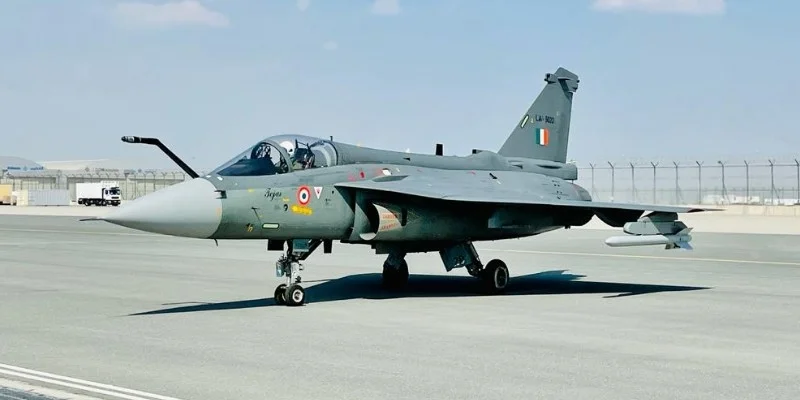
India to induct first Tejas Mk1A fighter squadron by March 2027, Air Force chief says
India's Air Force chief says the long-delayed indigenous Tejas Mk1A fighter jet will enter service with a full squadron by March 2027, as New Delhi seeks to address a shortage of combat aircraft and modernise its ageing fighter fleet.

Italy Backs Germany’s Participation in Next-Generation Fighter Jet Programme
Italy has reaffirmed its support for Germany joining the UK-Italy-Japan Global Combat Air Programme (GCAP), rejecting reports that Rome sought to block Berlin’s participation. Italy said its proposal for initial observer status was intended to accelerate Germany’s path to full membership while protecting the programme’s development schedule and its target of delivering a next-generation fighter by 2035.
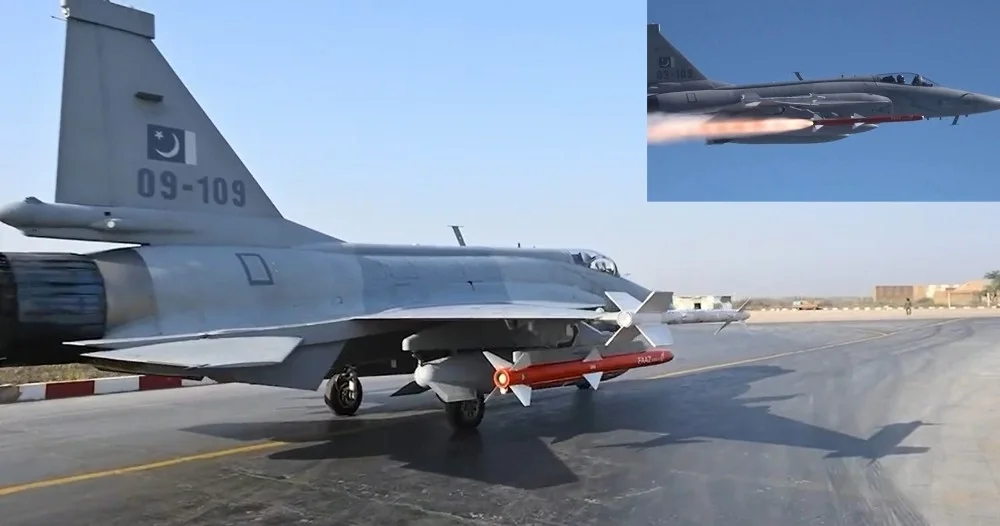
Pakistan Successfully Tests First Indigenous FAZ Air-to-Air Missile: ISPR
Pakistan has successfully tested its first indigenously developed FAZ air-to-air missile, with the ISPR saying the advanced weapon will enhance the Pakistan Air Force's operational capabilities and strengthen the country's defense posture.