
Iran-Backed Houthis Kill 53, Wound 200 in Ballistic Missile Attack on Yemen Military Camp
· 44 views
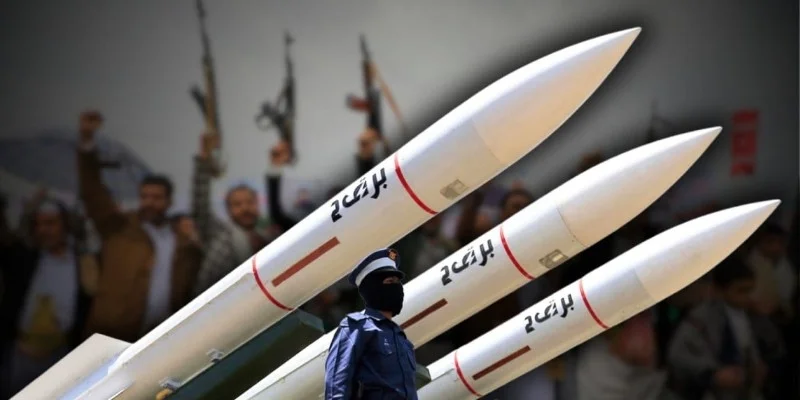
ADEN (Terror Monitor) — Iran-backed Houthi rebels killed at least 53 people and wounded more than 200 others in a ballistic missile attack on a military training camp in Yemen’s southern Shabwa province on Monday, October 19, in one of the deadliest attacks since fighting intensified earlier this year.
According to Yemeni officials cited by Reuters and The Associated Press (AP), the Houthis fired three ballistic missiles at a camp used by government security forces while newly recruited personnel were undergoing training. The Shabwa provincial authorities said the death toll could rise as emergency teams continued to assist the wounded.
The Houthis acknowledged carrying out the attack. Their military spokesperson, Yahya Saree, claimed that the camp was operated by Saudi forces, although the Saudi government had not immediately commented on the allegation.
The attack comes amid a renewed escalation in Yemen’s long-running civil war, with the Houthis intensifying attacks against Saudi Arabia while Saudi-backed Yemeni government forces attempt to regain territory controlled by the rebels.
The deteriorating security situation has also raised concerns about the potential expansion of the conflict, with Egypt considering military assistance to Saudi Arabia, the United States warning its citizens about security risks across the Middle East, and Saudi Arabia postponing a major international investment conference amid the escalating attacks.
Three Ballistic Missiles Strike Military Training Camp
Local officials said the attack targeted a military training facility in the Al-Alam area of Shabwa province, where newly recruited members of Yemen’s government-aligned security forces were participating in training exercises.
The missiles struck the camp during the exercises, causing extensive casualties among the recruits.
Reuters-verified footage from the scene showed wounded people and bloodied bodies scattered across the ground following the attack.
Shabwa provincial authorities reported that at least 53 people had been killed and approximately 200 injured. Officials warned that the number of fatalities could increase because of the severity of the injuries.
The Houthis claimed responsibility through their military spokesperson, Yahya Saree, who said the group had targeted a camp operated by Saudi forces and alleged that Saudi personnel were among those killed.
However, the claim regarding the presence and casualties of Saudi personnel had not been independently established in the initial reports.
The attack represents a major escalation in the fighting between the Houthis and forces loyal to Yemen’s internationally recognised government, which is backed by Saudi Arabia and its regional partners.
Yemen’s Government Warns of Further Escalation
The Shabwa provincial government condemned the attack, describing it as a serious military escalation targeting newly recruited personnel during their training and preparation.
Officials called on Yemen’s government and the Saudi-led coalition to strengthen the province’s defensive capabilities, including air-defence systems and early-warning measures to protect military installations from missile attacks.
Rashad al-Alimi, head of Yemen’s Presidential Leadership Council, pledged a firm response to the attack.
The missile strike occurred as government-aligned forces were attempting to recover territory held by the Houthis, particularly in areas near the strategically important Bab el-Mandeb Strait.
The Houthis have also intensified operations on several other fronts. According to the Associated Press, government-aligned fighters said they had repelled a Houthi offensive in southwestern Yemen following hours of fighting.
Separately, authorities in Marib province reported that the rebels had fired ballistic missiles towards the densely populated city of Marib, which hosts large numbers of people displaced by the conflict.
The simultaneous attacks underline the growing pressure on government forces as they attempt to prevent further Houthi advances and protect strategically important areas.
Fighting Threatens Strategic Energy and Shipping Infrastructure
Shabwa is an energy-rich province in south-central Yemen, overlooking the Gulf of Aden and located within a wider strategic area connected to international shipping routes.
The province is home to the Balhaf liquefied natural gas facility, one of Yemen’s most important energy installations.
Its geographical position also makes it significant to the security of maritime traffic approaching the Bab el-Mandeb Strait, a critical chokepoint linking the Red Sea with the Gulf of Aden and the wider Indian Ocean.
The Houthis have recently seized additional territory near the Red Sea coast and the Bab el-Mandeb Strait, prompting a Saudi-led military offensive aimed at pushing the group away from strategically important locations.
Any further escalation around the strait could threaten commercial shipping and increase the risks facing vessels operating near one of the world’s most important maritime corridors.
The crisis is particularly significant because the Bab el-Mandeb Strait provides a major route for international trade and energy shipments travelling between Europe and Asia.
A prolonged disruption could force shipping companies to reconsider their routes, potentially increasing transit times, insurance costs and transportation expenses.
Houthis Intensify Attacks on Saudi Arabia
The attack in Shabwa comes as the Houthis have expanded their military operations against Saudi Arabia, targeting airports, military facilities and energy infrastructure.
The rebels have repeatedly targeted Riyadh’s international airport, while attacks against Saudi oil installations have raised concerns about the security of the kingdom’s energy sector.
Reuters and AP have reported that recent Houthi strikes on Saudi targets have caused significant casualties and disrupted aviation operations.
Saudi Arabia has responded by increasing security measures and supporting military operations by its allies in Yemen.
The escalating conflict has also affected economic activity and international travel.
On Monday, the Houthis claimed to have carried out six attacks targeting oil infrastructure, airports and military installations across Saudi Arabia. The group did not specify when all the claimed attacks had taken place.
Saudi Civil Defence authorities issued warnings, although there were no immediate confirmed reports of casualties or damage from those particular claims.
Saudi Arabia Postpones Major Investment Conference
The security situation has also affected Saudi Arabia’s economic calendar.
Saudi Arabia postponed its flagship Future Investment Initiative conference, widely known as the “Davos in the Desert,” which had been scheduled to begin in Riyadh on October 26.
The event traditionally attracts international investors, business executives, financial institutions and government officials.
The postponement was announced by the Future Investment Initiative Institute, which said new dates would be announced.
The decision came amid repeated Houthi attacks against Saudi targets, including the kingdom’s international airport and oil infrastructure.
Although the institute’s announcement did not directly attribute the postponement to the attacks, the deteriorating security environment has raised concerns about the risks facing international visitors and business activities in the kingdom.
Egypt Delays Parliamentary Vote on Military Assistance to Saudi Arabia
Egypt is considering a possible military role in supporting Saudi Arabia as the kingdom faces an expanding campaign of attacks by the Iran-backed Houthis.
President Abdel Fattah al-Sisi has said Cairo is prepared to take the necessary measures to defend Saudi Arabia if Riyadh requests assistance.
Sisi sought parliamentary authorisation for the armed forces to provide military support to the kingdom if required.
However, Egypt’s parliament postponed a vote on the proposal until October 26, according to Reuters and Anadolu Agency.
The decision followed closed-door parliamentary discussions about the scope and possible consequences of a military deployment beyond Egypt’s borders.
Under Egypt’s constitution, a two-thirds parliamentary majority is required to approve the deployment of Egyptian forces on a combat mission outside the country, following consultation with the National Defence Council.
The proposed authorisation has generated debate within Egypt over the potential costs, duration and risks of military involvement.
The Egyptian Social Democratic Party instructed its lawmakers to abstain from the vote, arguing that parliament had not received sufficient information about the proposed mission’s objectives, financial implications or risks to Egyptian troops.
The party also stressed the importance of preserving diplomatic options and avoiding an open-ended military commitment.
The debate comes as Egypt faces economic pressures and concerns that a wider regional conflict could disrupt shipping through the Red Sea and the Suez Canal, both important sources of revenue for the country.
Egypt’s potential involvement would represent a significant development in the conflict, although the postponed vote means that parliamentary authorisation for such a deployment had not yet been secured as of October 19.
U.S. Embassies Warn Americans of Security Risks
The escalating conflict has prompted American diplomatic missions across the Middle East to warn U.S. citizens to exercise heightened vigilance.
Security alerts issued by U.S. missions in several countries, including Saudi Arabia and Iran, warned that the region’s complex security environment could deteriorate further.
Americans were advised to prepare for possible flight cancellations, airspace closures and other travel disruptions.
The alerts also warned that ongoing hostilities could spread beyond the areas currently affected by fighting.
U.S. citizens were urged to monitor information from airlines and local authorities, review their travel arrangements and maintain contingency plans in case conditions change rapidly.
The warnings reflect growing concerns that the confrontation involving Iran, the United States, Israel and Iran-aligned armed groups could widen, exposing additional countries and civilian infrastructure to security risks.
The latest developments in Yemen have added another dangerous front to an already volatile regional situation.
The 2022 Truce Has Collapsed as Yemen’s Civil War Intensifies
Yemen’s renewed fighting marks a major deterioration in a conflict that had experienced a relative reduction in hostilities following a United Nations-brokered truce in 2022.
The civil war escalated in 2014 when the Houthis seized the capital, Sanaa, and expanded their control across large parts of northern Yemen.
In 2015, a Saudi-led coalition intervened in support of the internationally recognised government.
Years of fighting devastated Yemen’s infrastructure, displaced millions of people and contributed to one of the world’s most severe humanitarian crises.
The 2022 truce substantially reduced large-scale fighting, although it did not resolve the underlying political conflict or produce a comprehensive peace agreement.
Hostilities have since resumed and intensified amid broader regional tensions involving Iran, the United States and Israel.
The Houthis’ renewed attacks on Saudi Arabia, combined with the military campaign by government-aligned forces to recover territory near the Red Sea, have further weakened prospects for a negotiated settlement.
Humanitarian organisations have repeatedly warned that renewed large-scale fighting could worsen food insecurity, displacement and access to medical care in a country where millions of people already depend on assistance.
The latest missile attack in Shabwa illustrates the growing danger to military personnel and the broader civilian population as fighting spreads across multiple fronts.
Regional Conflict Risks Expanding Beyond Yemen
The latest developments demonstrate how Yemen’s civil war is increasingly linked to the wider regional confrontation.
The Houthis’ attacks on Saudi Arabia have raised the prospect of deeper military involvement by regional powers, while the possibility of Egyptian assistance could broaden the coalition supporting Riyadh.
At the same time, continued fighting near the Bab el-Mandeb Strait threatens international shipping, while attacks on Saudi energy facilities could have implications for oil markets and regional economic stability.
Saudi Arabia has not publicly disclosed the full extent of its military response to the latest attacks, and Egypt has yet to secure parliamentary authorisation for a possible deployment.
The United States has meanwhile warned its citizens about the potential for further escalation and disruptions to regional travel.
As of October 19, the Houthi missile attack on the Shabwa training camp had killed at least 53 people and injured around 200, while the regional response remained uncertain. The next major developments are likely to depend on the actions of Yemen’s government forces, Saudi Arabia’s military response and the outcome of Egypt’s parliamentary deliberations on October 26.
Related Articles
Trump Threatens Devastating Strike on Iran’s Nuclear Sites as Pentagon Weighs ‘Mother of All Bombs’
President Donald Trump has threatened to strike Iran’s deeply buried Pickaxe Mountain nuclear facility as the Pentagon reportedly considers using the massive non-nuclear “Mother of All Bombs.” Tehran has dismissed the threats and warned that further U.S. attacks could trigger retaliation and escalate the regional conflict.
US Embassies Issue Urgent Middle East Security Alert Amid Houthi Attacks
US embassies across the Middle East have urged American citizens to remain vigilant amid escalating regional hostilities, warning of possible flight cancellations, airspace closures and travel disruptions. The alerts come as Iran-backed Houthi rebels intensify attacks on Saudi Arabia, with deadly strikes disrupting operations at Riyadh’s international airport and raising fears that the conflict could spread further across the region.
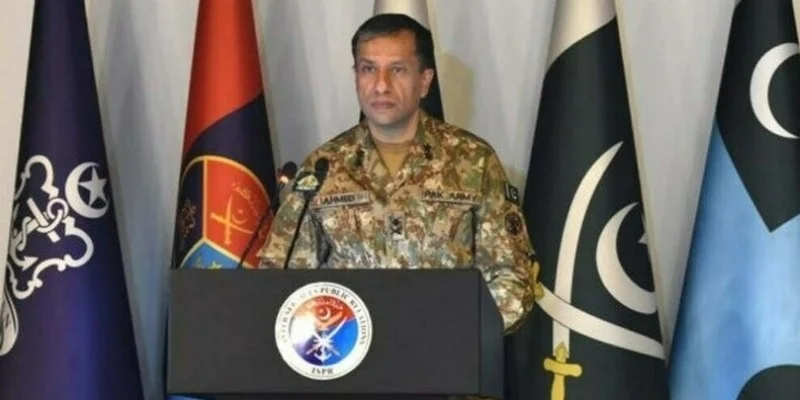
Pakistan Vows Collective Military Response to Any Attack on Saudi Arabia Under Makkah Defence Alliance
Pakistan has warned Yemen’s Iranian-backed Houthi rebels that any attack on Saudi Arabia could trigger a collective military response under the Makkah Joint Defence Alliance. ISPR Director General Lieutenant General Ahmed Sharif Chaudhry confirmed that Islamabad is providing Riyadh with necessary military assistance and would consider any formal request from Yemen’s internationally recognised government for direct support.
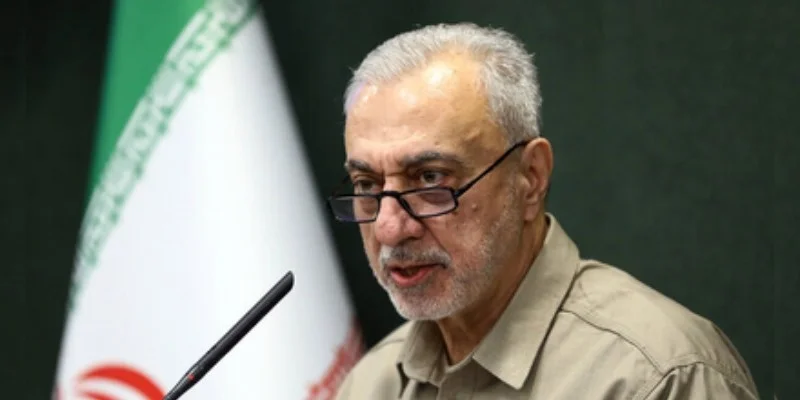
Iran’s New Defense Minister Warns US of ‘Enormous Damage’ if Military Attacks Resume
Iran’s new Defense Minister Mehrdad Akhlaghi warned that the United States and its regional allies would suffer “enormous damage” if Washington resumes military attacks against Tehran. His warning came after Iran’s parliament approved his appointment with 237 votes.