
Trump Threatens Devastating Strike on Iran’s Nuclear Sites as Pentagon Weighs ‘Mother of All Bombs’
· 39 views
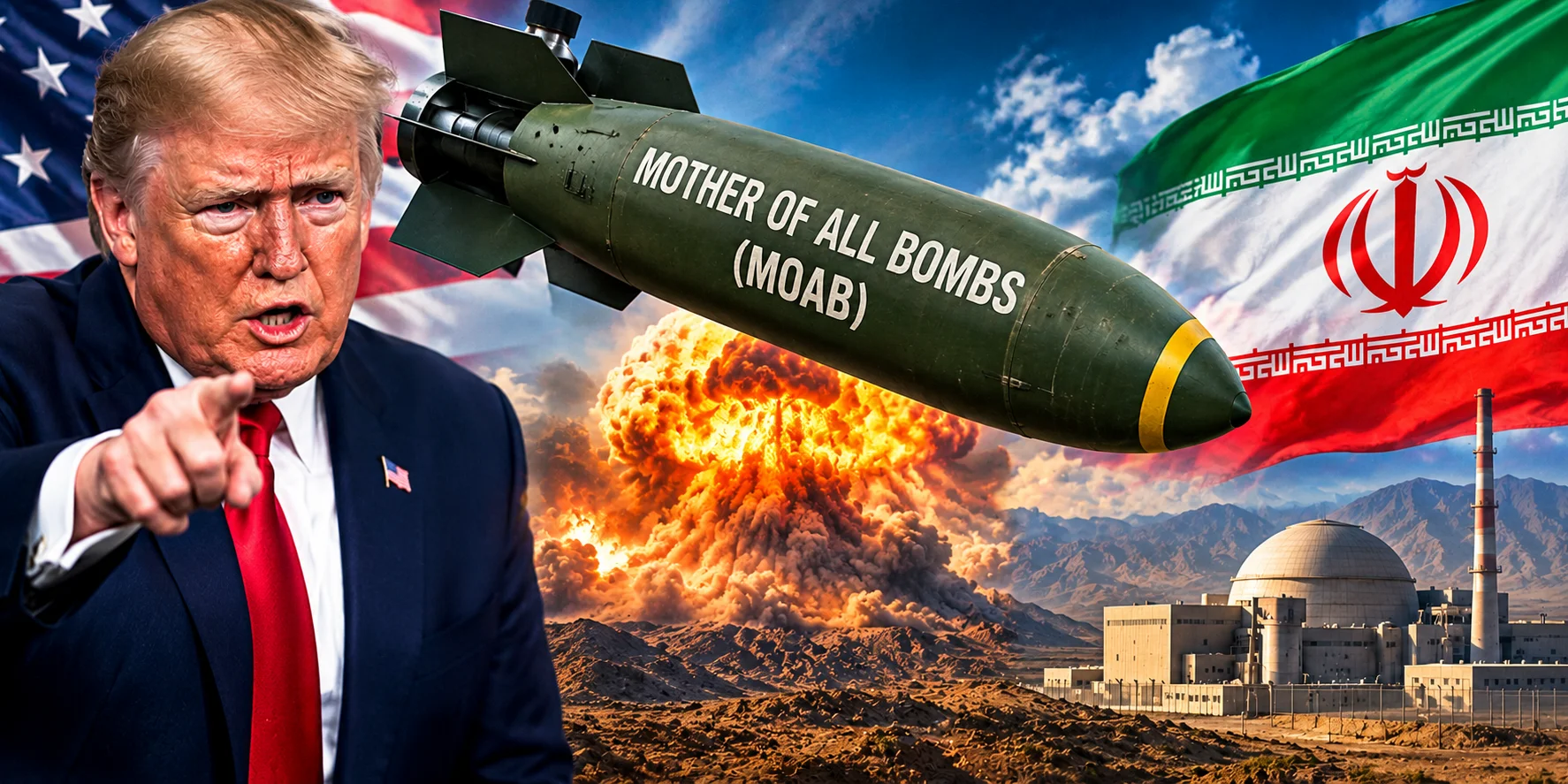
Washington, D.C. (Terror Monitor) — U.S. President Donald Trump has renewed his threat to launch military strikes against Iran’s nuclear facilities, including the heavily fortified underground complex known as Pickaxe Mountain, as reports indicate that the Pentagon has developed new attack plans involving the United States’ largest non-nuclear bomb, the GBU-43/B Massive Ordnance Air Blast (MOAB), widely known as the “Mother of All Bombs.”
Trump’s latest remarks have intensified concerns about a possible escalation in the U.S.-Israeli war against Iran, which began in February. However, the president has not confirmed whether he has authorized the use of the MOAB, and military experts have questioned whether the weapon would be effective against a nuclear facility believed to be buried deep beneath a mountain.
In an interview with the U.S. broadcaster Newsmax on October 15, Trump said Washington might have to strike Pickaxe Mountain, a suspected nuclear-related facility near Iran’s Natanz nuclear complex. He also ruled out deploying American ground troops for such an operation and said he would not use nuclear weapons against Iran.
The statements came after CNN reported that U.S. military planners had developed additional strike options targeting Iranian nuclear facilities and energy infrastructure, potentially including the use of the MOAB if Trump orders combat operations to resume.
The reported plans have raised questions about whether Washington is preparing for another major offensive or using the threat of overwhelming military force to pressure Tehran into making concessions.
Trump Warns Pickaxe Mountain Could Be Destroyed
Speaking to Newsmax, Trump said the United States wanted to ensure that Iran would never acquire a nuclear weapon.
“Their nuclear is buried under millions of tons of mountain,” Trump said, referring to Iran’s underground nuclear infrastructure.
He added: “Now we’re looking at Pickaxe Mountain. We may have to go there. We’ll take a shot at that one. We’ll knock it out fast.”
Trump also dismissed the need to use a nuclear weapon, saying the United States could achieve its military objectives with conventional weapons.
“I wouldn’t use nuclear. We don’t have to,” he said.
When asked about the MOAB, Trump emphasized that it was not a nuclear weapon but an extremely large conventional bomb. He did not, however, confirm whether he had approved its use against Iran.
The distinction is significant because the MOAB produces a powerful conventional explosion but was not designed to penetrate deeply buried underground facilities.
Pentagon Reportedly Develops New Strike Plans
CNN reported on October 15 that the U.S. military had developed new strike packages that could target Iranian energy infrastructure and nuclear sites if Trump decided to resume large-scale combat operations.
According to multiple U.S. officials familiar with the planning, the options include potentially deploying the GBU-43/B MOAB against selected targets.
CNN reported that the proposed operations could take place either before or after the November 3 U.S. midterm elections, although Trump has publicly said he would not launch new attacks before the elections.
The report also indicated that some U.S. officials were uncertain whether the president’s public commitment ruled out military action before Election Day.
One option discussed by military planners reportedly involves conducting additional strikes before withdrawing U.S. forces from the region, potentially allowing the administration to present the operation as a decisive conclusion to the conflict.
However, CNN’s sources also raised doubts about whether the MOAB would accomplish the administration’s strategic objectives, particularly if the main target were a deeply buried nuclear facility rather than an above-ground installation.
The Pentagon’s reported planning does not mean the weapon has been approved for use or that an attack is imminent.
What Is the ‘Mother of All Bombs’?
The GBU-43/B Massive Ordnance Air Blast bomb is one of the most powerful conventional weapons in the U.S. arsenal.
The weapon weighs approximately 21,600 pounds, or about 9.8 metric tonnes, and carries a massive explosive payload. It is designed to produce an exceptionally powerful blast and pressure wave across a large area.
Unlike a conventional bunker-buster bomb, the MOAB is not primarily designed to penetrate deep underground before exploding. Its destructive effect is concentrated largely above ground, making it potentially useful against exposed infrastructure, cave entrances and certain surface targets.
The United States used the MOAB operationally for the first time in April 2017, when it was dropped on a network of caves and tunnels used by Islamic State militants in Afghanistan.
Its possible deployment against Iran would represent a major escalation in the current conflict, particularly if used against energy facilities or sites associated with the country’s nuclear programme.
Why MOAB May Not Destroy Pickaxe Mountain
Despite its enormous explosive power, the MOAB may not be the appropriate weapon for destroying a facility buried deep beneath a mountain.
Pickaxe Mountain, also known as Kuh-e Kolang Gaz La, is located near Natanz, one of Iran’s principal nuclear sites. The facility is believed to be heavily fortified and constructed deep underground, although its precise purpose, internal layout and operational status remain unclear.
Satellite imagery and intelligence assessments have drawn attention to underground construction at the site, but publicly available information does not establish exactly what equipment or nuclear materials it contains.
Some assessments suggest that the facility extends roughly 100 metres or more underground. Its depth and protective rock formations could make it difficult to destroy with conventional aerial weapons.
Military experts have warned that a MOAB strike might damage tunnel entrances, ventilation systems and other exposed infrastructure without necessarily destroying the underground facilities themselves.
The weapon’s blast could cause extensive destruction around the site, but its ability to penetrate thick layers of rock is limited.
This raises a fundamental question about the reported U.S. plans: Would using the largest non-nuclear bomb in the American arsenal actually destroy the nuclear capabilities Washington wants to eliminate?
The GBU-57 Bunker Buster Presents a Different Option
The United States also possesses a specialized weapon designed to penetrate hardened and deeply buried targets: the GBU-57 Massive Ordnance Penetrator, commonly known as a bunker-buster bomb.
The GBU-57 weighs approximately 30,000 pounds, or 13.6 metric tonnes, and is engineered to penetrate protective layers before detonating.
During Operation Midnight Hammer in June 2025, the United States used B-2 stealth bombers and other aircraft to attack Iranian nuclear facilities. According to the Center for Strategic and International Studies, the operation included the deployment of 14 GBU-57 bombs against two targets, alongside cruise missile strikes against other facilities.
That operation demonstrated Washington’s willingness to use its most powerful conventional penetrating weapons against Iran’s nuclear infrastructure.
However, even a specialized bunker-buster is not guaranteed to destroy a facility buried deep beneath a mountain. The outcome would depend on the target’s depth, geological conditions, protective construction and the location of the equipment or materials being targeted.
The distinction between the two weapons is important: the MOAB is primarily designed to maximize blast effects over a large area, whereas the GBU-57 is specifically intended to penetrate hardened underground targets.
Could a Massive Strike Eliminate Iran’s Nuclear Programme?
Even a successful attack on Pickaxe Mountain would not necessarily eliminate Iran’s nuclear capabilities.
Destroying a facility can damage buildings, equipment and infrastructure, but it does not automatically eliminate the scientific expertise, technical knowledge or materials associated with a nuclear programme.
If equipment or nuclear material had been moved to other locations, or if key components survived the attack, Iran could potentially retain some capacity to continue its activities.
The extent of any damage would also be difficult to assess without access to the site and reliable post-strike intelligence.
The debate over the effectiveness of another major strike is particularly significant because Trump has previously claimed that U.S. attacks had inflicted devastating damage on Iran’s nuclear programme. His renewed threats against Pickaxe Mountain suggest that Washington continues to regard at least some elements of Iran’s nuclear infrastructure as a potential target.
Experts have therefore questioned whether another dramatic bombing campaign could deliver a lasting strategic outcome or merely damage facilities without resolving the underlying dispute.
Iran Rejects Threats and Warns of Retaliation
Iranian officials and hard-line commentators have responded to the American threats with defiance, dismissing the idea that the MOAB could intimidate the country into abandoning its position.
Ibrahim Azizi, head of the Iranian parliament’s National Security and Foreign Policy Committee, rejected the suggestion that the weapon could frighten Iran or undermine its historical identity.
Iranian hard-liners have also attempted to portray Washington’s threats as evidence of frustration over its inability to force Tehran into submission.
In comments reported by Iranian media, conservative commentator Hassan Khoshcheshm used a provocative expression to contrast American military power with Iran’s claimed capabilities.
“If America has the mother of all bombs, we have the father of bombs,” he said, without providing details about the weapons to which he was referring.
Supporters of Iran’s Islamic Revolutionary Guard Corps have similarly argued that the United States has already used powerful bunker-buster bombs against Iranian nuclear facilities, suggesting that a further threat involving the MOAB is not unprecedented.
These statements reflect the Iranian government’s effort to project confidence and discourage the perception that American military pressure will compel Tehran to capitulate. They do not, however, establish how effectively Iran could withstand a new U.S. attack.
IRGC Commander Issues Fresh Warning
Iran’s warnings have continued as speculation about possible U.S. military action grows.
On October 18, Brigadier General Mohammad Reza Naqdi, deputy coordinator of the Islamic Revolutionary Guard Corps, warned Washington against what he described as a military miscalculation.
According to Iranian media reports, Naqdi said Iran was prepared to respond to the American “Mother of All Bombs” with what he called the “father of bombs.”
“If you make a wrong move, we will come for you with the father of bombs, and all your assets will be at risk,” Naqdi said at a rally in the northern Iranian city of Sari.
He portrayed Trump’s threats as a sign of frustration in dealing with a country that refuses to surrender to external pressure.
The remarks were reported on October 18 and add to the increasingly confrontational rhetoric surrounding the possible use of the MOAB.
Iran has not publicly provided independently verifiable technical details about the weapon Naqdi described. His comments should therefore be understood as a warning rather than confirmation of a specific operational capability.
Iranian Hard-Liners Warn of Civilian and Economic Consequences
Not all Iranian commentary has focused on military defiance. Some figures have warned that attacks on nuclear facilities and energy infrastructure could cause extensive civilian harm and economic disruption.
Former Iranian parliamentarian Heshmatollah Falahatpisheh has cautioned that the consequences of strikes against deeply buried facilities would not necessarily remain confined to the immediate targets.
Damage to energy infrastructure could disrupt electricity supplies, fuel distribution and industrial production, while attacks near populated areas could put civilians at risk.
The potential consequences would depend on the targets selected, the nature of the weapons used and the extent of damage to surrounding infrastructure.
Iranian commentators have also called for diplomatic action and international intervention to prevent another escalation.
Among the concerns raised is the possibility that attacks on energy facilities could trigger retaliation against regional infrastructure, shipping and other strategic targets, widening the conflict beyond Iran and the United States.
Such warnings highlight the danger that a strike intended to demonstrate American military superiority could produce a wider confrontation with consequences for regional security and global energy markets.
Midterm Elections Add Political Pressure
The timing of the reported strike plans is another important factor.
The November 3 midterm elections are approaching, and Trump has publicly said he does not intend to launch new attacks on Iran before the vote. However, CNN’s reporting suggests that military planners have developed options for renewed operations on either side of the election date.
The president faces competing considerations.
On one hand, a major strike could be presented as evidence that his administration remains committed to preventing Iran from acquiring nuclear weapons. On the other, expanding the war could intensify domestic political criticism over its cost, duration and consequences for American households.
The conflict has already affected energy markets and raised concerns about the wider economic impact of continued hostilities.
A dramatic attack might allow the administration to claim a military success, but it could also provoke Iranian retaliation, further destabilize regional security and make it more difficult to bring the conflict to an end.
The political significance of any new operation would therefore depend not only on the immediate damage inflicted but also on whether Washington could demonstrate that the strike had achieved a lasting strategic objective.
What Happens If the United States Attacks Again?
A renewed American attack on Iran’s nuclear facilities or energy infrastructure could trigger a new cycle of retaliation.
Tehran has repeatedly warned that it would respond to further U.S. military action. The precise form and scale of any response remain uncertain, but the risks could extend to American military assets, regional infrastructure and strategic shipping routes.
Attacks on energy facilities could also intensify volatility in global oil markets, particularly if the conflict threatened the movement of oil and other commercial traffic through the Strait of Hormuz.
The possibility of civilian casualties and damage to essential infrastructure would further increase the political and humanitarian stakes.
At the same time, there is no public confirmation that Trump has authorized a MOAB strike, and the development of military plans does not necessarily mean they will be implemented.
The effectiveness of such an operation would also remain uncertain, especially against a facility believed to be buried deep beneath a mountain.
For Washington, the central challenge is whether military pressure can achieve its stated objective of preventing Iran from developing nuclear weapons without triggering a wider and potentially prolonged regional war.
For Tehran, the challenge is to deter another attack while avoiding a confrontation that could cause extensive damage to its infrastructure and economy.
Trump’s renewed threat has therefore raised the prospect of a further escalation, but it remains unclear whether the MOAB would deliver the decisive result Washington seeks—or instead deepen a conflict that neither side has been able to resolve.
Related Articles
US Embassies Issue Urgent Middle East Security Alert Amid Houthi Attacks
US embassies across the Middle East have urged American citizens to remain vigilant amid escalating regional hostilities, warning of possible flight cancellations, airspace closures and travel disruptions. The alerts come as Iran-backed Houthi rebels intensify attacks on Saudi Arabia, with deadly strikes disrupting operations at Riyadh’s international airport and raising fears that the conflict could spread further across the region.
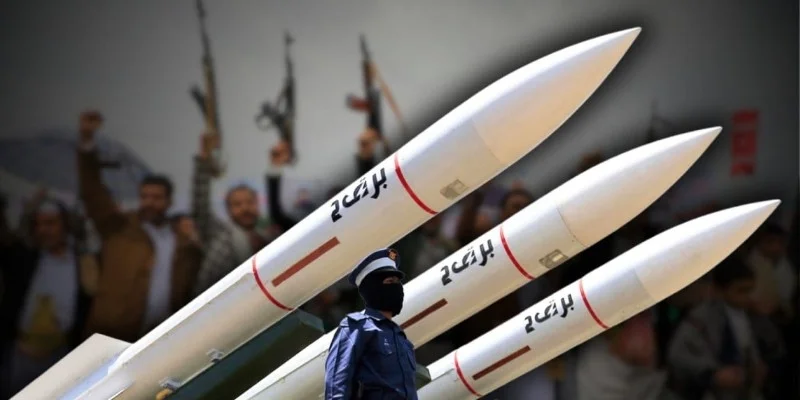
Iran-Backed Houthis Kill 53, Wound 200 in Ballistic Missile Attack on Yemen Military Camp
Iran-backed Houthi rebels killed at least 53 people and wounded around 200 in a three-missile attack on a military training camp in Yemen’s Shabwa province on Monday. The escalation comes as the Houthis intensify attacks on Saudi Arabia, prompting Egypt to consider military assistance to Riyadh and the United States to warn its citizens of growing security risks across the Middle East.
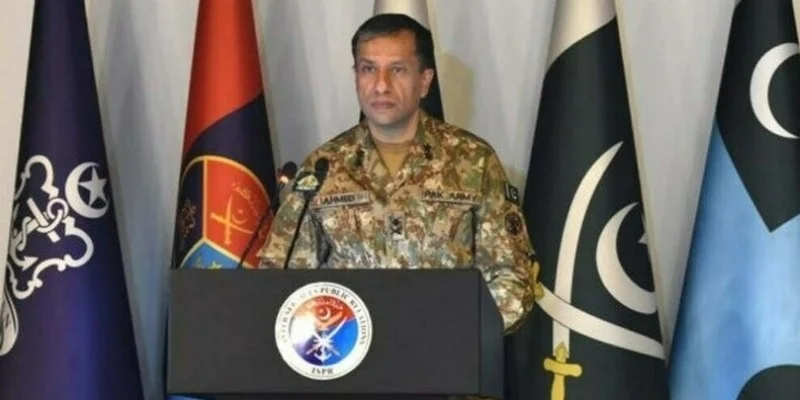
Pakistan Vows Collective Military Response to Any Attack on Saudi Arabia Under Makkah Defence Alliance
Pakistan has warned Yemen’s Iranian-backed Houthi rebels that any attack on Saudi Arabia could trigger a collective military response under the Makkah Joint Defence Alliance. ISPR Director General Lieutenant General Ahmed Sharif Chaudhry confirmed that Islamabad is providing Riyadh with necessary military assistance and would consider any formal request from Yemen’s internationally recognised government for direct support.
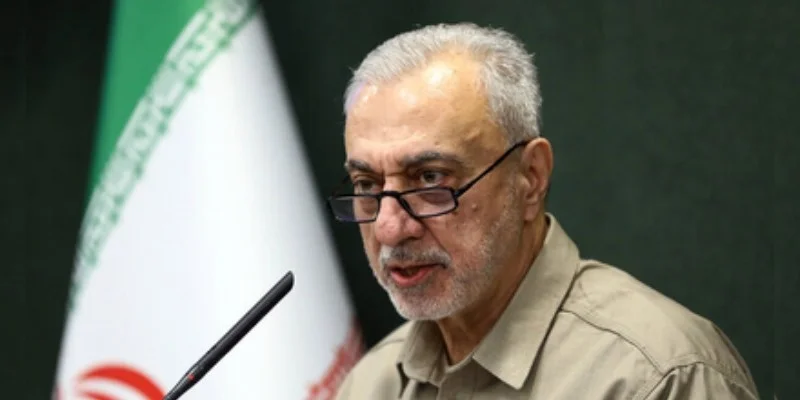
Iran’s New Defense Minister Warns US of ‘Enormous Damage’ if Military Attacks Resume
Iran’s new Defense Minister Mehrdad Akhlaghi warned that the United States and its regional allies would suffer “enormous damage” if Washington resumes military attacks against Tehran. His warning came after Iran’s parliament approved his appointment with 237 votes.