
Iran Threatens to Strike US Military Bases Across Europe, Warns of Wider War Beyond Middle East
· 34 views
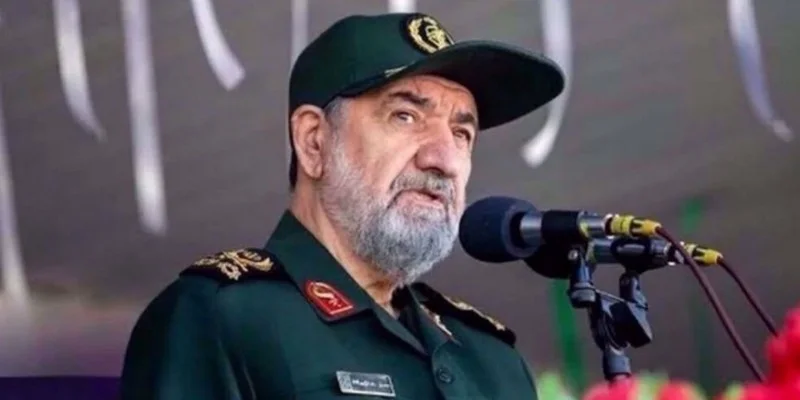
TEHRAN (Terror Monitor) — Iran has threatened to expand its military response beyond the Middle East and target American military installations in Europe and other distant regions if the United States launches fresh attacks against the Islamic Republic.
Iranian security chief Mohsen Rezaei issued the warning in an interview with Lebanon-based Al Mayadeen television, broadcast on Wednesday, November 11, according to a report by Agence France-Presse (AFP).
"If American aircraft take off from an American military base, even one located in a European country or some other distant region, to bomb Iran, we will strike those bases as well," Rezaei said.
He warned that any renewed American military action would prompt Tehran to target what he described as "America's more distant military installations", including facilities that Iran had not previously attacked.
"We may even strike certain islands that they assume are beyond the reach of our missiles," he added, without identifying specific locations.
The remarks represent a further escalation in Tehran's warnings that any renewed US military campaign could turn into a conflict extending far beyond the Persian Gulf and the wider Middle East.
Diego Garcia and Iran's long-range missile threat
Rezaei's warning has also renewed attention on Diego Garcia, the strategically important joint United States-United Kingdom military installation in the Indian Ocean, approximately 4,000 kilometres from Iran.
In March, two Iranian ballistic missiles were reportedly launched in the direction of the military base. According to a statement subsequently made by the British government to Parliament, one missile fell short of its target while the other was intercepted before reaching the island. Neither missile came close to the installation.
The incident raised questions about Iran's ability to threaten military facilities located at considerable distances from its territory.
Iran has also repeatedly warned that countries allowing their territory or military installations to be used for operations against the Islamic Republic could face retaliation.
Alleged Iranian-backed plot at British airbase
Rezaei's latest warning comes just days after the US Department of Justice announced terrorism-related charges against three individuals accused of involvement in an alleged plot targeting Britain's Royal Air Force Fairford base, where American military personnel and aircraft were stationed.
In an announcement on Tuesday, November 10, the Justice Department said an eight-count superseding indictment had been unsealed against Mohammad Baqer Saad Dawood al-Saadi, Mohsen Mohajeri and Mohammed Ali al-Hassani.
According to US prosecutors, the three allegedly supported an Iran-aligned network involving the Islamic Revolutionary Guard Corps (IRGC) and Kata'ib Hezbollah, an Iraqi armed group designated as a foreign terrorist organisation by Washington.
The indictment alleges that al-Hassani coordinated preparations for an operation against RAF Fairford in September 2026, while Mohajeri was also allegedly involved in coordinating activities from Iran.
Prosecutors said associates were instructed to arrange three vans, some containing barrels of fuel, and conduct surveillance around the British airbase. The vehicles were reportedly stopped or prevented from reaching their intended destination by security roadblocks.
US authorities also alleged that al-Saadi, who was already in federal custody in New York, attempted to coordinate activities with the other defendants through coded communications passed via third parties.
The defendants face multiple terrorism-related charges, including conspiracy to provide material support to designated terrorist organisations and conspiracy to bomb a place of public use.
The allegations have not been proven in court, and all three defendants are presumed innocent unless convicted.
Iran vows to continue underground missile production
Meanwhile, Iran's Islamic Revolutionary Guard Corps has reaffirmed its commitment to developing and manufacturing ballistic missiles despite international pressure, sanctions and military threats.
IRGC commander Ahmad Vahidi said missile production and technological development would continue, according to a statement reported by Iran's Tasnim News Agency.
In a message marking Iran's Aerospace Defence Day, Vahidi paid tribute to Hassan Tehrani Moghaddam, widely regarded in Iran as a key architect of the country's ballistic missile programme.
Addressing personnel of the IRGC Aerospace Force, Vahidi said Iranian forces were continuing to build military capabilities deep inside mountains and underground facilities.
"The enemy must know that the path of martyr Tehrani Moghaddam cannot be stopped by threats or sanctions. This path continues with blood and faith," he said.
His remarks came amid renewed attention to Iran's underground military infrastructure and its efforts to protect missile manufacturing facilities from potential airstrikes.
In a related development, the IRGC Aerospace Force unveiled a new underground missile facility on November 10, displaying ballistic and cruise missiles alongside their launch systems.
Tasnim reported that Iranian officials had described the facility as part of a broader effort to move missile and drone production lines beneath the ground, making them more difficult to destroy through aerial attacks.
Iran rules out transferring enriched uranium abroad
On the diplomatic front, Rezaei has insisted that Iran will not transfer any of its enriched nuclear material outside the country, signalling another major obstacle to negotiations with Washington.
In his Wednesday interview, he said the nuclear issue was not currently part of the negotiations and reiterated that Tehran had already established its red lines.
He specifically rejected any proposal requiring Iran to send even a small quantity of its enriched nuclear material abroad.
Reuters separately reported on Wednesday that Rezaei had declared Iran would not allow even a single particle of enriched nuclear material to leave the country.
The position puts Tehran at odds with Washington, which has insisted that Iran's nuclear programme and highly enriched uranium stockpile must be addressed as part of any agreement to end the conflict.
The International Atomic Energy Agency (IAEA) estimated that Iran possessed approximately 440.9 kilograms of uranium enriched to 60 percent before the US and Israeli strikes on Iranian nuclear facilities in June 2025. The current status and quantity of the remaining stockpile are unclear.
Uranium enriched to 60 percent is far above the level generally required for civilian nuclear power generation and is relatively close to the 90 percent enrichment level commonly associated with weapons-grade material. Iran maintains that its nuclear programme is peaceful and denies seeking to develop nuclear weapons.
Washington signals reduced appetite for renewed military strikes
Rezaei's statements come as diplomatic efforts to end the conflict continue, although major disagreements remain between Tehran and Washington.
US Secretary of State Marco Rubio said on Tuesday that Washington currently saw no need for another round of major military operations against Iran, arguing that the American economic pressure campaign was having a significant impact.
"The economic campaign (against Iran) is so devastating that right now there is no need for major combat operations," Rubio said following a meeting of G7 foreign ministers in Paris, according to AFP.
President Donald Trump also recently referred to positive momentum in efforts to resolve the conflict, while regional governments, including Qatar and Pakistan, have been involved in diplomatic initiatives aimed at securing an agreement.
However, negotiations remain complicated by disagreements over sanctions, the Strait of Hormuz, Iran's nuclear programme and the future of American military operations in the region.
Iranian Foreign Minister Abbas Araghchi has said Tehran's proposal for reopening the Strait of Hormuz remains on the table, subject to Washington accepting Iranian conditions.
Reuters reported on Wednesday that the strategic waterway continued to face serious security challenges despite some recovery in shipping activity. Attacks on commercial vessels and disruption to maritime traffic have kept international concerns high.
Eight months of war and regional instability
The war began on February 28, 2026, when the United States and Israel launched military strikes against Iran, killing then-Supreme Leader Ayatollah Ali Khamenei.
Iran retaliated with missile and drone attacks against targets across the region, while armed groups aligned with Tehran in Lebanon, Yemen and Iraq became involved in the conflict.
The fighting has also disrupted shipping through the Strait of Hormuz, one of the world's most important energy transit routes, raising concerns over global oil supplies, maritime security and regional economic stability.
Although diplomatic efforts have raised hopes of ending the conflict, Tehran's latest threats to target US military facilities beyond the Middle East, combined with its refusal to compromise on the transfer of enriched uranium, indicate that significant obstacles remain to a lasting settlement.
Related Articles
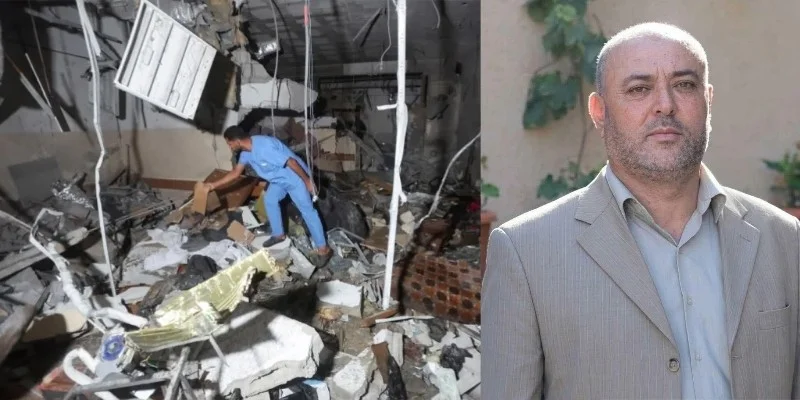
Israeli Airstrike on Gaza’s Nasser Hospital Kills Six, Including Surgeon
An Israeli airstrike on Nasser Hospital in southern Gaza has killed at least six Palestinians, including a surgeon and a 13-year-old boy, and wounded at least 28 others. Israel said it targeted a senior Hamas commander allegedly operating a military headquarters inside the hospital, but Palestinian reports said the commander was not among those killed.
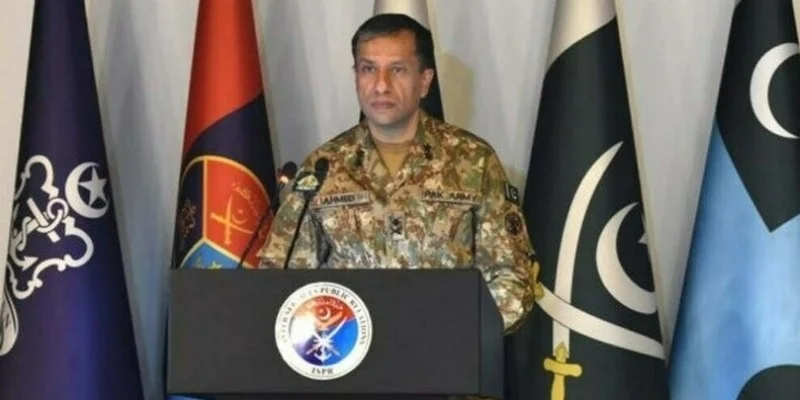
Pakistan Vows Rapid Military Deployment to Saudi Arabia Under Makkah Defence Alliance
Pakistan says it is preparing for the rapid deployment of agreed military forces and defence capabilities to Saudi Arabia under the Makkah Joint Defence Alliance, reaffirming that its commitment to the Kingdom’s security and sovereignty is “absolute and non-negotiable.”
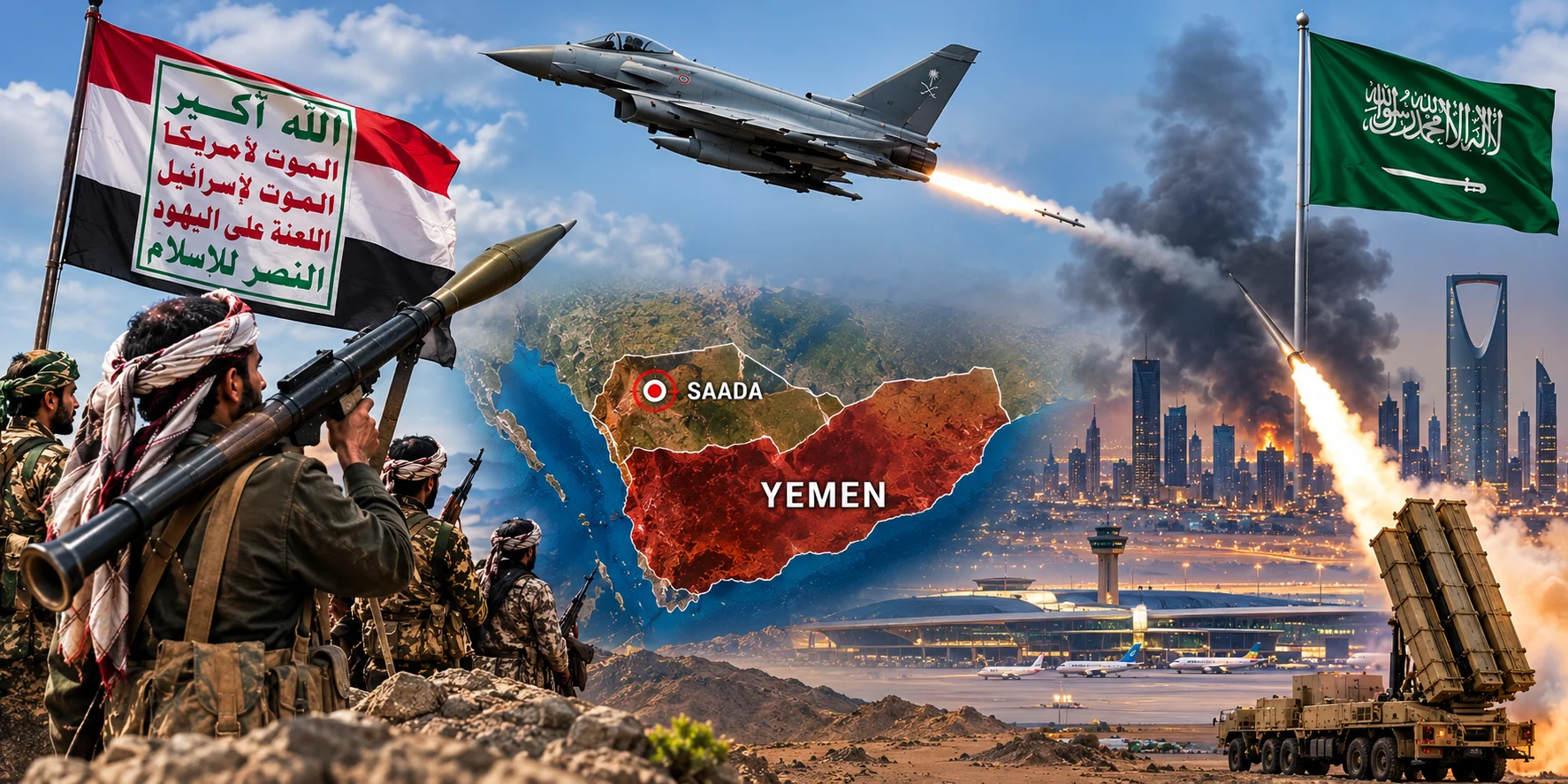
Houthis Launch Fresh Missile and Drone Attacks on Saudi Arabia as Missiles Strike Yemen’s Aden
Iran-backed Houthis Launch Fresh Missile and Drone Attacks on Saudi Arabia, Target Military Bases in Yemen’s Aden
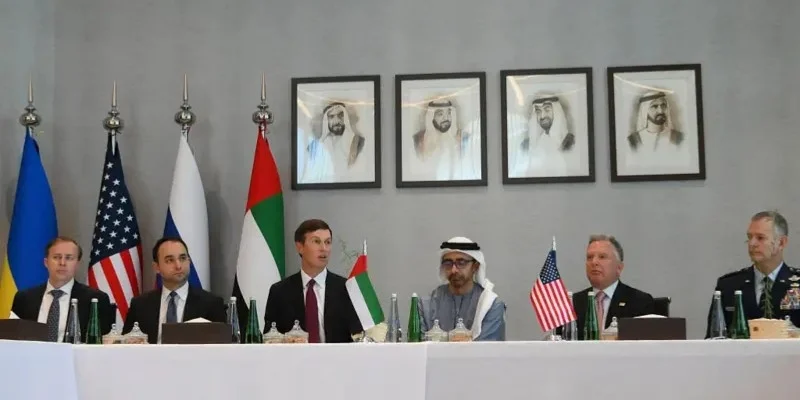
Russia-Ukraine Talks in Abu Dhabi End Without Breakthrough, but Prisoner Swap Agreed
Russia and Ukraine Agree to Largest Prisoner Exchange After Abu Dhabi Peace Talks, No Breakthrough on War Ending