
Israeli Airstrike on Gaza’s Nasser Hospital Kills Six, Including Surgeon
· 48 views
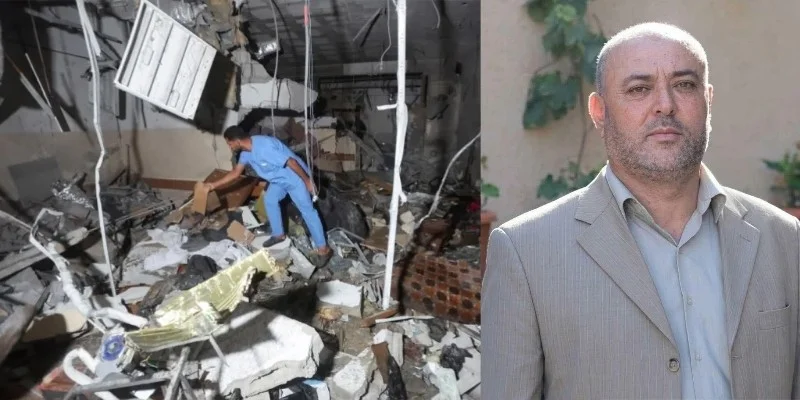
Gaza/Jerusalem (Terror Monitor) — An Israeli airstrike on Nasser Hospital in southern Gaza killed at least six Palestinians, including a general surgeon and a 13-year-old boy, and wounded at least 28 others on Thursday, November 12, according to Palestinian health authorities, as Israel said the operation targeted a senior Hamas commander and other militants allegedly using the hospital as a military headquarters.
The overnight strike hit the medical complex in Khan Younis shortly after midnight, causing extensive damage to its surgical department, operating rooms, intensive care facilities and several hospital wards.
Gaza's Health Ministry identified one of the victims as Dr. Rizk Abu Shaira, a general surgeon working at Nasser Hospital. A 13-year-old boy was also among those killed, while at least two other victims were patients receiving treatment at the hospital.
The identities and affiliations of all six people killed were not immediately independently established.
According to Gaza's Health Ministry, at least 28 people were wounded in the attack. Reuters, citing Gaza Civil Defence spokesperson Mahmoud Basal, reported six deaths and 20 injuries, while the Associated Press also reported 28 wounded, citing Palestinian health authorities.
The Israeli military confirmed carrying out the airstrike, saying it had targeted a compound inside the hospital where Hamas commanders and other alleged militants were operating.
In a joint statement, the Israel Defense Forces (IDF) and Shin Bet domestic intelligence agency alleged that Hamas had established a military headquarters on the second floor of Nasser Hospital and was using the facility to plan and coordinate attacks against Israeli forces and civilians.
The Israeli military identified the principal target as Muhammad Abu Ismail, whom it described as the commander of Hamas's Khan Younis Brigade.
According to the IDF, the targeted commander was responsible for directing military operations and had been involved in holding Israeli hostages captured during the Hamas-led attack on October 7, 2023.
Israel further alleged that the hospital premises had been used for military command activities, weapons storage and observation posts, and that civilians were not permitted to enter the second-floor area allegedly serving as Hamas's military headquarters.
The IDF said the strike was specifically directed at the room from which the brigade commander and other alleged militants were conducting military activities.
It also claimed that precision munitions and aerial surveillance had been used to minimise civilian casualties and that repeated warnings had been issued to halt military activities inside the hospital.
However, the hospital administration said it had received no immediate warning before the attack.
According to reports from Gaza, Muhammad Abu Ismail was not among the six people reported killed by Palestinian health authorities. The Israeli military did not immediately provide independently verifiable details about the fate of the commander.
Israel also alleged that Abu Ismail had been involved in holding several Israeli hostages, including Nimrod Cohen, Matan Zangauker, Edan Alexander, Avera Mengistu, Colonel Asaf Hamami, Staff Sergeant Oz Daniel and Captain Omer Neutra.
The allegations concerning Hamas's military headquarters inside Nasser Hospital have not been independently verified by international news organisations.
Hospital Wards and Operating Rooms Devastated
Footage circulating on social media following the attack showed extensive destruction inside Nasser Hospital, with damaged operating rooms, destroyed medical equipment, rubble scattered across patient beds and several sections of the building severely damaged.
Medical personnel and emergency workers were seen carrying injured patients through debris-covered corridors while attempting to evacuate people from affected wards.
The hospital's surgical wing and parts of its intensive care facilities were among the areas reportedly hit.
British volunteer surgeon Dr. Goher Rahbour, who was working at Nasser Hospital, told international media that the attack took place shortly after midnight and that the explosions were powerful enough to shake the entire hospital building.
Rahbour said he was working on the hospital's fourth floor when the strikes occurred and described the recovery area as having been reduced to rubble.
He also said he had been working alongside Dr. Abu Shaira just hours before the attack.
Hospital director Ahmed al-Farra said the strike had disrupted medical services and surgical operations, further limiting the hospital's ability to treat patients.
The attack has raised fresh concerns about the safety of patients and medical personnel in Gaza, where hospitals are already operating under severe shortages of medicines, medical equipment, fuel and qualified healthcare workers.
Israel and Hamas Dispute Military Use of Hospitals
The Israeli military has repeatedly accused Hamas of operating from hospitals, schools and other civilian infrastructure in Gaza, allegations that the Palestinian group has generally rejected.
In its latest statement, the IDF maintained that Nasser Hospital had been used as a military headquarters and that the targeted room was being used by Hamas commanders to conduct military activities.
Israel also said it had issued repeated warnings about the alleged military presence at the hospital but claimed those activities had continued despite the warnings.
Hospital officials, however, said no immediate warning had been received before Thursday's attack.
Under international humanitarian law, hospitals and medical personnel enjoy special protection during armed conflicts. Medical facilities can lose that protection under specific circumstances if they are used to commit acts harmful to an enemy, subject to applicable legal requirements, including warnings where appropriate and the principles of distinction, proportionality and precaution.
Attack Deepens Gaza's Healthcare Crisis
Nasser Hospital is one of the major medical facilities serving southern Gaza and has repeatedly faced serious security incidents during the war.
Its latest targeting has further undermined the territory's already devastated healthcare system and raised concerns about the availability of emergency and specialised medical treatment.
According to an assessment published by the United Nations, World Bank and European Union in April, more than 1,800 healthcare facilities in Gaza had been partially or completely damaged or destroyed since the beginning of the war.
The World Health Organization has repeatedly warned that Gaza's remaining hospitals are struggling with damaged infrastructure, shortages of medical supplies and fuel, and increasing numbers of patients requiring urgent treatment.
Israeli Attacks Continue Despite Ceasefire
The latest airstrike comes despite a US-backed ceasefire agreement that took effect in October 2025, following more than two years of devastating fighting between Israel and Hamas.
Although the agreement reduced the scale of hostilities, Israeli military operations and attacks have continued in different parts of the Gaza Strip.
According to Gaza's Health Ministry, at least 1,622 Palestinians had been killed in Israeli attacks since the ceasefire took effect, while Israel reported that five of its soldiers had been killed during the same period, according to the Associated Press.
The overall Palestinian death toll since the beginning of Israel's military offensive in October 2023 has exceeded 74,600, according to Gaza health authorities.
The war began after Hamas-led militants attacked southern Israel on October 7, 2023, killing approximately 1,200 people and taking 251 others hostage, according to Israeli figures.
The subsequent Israeli military campaign has devastated large parts of Gaza, displaced much of its population and severely damaged residential areas, hospitals and civilian infrastructure.
Disagreements Over Next Phase of Ceasefire
The attack on Nasser Hospital comes as efforts to advance the next phase of the ceasefire agreement remain stalled.
The proposed next phase includes Hamas's disarmament, further Israeli military withdrawal from Gaza and the establishment of a Palestinian technocratic administration to oversee the territory.
Israel has insisted that Hamas must no longer pose a military threat, while Hamas has called for guarantees that Israeli military operations will end and that Israeli forces will completely withdraw from Gaza.
The Trump administration-backed peace framework has also faced significant obstacles over security arrangements, governance and the future of Hamas's military capabilities.
Thursday's attack has renewed concerns about the durability of the ceasefire and the protection of civilians and medical facilities in the Palestinian territory.
With medical services disrupted, hospitals struggling to operate and casualties continuing to rise, the latest strike has once again brought international attention to the humanitarian consequences of the Gaza conflict and the urgent need to protect healthcare facilities and medical personnel under international law.
Related Articles
Iran Threatens to Strike US Military Bases Across Europe, Warns of Wider War Beyond Middle East
Iran has threatened to strike US military bases across Europe and other distant regions if Washington launches fresh attacks, warning that even islands previously considered beyond the reach of Iranian missiles could become targets. Tehran has also vowed to continue underground ballistic missile production and rejected transferring any enriched uranium abroad, as tensions with the United States remain high.
Pakistan Vows Rapid Military Deployment to Saudi Arabia Under Makkah Defence Alliance
Pakistan says it is preparing for the rapid deployment of agreed military forces and defence capabilities to Saudi Arabia under the Makkah Joint Defence Alliance, reaffirming that its commitment to the Kingdom’s security and sovereignty is “absolute and non-negotiable.”
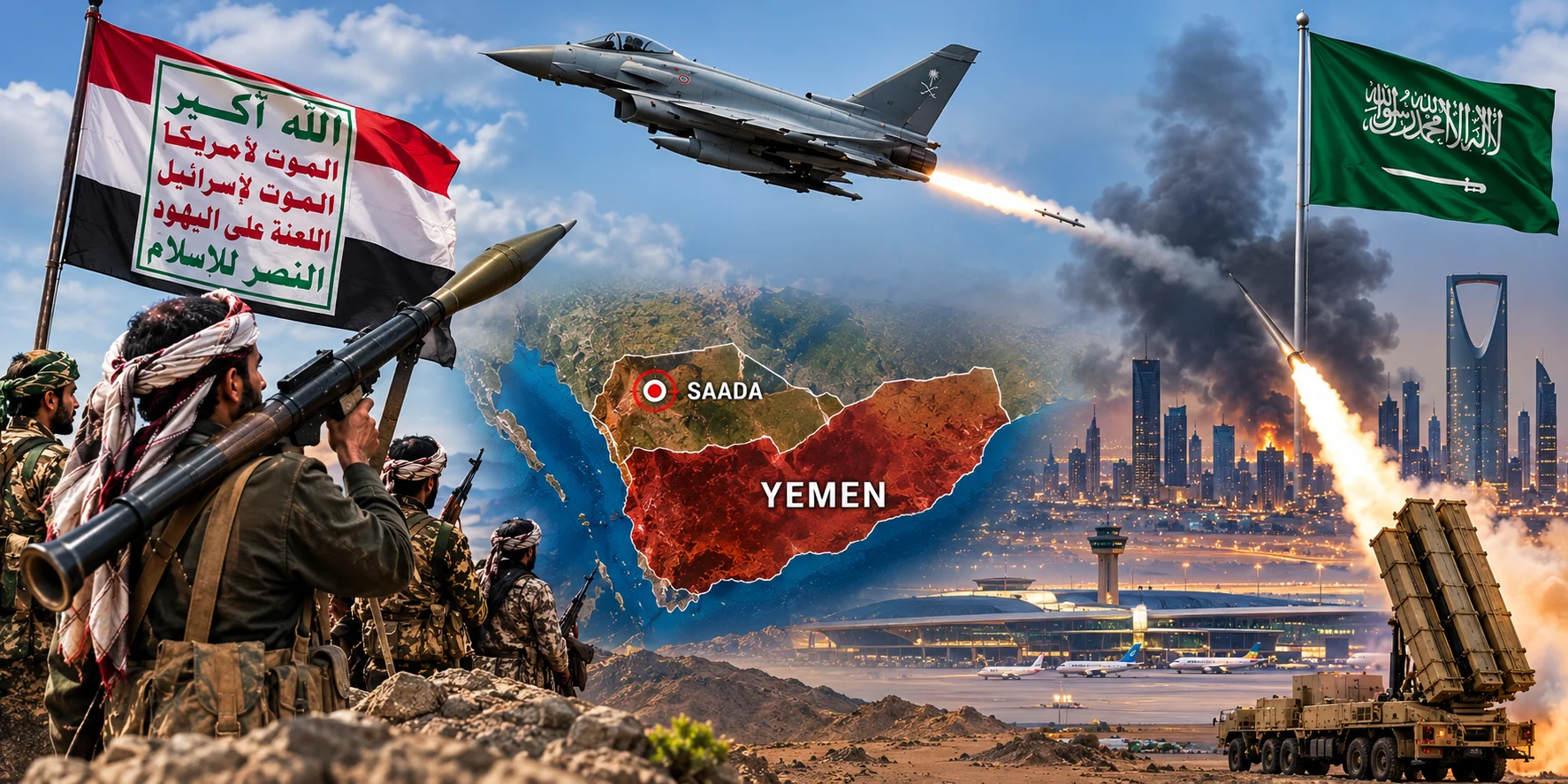
Houthis Launch Fresh Missile and Drone Attacks on Saudi Arabia as Missiles Strike Yemen’s Aden
Iran-backed Houthis Launch Fresh Missile and Drone Attacks on Saudi Arabia, Target Military Bases in Yemen’s Aden

Russia-Ukraine Talks in Abu Dhabi End Without Breakthrough, but Prisoner Swap Agreed
Russia and Ukraine Agree to Largest Prisoner Exchange After Abu Dhabi Peace Talks, No Breakthrough on War Ending