
Taiwan President Announces Major Defense Spending Increase Amid Rising Chinese Military Pressure
· 524 views
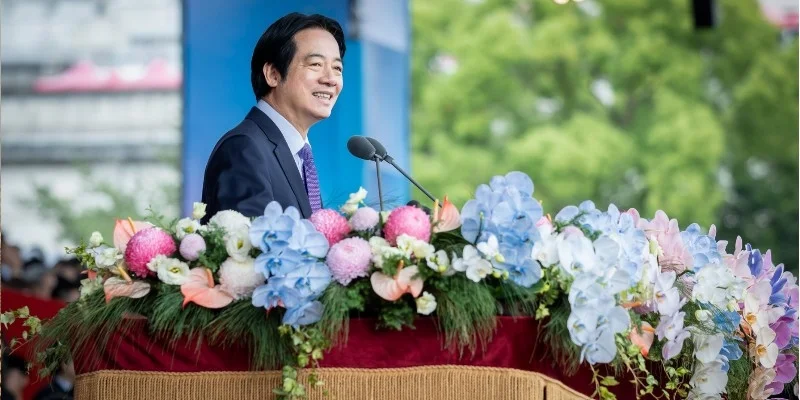
TAIPEI (Terror Monitor) — Taiwan President Lai Ching-te has announced a major increase in defense spending, saying the island must strengthen its military capabilities to counter growing pressure from China and deter a potential conflict across the Taiwan Strait.
Speaking during Taiwan's National Day celebrations on Saturday, October 10, Lai said Taiwan's objective was not to start a war but to prevent one by strengthening its deterrence capabilities and ensuring that its armed forces were prepared to defend the island.
Taipei has set its proposed defense budget for the coming fiscal year at 1.1 trillion New Taiwan dollars, an amount equivalent to more than 3 percent of the island's gross domestic product (GDP). The planned spending increase reflects growing concern over China's expanding military capabilities and its continued military activities around Taiwan.
Lai accused Beijing of attempting to change the status quo across the Taiwan Strait through military operations and other forms of coercion. He said Taiwan would continue strengthening its defenses to protect its democratic system, safeguard its population and maintain peace and stability in the region.
"Taiwan's purpose is not to provoke a war, but to prevent one," Lai said, emphasizing the importance of maintaining a credible defensive capability in the face of mounting security challenges.
China considers Taiwan part of its territory and has repeatedly refused to rule out the use of force to bring the self-governing island under its control. Beijing regards reunification as a central national objective, while Taiwan's government maintains that its future should be determined by its people.
Taiwan, with a population of approximately 23 million, operates its own democratic political system, government and military. Despite its de facto autonomy, its international status remains contested because Beijing claims sovereignty over the island and opposes moves toward formal Taiwanese independence.
Taiwan Seeks Stronger Military Capabilities and U.S. Support
The planned increase in defense spending comes as Taipei seeks to modernize its armed forces, improve its air and missile defenses, and reassure the United States of its commitment to self-defense.
The United States is Taiwan's most important international security partner and its principal source of foreign arms, although Washington and Taipei do not maintain formal diplomatic relations.
Taiwan is awaiting approval of an arms package worth approximately $14 billion that includes U.S.-made Patriot air defense systems. The proposed procurement is intended to strengthen the island's ability to defend against aerial threats and improve its broader military readiness amid China's growing military presence in the region.
The Patriot system is designed to intercept aircraft and certain incoming missiles, making it an important component of Taiwan's efforts to strengthen its air and missile defenses.
However, uncertainty over the future of U.S. security support has added to Taipei's concerns. U.S. President Donald Trump has previously said Taiwan should pay for American protection, remarks that have prompted questions about the future terms of Washington's security commitment.
The United States maintains its longstanding One China policy while continuing to provide Taiwan with defensive weapons and other forms of support for its self-defense capabilities. Washington opposes unilateral changes to the status quo across the Taiwan Strait, although its policy does not amount to formal recognition of Taiwan as an independent state.
Lai's announcement signals that Taipei intends to devote additional resources to its own defense rather than rely exclusively on external assistance. The proposed budget increase is part of a broader effort to improve military preparedness and strengthen deterrence against a possible Chinese attack.
Beijing-Taipei Tensions Remain a Regional Security Concern
China has increased military activity around Taiwan in recent years, including air and naval operations that Taipei views as attempts to intimidate the island and put pressure on its government.
Beijing has consistently rejected Taiwan's claims to separate political status and regards Lai as a pro-independence leader. Chinese officials maintain that Taiwan is an inseparable part of China and that reunification is necessary to achieve national unity.
Taiwan's government, meanwhile, has stressed that maintaining peace requires a combination of military preparedness, international cooperation and efforts to avoid miscalculation.
Analysts have warned that an escalation across the Taiwan Strait could have consequences far beyond the island, potentially drawing in the United States and disrupting regional security, international trade and global supply chains. Taiwan's strategic importance is also linked to its role in the global semiconductor industry, which supplies advanced chips used in electronics, computing and other critical technologies.
Against this backdrop, Taipei's proposed defense spending increase reflects its assessment that the security environment is becoming more challenging and that stronger defensive capabilities are necessary to discourage military action.
National Day Marks the Beginning of the Republic of China's Historical Legacy
Taiwan's National Day, observed annually on October 10, commemorates the 1911 revolution that helped bring an end to China's Qing dynasty and paved the way for the establishment of the Republic of China.
The present-day dispute between China and Taiwan has its roots in the Chinese Civil War between Nationalist forces led by Chiang Kai-shek and Communist forces under Mao Zedong.
After the Nationalists were defeated on the mainland in 1949, Chiang's government relocated to Taiwan, while the Communists established the People's Republic of China in Beijing. Since then, the two sides have remained under separate governments, with Beijing continuing to claim sovereignty over Taiwan.
The political divide has endured for more than seven decades and remains one of the most sensitive issues in relations between China and the United States.
Lai's National Day address underscored Taipei's determination to strengthen its defenses while presenting deterrence as the central objective of its military policy. As China continues to assert its sovereignty claims and the United States maintains its security support for Taiwan, the island faces the challenge of improving its defensive capabilities while seeking to prevent tensions from escalating into open conflict.
Related Articles
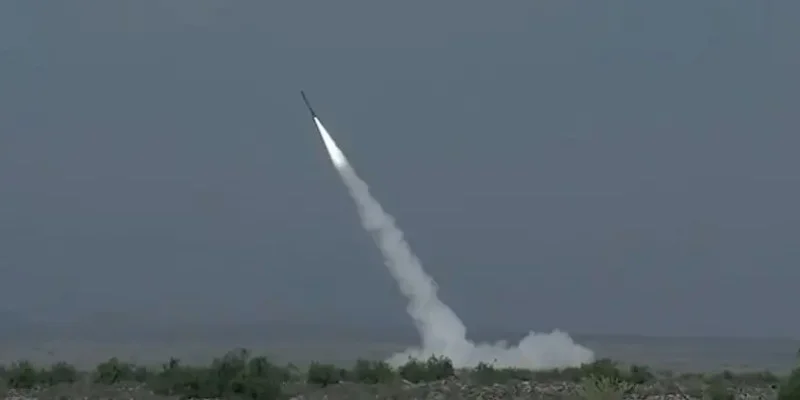
Pakistan Successfully Tests Fateh-II Hypersonic Ballistic Missile With Extended Range
Pakistan’s military has successfully tested the extended-range variant of its Fateh-II hypersonic ballistic missile, the ISPR announced Tuesday. The missile features advanced navigation and avionics systems, can change its trajectory during flight and is designed to strike designated targets with high precision, according to the military.
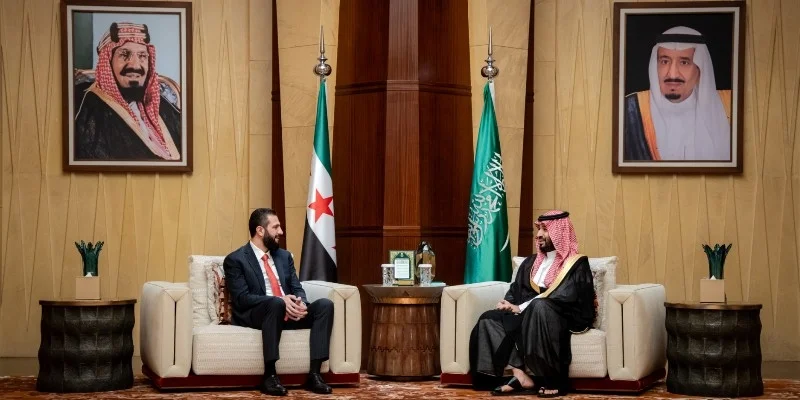
Syrian President Ahmed al-Sharaa Meets Saudi Crown Prince Mohammed bin Salman in Riyadh
Syrian President Ahmed al-Sharaa met Saudi Crown Prince and Prime Minister Mohammed bin Salman in Riyadh on Tuesday to discuss bilateral relations, expanding cooperation and the latest regional developments. The meeting came amid heightened tensions across the region, including the escalating conflict involving Iran-backed Houthis in Yemen.
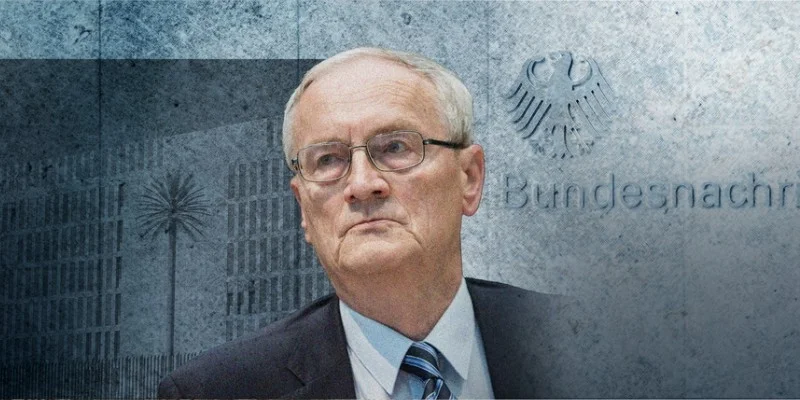
Former German Intelligence Chief August Hanning Arrested on Espionage and Treason Suspicions
Germany has arrested former BND chief August Hanning on suspicion of espionage, obtaining state secrets and attempted treason. Authorities also detained his former office manager, with investigators examining the alleged transfer of thousands of classified intelligence documents to a foreign intelligence service.
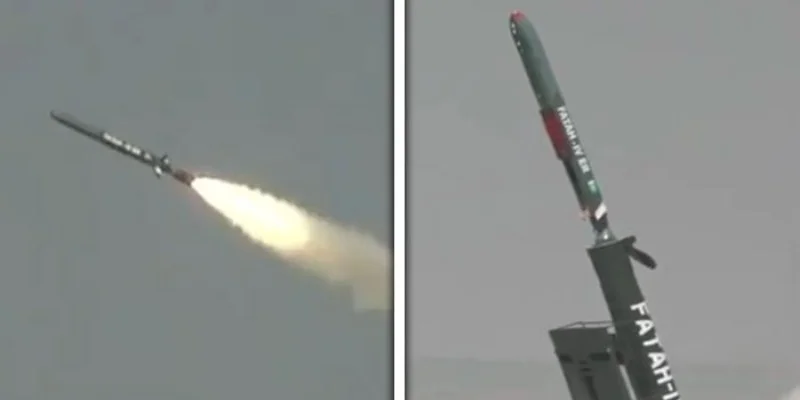
Pakistan Successfully Tests Extended-Range Fatah-4 Ground-Launched Cruise Missile
Pakistan has successfully tested the extended-range variant of its indigenously developed Fatah-4 ground-launched cruise missile system, the military said. Equipped with advanced avionics and enhanced navigation, the system is designed to strike targets at extended ranges with a high degree of precision.