
U.S. Completes Final Troop Withdrawal From Iraq, Ending 12-Year Anti-ISIS Mission
· 752 views
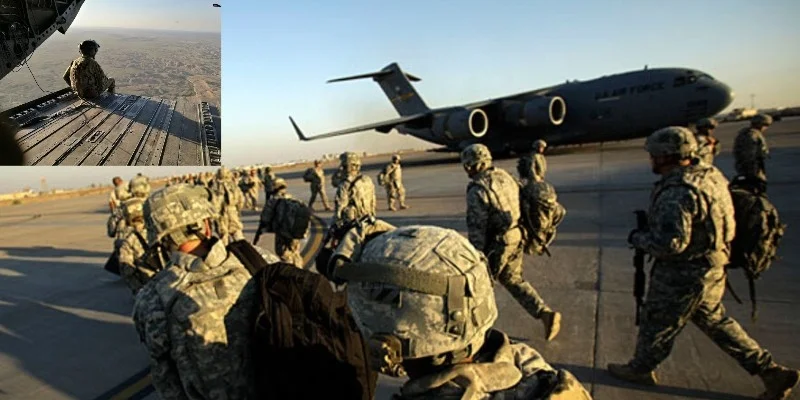
Washington, D.C. (Terror Monitor) — The United States has completed the withdrawal of its remaining military personnel and equipment from Iraq, formally ending its 12-year military mission against the Islamic State (ISIS), the Pentagon announced Wednesday, September 30.
The final U.S. forces and military equipment left Erbil Air Base in northern Iraq, bringing to an end the U.S.-led coalition's military mission against ISIS in the country.
Pentagon spokesman Sean Parnell said the withdrawal was completed in an “orderly” manner and described it as a major milestone following the defeat of ISIS as an organized military force in Iraq and across the region.
“This milestone reflects the success of a 12-year campaign that defeated ISIS as an organized military threat in Iraq and across the region,” Parnell said.
He said the completion of the withdrawal also marked the transition from a wartime coalition mission to an Iraqi-led security effort, with Washington and Baghdad now moving toward a more conventional bilateral security partnership.
Final U.S. troops depart Erbil
The final U.S. military contingent in Iraq had been stationed at Erbil Air Base in the semi-autonomous Kurdistan region.
The departure included the remaining military personnel as well as equipment associated with the anti-ISIS mission.
The U.S.-led task force responsible for operations against ISIS in Iraq has now shifted its operational headquarters to Jordan, while Washington continues to maintain military forces and counterterrorism capabilities in neighboring Syria.
The withdrawal was carried out under an agreement reached between Washington and Baghdad in 2024 that established a timetable for ending the multinational coalition's military mission in Iraq and transitioning to a bilateral security relationship.
The United States had approximately 2,000 troops in Iraq earlier this year, although the number was gradually reduced as the withdrawal proceeded.
The latest departure marks the second time the United States has withdrawn all of its military forces from Iraq.
U.S. invasion, withdrawal and return
The latest U.S. military presence in Iraq was part of a broader chapter that began with the U.S.-led invasion of Iraq in 2003.
American and coalition forces invaded Iraq and overthrew President Saddam Hussein's government. U.S. troops eventually withdrew from the country in 2011 after nearly eight years of military operations.
Washington returned three years later after ISIS seized large areas of northern and western Iraq and declared a self-styled caliphate spanning parts of Iraq and Syria.
In response, the United States formed and led an international coalition against ISIS under Operation Inherent Resolve.
The coalition conducted thousands of airstrikes and provided weapons, training, intelligence and other assistance to Iraqi security forces and Kurdish Peshmerga units.
Iraqi and Kurdish forces, backed by the coalition, gradually recaptured territory held by ISIS, eventually eliminating the group's territorial control in Iraq.
Despite losing its territory, ISIS has remained active through underground networks and sleeper cells, particularly in remote areas of Iraq and Syria.
Iraq assumes primary security responsibility
With the U.S.-led military mission now concluded, Iraqi security forces will assume primary responsibility for confronting ISIS remnants and other security threats inside the country.
Pentagon spokesman Sean Parnell said Iraqi forces, including the Peshmerga and other security units in the Kurdistan region, would continue efforts to prevent ISIS from rebuilding its operational capabilities.
The United States has stressed that the end of its military mission does not mean the end of security cooperation with Iraq.
Washington plans to maintain a bilateral security relationship with Baghdad that includes intelligence sharing, military training, counterterrorism cooperation and other forms of security assistance.
“The primary responsibility for addressing Iraq's remaining security challenges, including ISIS remnants and Iran-aligned militias, now rests with the Government of Iraq,” Parnell said.
Iraq marks end of U.S.-led military mission
The Iraqi government welcomed the withdrawal as an important step toward strengthening national sovereignty.
Iraqi authorities designated September 30 as Sovereignty Day, with official celebrations and a national holiday marking the formal end of the U.S.-led military mission.
Iraqi officials have repeatedly said that the country's security forces are now capable of conducting counterterrorism operations and maintaining internal security without a permanent U.S. military presence.
The withdrawal was also welcomed by several Iran-aligned armed groups in Iraq that have long opposed the deployment of U.S. forces.
Some of these groups have portrayed the American departure as a victory for what they describe as the “resistance” against the United States and Israel.
Concerns over ISIS resurgence and Iran-aligned groups
The end of the U.S. military mission comes with continued uncertainty over Iraq's security environment.
Although ISIS no longer controls significant territory in Iraq, the group retains clandestine networks capable of carrying out attacks, particularly in remote and rural areas.
U.S. officials have emphasized that Washington's broader campaign against ISIS will continue. The anti-ISIS task force has been repositioned to Jordan, while U.S. forces remain involved in counterterrorism operations in Syria.
At the same time, Iraq faces the challenge of managing powerful Iran-aligned armed groups that operate alongside or outside the formal state security structure.
Some Iraqi and Kurdish officials have expressed concerns about the security implications of the U.S. withdrawal, while Iran-aligned factions have welcomed the departure.
The Iraqi government has sought greater state control over armed groups and has pushed for the integration of some factions into official security institutions. However, efforts to limit the independent power of Iran-aligned groups remain politically and militarily sensitive.
End of more than two decades of U.S. military involvement
The final withdrawal closes a major chapter in America's military involvement in Iraq that began with the 2003 invasion.
At the height of the Iraq War, more than 160,000 U.S. troops were deployed in the country. The American military presence was sharply reduced before the 2011 withdrawal and later re-established on a much smaller scale following the rise of ISIS.
The end of the anti-ISIS mission therefore represents a significant change in the U.S.-Iraq security relationship rather than a complete break between the two countries.
For Washington, the mission has shifted from a wartime multinational operation to a bilateral security partnership with Baghdad.
For Iraq, the withdrawal transfers greater responsibility to its own security institutions to prevent an ISIS resurgence, maintain internal stability and manage the influence of powerful armed factions.
The United States has formally ended its Iraq-based military mission against ISIS, but Washington and Baghdad are expected to maintain security cooperation through intelligence sharing, training and counterterrorism assistance.
Related Articles
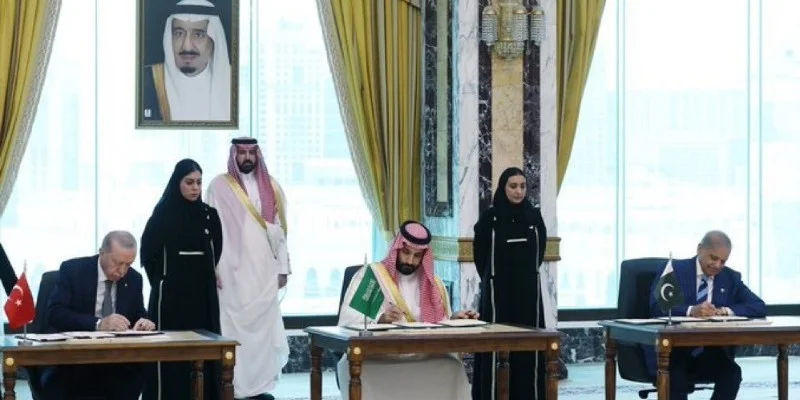
Pakistan, Turkey and Saudi Arabia to Discuss Houthi Attacks at Emergency Defence Meeting Next Week
Pakistan, Turkey and Saudi Arabia will hold an emergency defence meeting next week to discuss Iran-backed Houthi attacks on Saudi Arabia, Foreign Minister Ishaq Dar said, emphasizing political engagement over military action.
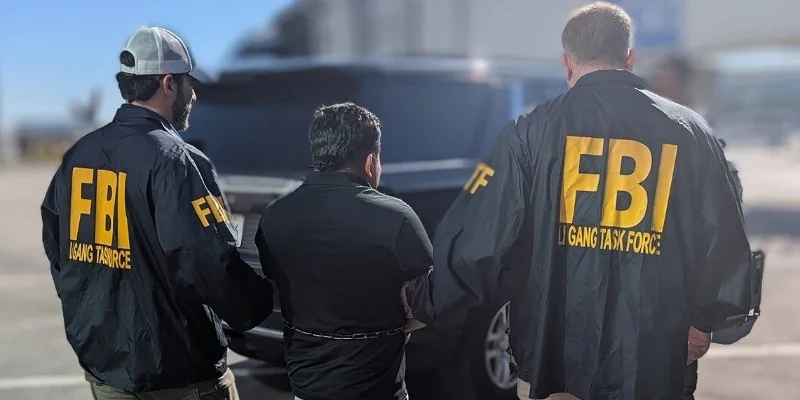
FBI Arrests US Energy Department Employee for Allegedly Supporting Iran-Backed Houthis
A U.S. Department of Energy employee has been arrested on charges of attempting to provide material support to Iran-backed Houthis in Yemen. Authorities allege he acquired materials for explosives and drones, provided technical assistance, and attempted to travel to Houthi-controlled Sanaa. If convicted, he faces up to 20 years in federal prison.

Hegseth Announces 20% Cut in US Generals and Admirals
US Defense Secretary Pete Hegseth has announced a 20% reduction in general and flag officer positions across the US military, describing the move as “long-overdue accountability.” Speaking at Marine Corps Base Quantico on September 30, Hegseth said approximately 10% of generals and admirals had been dismissed, with a further 10% reduction in authorised positions. He linked the changes to President Donald Trump’s efforts to refocus the military on combat readiness and eliminate what he calls “wok
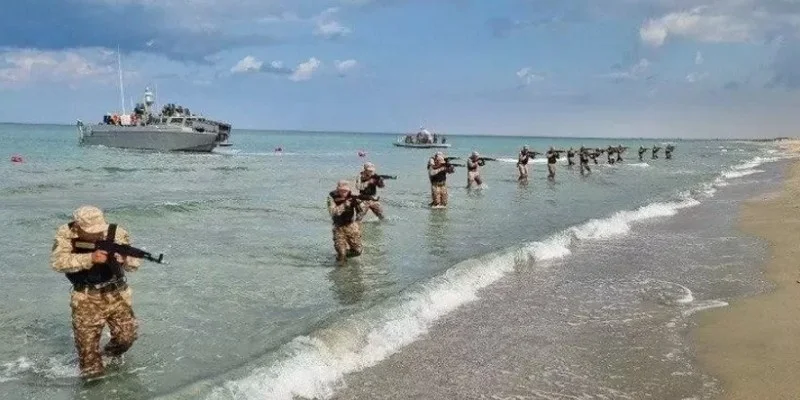
14 Kazakh Sailors Killed During Caspian Sea Exercise, Five Military Officials Detained
Fourteen Kazakh naval personnel were killed after being swept into the Caspian Sea during a military exercise in severe weather, while three others were rescued. Kazakhstan has detained five senior defence officials, including the navy’s first deputy commander, over suspected negligence and violations of maritime navigation rules. President Kassym-Jomart Tokayev ordered an investigation and declared a national day of mourning.