
Houthi Leader Calls Egypt’s Military Support for Saudi Arabia a ‘Declaration of War’ Against Yemen
· 70 views
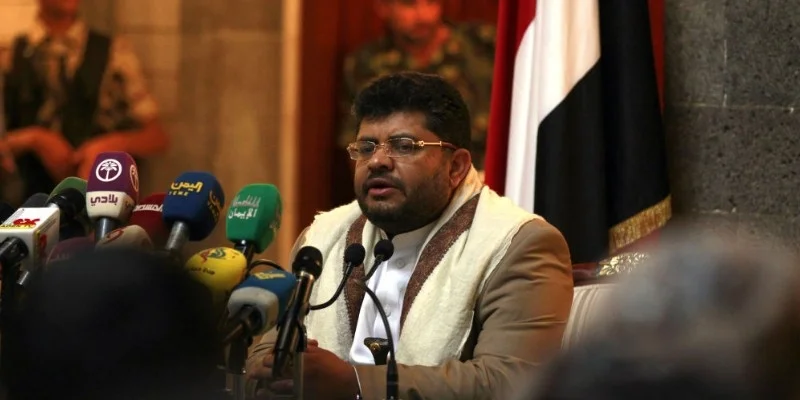
CAIRO (Terror Monitor) — Mohammed Ali al-Houthi, a member of Yemen’s Iran-aligned Houthi movement’s political bureau, has described Egypt’s decision to authorize military support for Saudi Arabia as a “declaration of war” against Yemen, raising tensions as missile and drone attacks against the kingdom intensify.
Al-Houthi made the remarks in statements published overnight between Monday and Tuesday, after Egypt’s parliament approved a mandate allowing President Abdel Fattah al-Sisi to take necessary measures to support Saudi Arabia and defend its territory and sovereignty against external aggression.
“Egypt and its parliament are declaring support for what they call the defence of the Kingdom of Saudi Arabia, and in doing so, they are declaring war against the Republic of Yemen,” al-Houthi said, according to a statement reported by AFP.
Cairo, however, has maintained that its support would be strictly defensive, aimed at protecting Saudi territory and borders, and would not involve offensive military operations against Yemen.
Egypt’s Parliament Approves Military Support
Egypt’s House of Representatives approved the authorization on Monday, October 26, by a two-thirds majority following several closed-door sessions on the country’s response to escalating regional hostilities.
The parliamentary mandate authorizes al-Sisi to take the necessary measures to support Saudi Arabia in coordination with Riyadh, with the stated objective of defending the kingdom’s territory, sovereignty and holy sites against external aggression.
Al-Sisi had requested parliamentary approval on October 17 so that Egypt could provide military assistance if Saudi Arabia formally sought help in countering Houthi attacks.
The vote could bring Egypt more directly into the regional confrontation, although the authorization does not itself confirm an immediate deployment of Egyptian forces. Saudi Arabia has not publicly announced a formal request for Egyptian troops, and Cairo has not released a complete operational plan detailing the scope of any potential mission.
Egyptian parliamentary law requires approval by two-thirds of lawmakers for a declaration of war or the deployment of the armed forces on a combat mission beyond the country’s borders, in accordance with Article 152 of the constitution.
Cairo Rules Out Offensive Operations in Yemen
Egyptian officials have repeatedly emphasized that the country’s proposed role would be limited to defending Saudi Arabia rather than launching attacks against Houthi-controlled areas in Yemen.
Foreign Minister Badr Abdelatty has reiterated Cairo’s support for Saudi Arabia’s security and territorial integrity while stressing that Egypt continues to favour diplomatic efforts to prevent a wider regional war.
According to the Associated Press, a regional official said Egypt could provide air-defence systems and aircraft to help intercept missiles and drones, without sending ground troops into Yemen. However, the precise nature and timing of any military assistance have not been formally detailed in the parliamentary authorization.
The distinction between defensive assistance and offensive action is central to Cairo’s position. Egyptian officials have sought to reassure the public that authorization to help Saudi Arabia does not amount to a decision to launch a military campaign against Yemen.
Saudi Arabia Reports Intercepting Missiles and Drones
The Houthi warning came as Saudi Arabia reported another wave of incoming missiles and drones.
On Tuesday, the Saudi-led coalition fighting in Yemen said its air defences had intercepted and destroyed three ballistic missiles launched towards the kingdom’s Eastern Province and four drones heading towards southern Saudi Arabia.
Coalition spokesman Major General Turki al-Maliki said the missiles and drones had been intercepted. Saudi Civil Defence issued early-warning alerts for potential hostile threats in the Eastern Province and Al-Kharj governorate before later announcing that the danger had passed.
The coalition did not report casualties from the interceptions in its initial statements, and the Houthis had not immediately commented on the latest claims. The interception reports could not be independently verified by Reuters.
The latest incidents follow an intensification of hostilities between Saudi Arabia and the Houthis. Riyadh has increased military operations against Houthi positions as the group has advanced in strategic areas along Yemen’s Red Sea coast, raising concerns about the security of the Bab el-Mandeb Strait.
Bab el-Mandeb and Red Sea Security
The Bab el-Mandeb Strait connects the Red Sea with the Gulf of Aden and serves as a vital maritime passage for international trade. Ships travelling between the Indian Ocean and the Suez Canal pass through the waterway, making it strategically important for Egypt, Gulf states and global shipping.
Any disruption to the strait could affect commercial shipping, energy transport and Egypt’s Suez Canal revenues.
The renewed fighting has also threatened the fragile truce established in 2022 between the Saudi-led coalition, which supports Yemen’s internationally recognized government, and the Houthis, who control the capital, Sanaa, and other parts of the country.
For Egypt, the security of the Red Sea is closely linked to national economic and strategic interests. Cairo has repeatedly opposed attacks on Gulf states and critical infrastructure, while seeking to avoid becoming involved in a prolonged regional war.
Opposition Raises Concerns Over Egypt’s Role
The parliamentary decision has also prompted debate within Egypt over the potential risks of military involvement.
The Egyptian Social Democratic Party’s parliamentary bloc abstained from the vote, arguing that lawmakers had not received sufficient information about the proposed mission’s objectives, duration, financial costs and risks to Egyptian personnel.
The Civil Democratic Movement, an opposition coalition, has also opposed drawing Egyptian forces into a regional war, arguing that Cairo should prioritize mediation and diplomatic engagement.
Egypt’s experience in Yemen during the 1960s, when it deployed forces in support of the republican side in the country’s civil war, remains a point of concern in discussions about a possible new military commitment. That intervention imposed considerable military and economic costs on Cairo.
Egypt previously supported the Saudi-led coalition during the Yemen conflict that began in 2015, including through naval deployments, but it has not publicly announced a new combat deployment under the latest parliamentary authorization.
Regional Diplomacy Continues Amid Escalation
The latest confrontation is unfolding alongside diplomatic efforts involving Saudi Arabia, Pakistan, Türkiye and Iran to contain the wider regional conflict.
Senior officials from the four countries have held consultations aimed at establishing regional security arrangements and reducing tensions. Iranian officials have also called for foreign military forces to withdraw from the region, while Saudi Arabia continues to report attacks targeting its territory.
Britain has separately announced plans to deploy Royal Air Force Typhoon fighter jets to help protect Saudi cities and critical infrastructure against aerial attacks, adding another international dimension to the kingdom’s defensive preparations.
The combination of renewed Houthi attacks, Egypt’s parliamentary authorization and continuing diplomatic contacts highlights the difficulty of containing the conflict without drawing additional regional actors into direct military involvement.
For now, Egypt’s position remains that any assistance to Saudi Arabia would be defensive and coordinated with Riyadh. Al-Houthi’s warning nevertheless signals that the movement views Cairo’s decision as a significant escalation, even though Egypt has not announced that it will conduct offensive operations in Yemen.
Whether the authorization leads to an actual deployment will depend on Saudi Arabia’s requests, subsequent coordination between the two governments and the nature of any military assistance ultimately agreed upon.
Related Articles
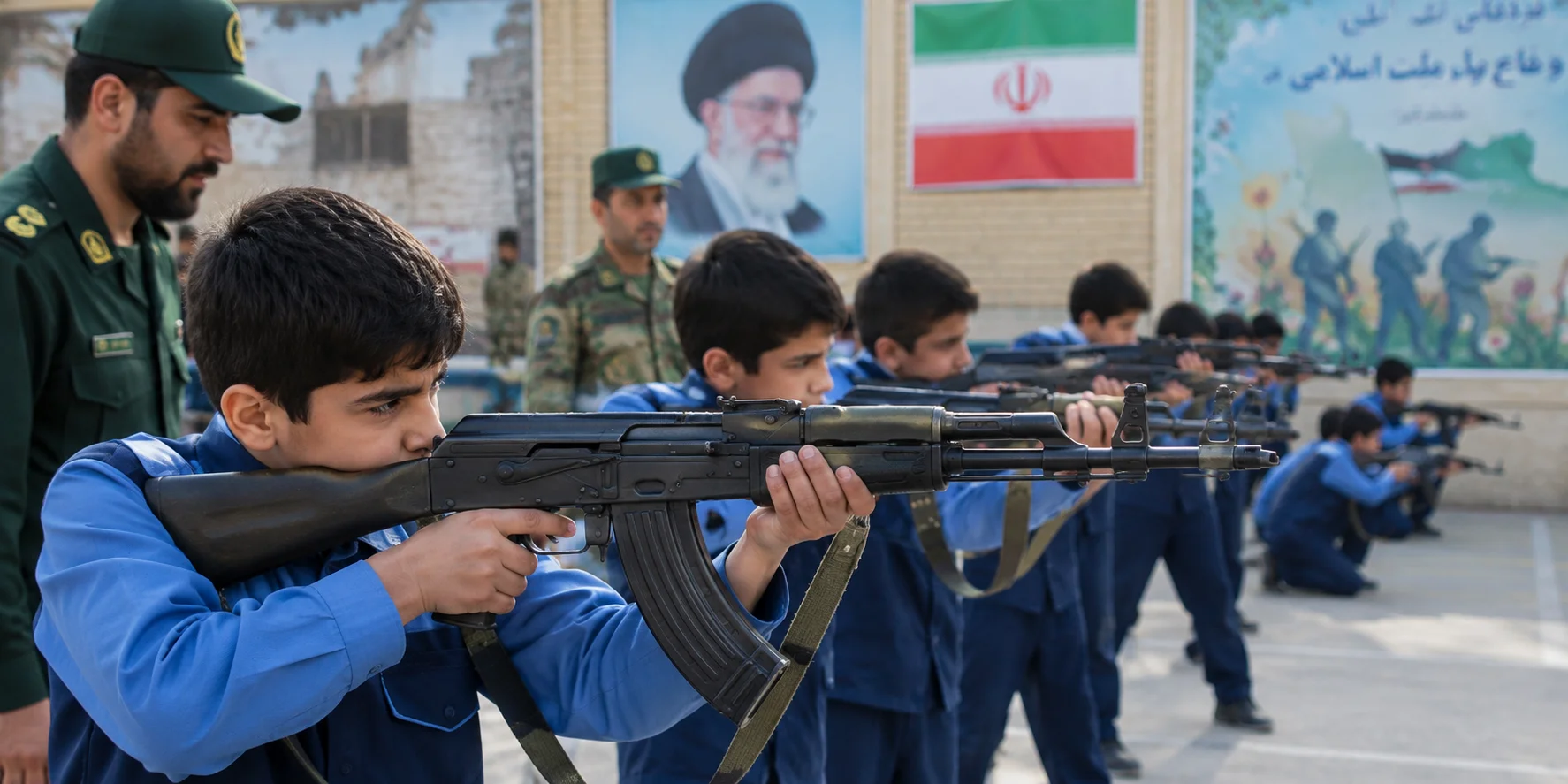
Iran Expands Military Training in Schools, Raising Concerns Over Children’s Recruitment and Security Role
Reports of firearms training for students, military-style identification tags and new youth programmes have raised concerns about the growing role of Iran’s military and security institutions in schools. Iranian authorities describe the initiatives as defensive and ideological education, while critics warn they risk exposing children to militarisation and security activities.

Egypt’s Parliament Authorizes Military Support for Saudi Arabia Amid Escalating Houthi Attacks
Egypt’s parliament has authorized President Abdel Fattah al-Sisi to provide military support for Saudi Arabia amid escalating Houthi attacks. Cairo says any assistance would be limited to defending Saudi territory and borders, excluding offensive operations in Yemen, while continuing to pursue a diplomatic solution to the conflict.
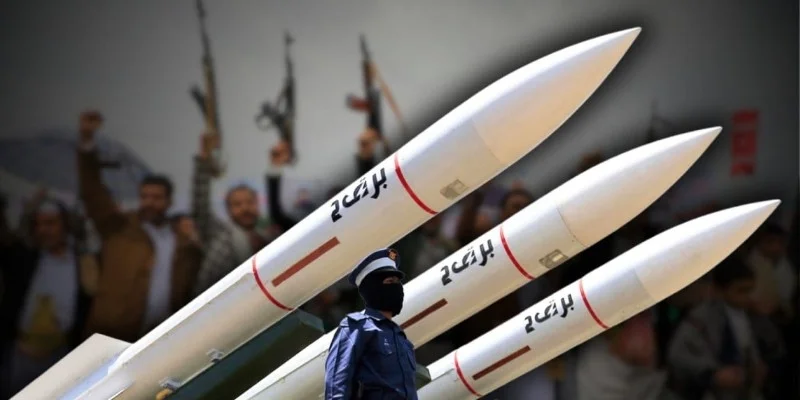
Houthi Attack on Saudi Arabia’s Dammam Airport Kills Two, Injures Eight
A Houthi attack on King Fahd International Airport in Dammam, Saudi Arabia, killed one Saudi citizen and one Indian national and injured eight others. Saudi aviation authorities confirmed that airport operations and flight movements have returned to normal, while security agencies assess the damage and strengthen protective measures.
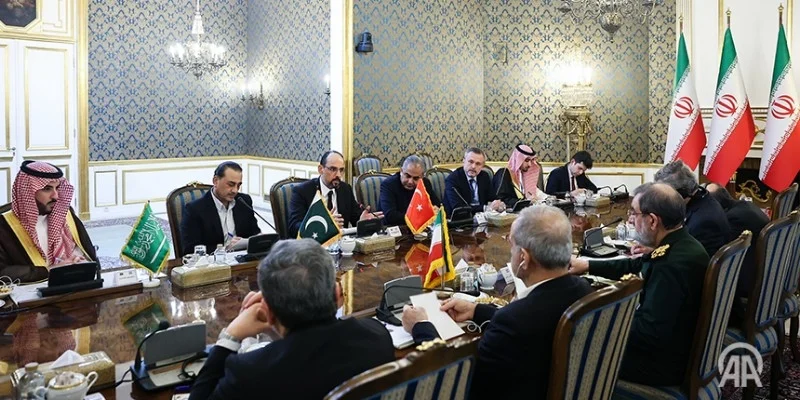
Iran, Pakistan, Saudi Arabia and Türkiye Agree to Continue Regional Security Talks in Tehran
Iran, Pakistan, Saudi Arabia and Türkiye concluded high-level talks in Tehran aimed at reducing regional tensions and preventing renewed conflict. Iranian President Masoud Pezeshkian called for greater regional cooperation before departing for Moscow to attend the Gas Exporting Countries Forum summit.