
Iran Expands Military Training in Schools, Raising Concerns Over Children’s Recruitment and Security Role
· 54 views
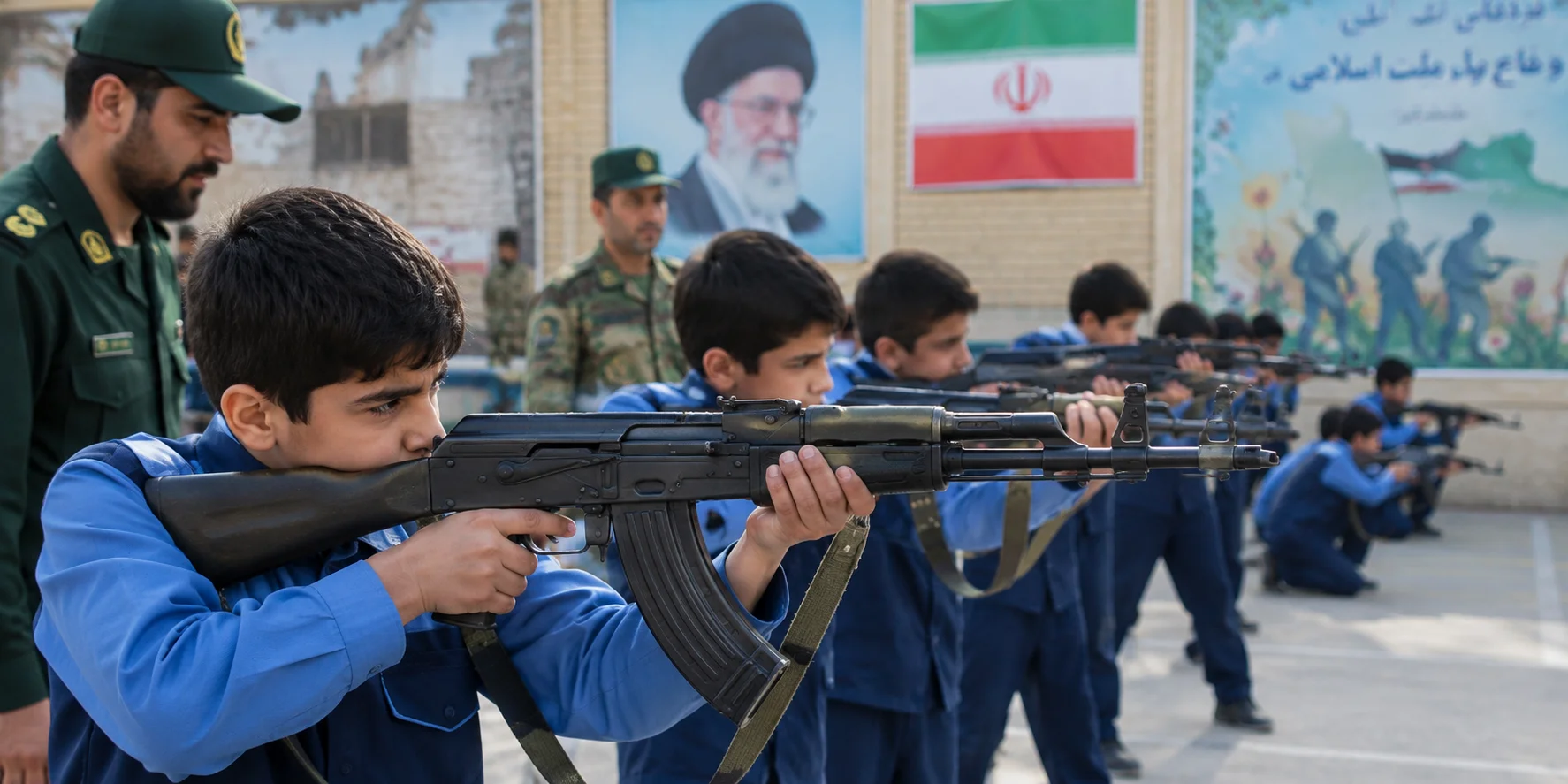
TEHRAN (Terror Monitor) — Reports and photographs showing students receiving firearms training in Iranian schools, alongside the introduction of new youth programmes and reports of requests for military-style identification tags, have renewed concerns over the expanding role of military and security institutions in the country’s education system.
Iranian authorities say the programmes aim to strengthen students’ defensive preparedness and familiarise them with the Islamic Republic’s revolutionary ideals. Critics, however, warn that the initiatives risk turning schools into extensions of the country’s military and security apparatus, blurring the distinction between education, ideological instruction and military training.
According to a report by the BBC, agreements signed in recent years and newly introduced initiatives suggest that the involvement of Iran’s military and security institutions in schools now extends beyond the activities of the student Basij organisation.
The Basij is a paramilitary volunteer force affiliated with Iran’s Islamic Revolutionary Guard Corps (IRGC) and has long played a role in mobilising young people around the state’s ideological and security objectives.
The expansion of these activities has continued under President Masoud Pezeshkian’s administration, despite criticism over the growing influence of military and security bodies in educational institutions.
New Youth Programmes Expand Security Activities
One of the initiatives associated with the Basij is the Halaqat-e Salehin, or “Righteous Circles,” also known as the Shajareh Tayyebeh Salehin programme.
Launched in the late 2000s and early 2010s, the programme initially focused on religious instruction and ideological education for young people at mosques and Basij centres. Its activities gradually expanded into schools, with the stated objective of encouraging students to participate in Basij programmes.
In February last year, Iran’s police command and the Ministry of Education signed a memorandum of understanding providing for cooperation on programmes involving students, parents and education personnel.
Under the agreement, the Education Ministry committed to cooperating with several specialised police units, including cybercrime, anti-narcotics, traffic, crime-prevention and investigative police.
Critics argue that the agreement could facilitate a broader police and security presence in schools, although the precise scope and implementation of the activities remain important considerations.
The 40-day war between Iran and Israel also created conditions in which some of these initiatives gained greater prominence, according to the report.
‘Young Combatant’ Headquarters and Weapons Training
Iranian media reported that the first meeting of the national headquarters of the “Young Combatant” initiative, known in Persian as Javan-e Mobarez, was held on April 1, 2026.
Representatives of organisations associated with Iran’s Islamic Revolution cultural movement and student groups, including the Student Basij Organisation, attended the meeting.
Siyavash Moslemi, head of the Student Basij Organisation and commander of the initiative’s headquarters, said young people could become key participants in defending the Islamic Revolution.
According to Moslemi, the initiative’s objectives include training in offensive cyber operations, monitoring neighbourhoods to identify alleged infiltrators, gathering public information, mobilising young people at public gatherings and providing firearms training.
The stated objectives have raised concerns among critics about the extent to which school-age children are being prepared for activities that go beyond conventional education and civilian emergency preparedness.
Last month, Moslemi referred to the performance of “Young Combatant” centres during the war and announced another initiative called the “No+Meydan Student League,” describing it as a “second joint operation.”
The programme was launched in cooperation with the Student Basij Organisation, the Education Ministry’s cultural and educational affairs department and several other institutions.
Its declared aim is to identify and develop students’ abilities in assistance, publicity and media activities, while providing them with opportunities to participate in those fields.
The initiative covers primary, middle and high school students. One component is dedicated to military training, according to the programme’s description.
Iranian media outlets, including the student news agency PANA, have recently published photographs showing students being trained to handle firearms.
Controversy Over Military-Style Identification Tags
Reports that schools had asked parents to obtain military-style identification tags for their children have added to the controversy.
Such tags are typically metal plates worn around the neck by military personnel for identification. Their reported use in schools has prompted questions about whether the authorities are preparing students for emergency situations or normalising military practices among children.
Reports and social media posts have referred to requests for identification tags in several Iranian cities, including Bandar Abbas, Kermanshah, Mashhad, Urmia and Karaj. Some parents reportedly said schools had asked them to arrange the tags, while in other cases schools were said to have organised their production.
A video that circulated online showed a firefighter visiting a girls’ school. In the footage, the firefighter referred to a school official’s request for identification plates containing students’ personal information.
When the similarity between the plates and military identification tags was raised, the school official reportedly responded that the instruction had come “from above.”
It remains unclear which institution the official was referring to or whether a formal directive had been issued to schools nationwide.
On October 23, an Education Ministry spokesperson strongly denied reports that the ministry was issuing military identification tags to students. The spokesperson said school principals should not make statements or raise issues that cause concern among families.
The Education Department in Hormozgan province had also denied reports that schools were requesting identification tags from students.
The denials have not eliminated questions about the origin of the reports, the purpose of the items described by parents and whether similar practices were being implemented locally.
Military Education Has Long Been Part of Iran’s Curriculum
The controversy extends beyond newly announced programmes and recent agreements. Defence education has been part of Iran’s formal education system for decades.
Since 1986, defence education has been included in the high school curriculum. According to the textbook Amadegi-ye Defa’i, or “Defensive Preparedness,” the subject is compulsory.
The course reportedly includes 12 marks for written work and eight for practical training. Some practical activities are conducted in cooperation with Basij educational districts and student Basij units.
The curriculum covers civil defence, passive defence, military discipline, individual combat procedures and what Iranian official terminology describes as “soft warfare.”
The current debate, however, has increasingly focused on activities outside classroom instruction, particularly photographs showing military personnel at schools and young students handling weapons.
Images of children assembling and disassembling firearms at schools and public locations have fuelled concerns that paramilitary training is becoming more visible in educational settings, including at stages when students are still very young.
Critics argue that practical defence education must be distinguished from training children for armed or security-related activities.
Iran’s Revolutionary Narrative and the Role of Children
The use of children and young people in official narratives about war, sacrifice and national defence has deep historical roots in the Islamic Republic.
One of the best-known examples is Mohammad Hossein Fahmideh, who was 13 when he died during the Iran-Iraq War. Iran’s revolutionary leadership subsequently portrayed him as a symbol of sacrifice, and Ayatollah Ruhollah Khomeini famously referred to him as a model for the nation.
Regardless of disputes surrounding the official account of his death, Fahmideh became one of the most prominent symbols of Iran’s state-sponsored culture of sacrifice and martyrdom. His image appeared on Iranian currency for years, and his story was incorporated into school textbooks.
For years after the Iran-Iraq War, the involvement of children and adolescents in military activities received comparatively limited scrutiny in public debate. The issue has since become a recurring point of contention between Iranian authorities and human rights organisations.
Iranian officials generally portray the participation of young people during the war as voluntary service in defence of the country. They have also rejected criticism of such participation as politically motivated or as disregarding Iran’s security concerns.
Critics, however, argue that official campaigns involving school-age children risk normalising military participation and exposing minors to activities that should be restricted to trained adults.
International Law and Child Recruitment Concerns
Iran has been a party to the United Nations Convention on the Rights of the Child since 1993.
Article 38 of the convention requires states to take all feasible measures to ensure that people under 15 do not take a direct part in hostilities and that children below that age are not recruited into their armed forces.
The Rome Statute of the International Criminal Court identifies the conscription, enlistment or use of children under 15 to participate actively in hostilities as a potential war crime under the conditions specified in the statute.
The legal assessment depends on the nature of the activity, the age of the children involved and whether they are being recruited or used in hostilities. Firearms instruction or participation in a school programme does not, by itself, establish that a war crime has occurred.
A recent US State Department report on human trafficking has also accused Iran of using children in certain military and security-related activities. The report discusses Basij activities, recruitment of young people and programmes designed to train and organise youth.
Another section examines the reported use of people under 18 by Basij forces in security operations during protests and unrest, describing some of them as child soldiers.
Iranian authorities reject such allegations and characterise reports of this kind as politically biased.
Critics point to statements concerning the acceptance of volunteers as young as 12 in some campaigns associated with the IRGC or Basij as evidence of the need for greater scrutiny of the recruitment and training of minors.
The precise distinction between voluntary participation in educational programmes, paramilitary preparation and involvement in security operations remains central to the debate.
Religious Activities in Schools Also Under Scrutiny
The debate over militarisation has coincided with growing criticism of the expansion of religious and ideological programmes in Iran’s education system.
Philosopher and theologian Mohammad Mojtahed Shabestari warned President Pezeshkian in a letter that schools were becoming “garrisons for compulsory group prayers.”
He urged the president to prevent the education minister from allowing schools to be transformed into religious strongholds, arguing that many students participated in compulsory prayers out of reluctance or obligation rather than genuine religious conviction.
His criticism reflects broader concerns among some intellectuals and education observers that schools are increasingly being used to advance ideological objectives at the expense of students’ freedom of conscience and the traditional educational mission.
Iranian officials, by contrast, present religious, ideological and defence programmes as part of an effort to raise a committed generation capable of protecting the country and the Islamic Revolution.
Critics say the growing number of initiatives risks blurring the boundaries between civilian education, military preparedness, political mobilisation and security-related activities involving minors.
Renewed Regional Tensions Add to Concerns
The latest reports have emerged after Iran experienced two wars and amid continuing concerns about the possibility of renewed military confrontation.
That environment has given greater prominence to official arguments for preparing students to respond to emergencies and defend the country. However, critics question whether firearms training and the organisation of schoolchildren into military-oriented programmes are proportionate responses to the threats facing Iran.
They also point out that recent confrontations have largely involved airstrikes and missile attacks rather than sustained ground combat, raising questions about how weapons training for schoolchildren relates to the practical requirements of civilian protection.
The debate ultimately centres on where Iran should draw the line between teaching young people about civil defence and involving them in military or security structures.
As reports of firearms training, youth mobilisation programmes and identification-tag requests continue to circulate, the Iranian government faces growing questions about transparency, parental consent, the protection of minors and the role of schools in the country’s broader security strategy.
Sources: Terror Monitor, BBC, Iranian state media, PANA student news agency, United Nations Convention on the Rights of the Child and US State Department reporting.
Related Articles
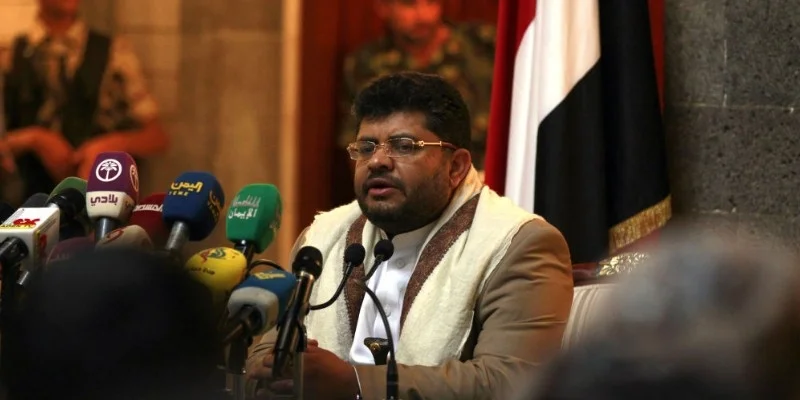
Houthi Leader Calls Egypt’s Military Support for Saudi Arabia a ‘Declaration of War’ Against Yemen
Houthi political bureau member Mohammed Ali al-Houthi has condemned Egypt’s authorization of military support for Saudi Arabia, calling it a “declaration of war” against Yemen. Cairo says its assistance would be limited to defending Saudi territory, as Riyadh reports intercepting three ballistic missiles and four drones.

Egypt’s Parliament Authorizes Military Support for Saudi Arabia Amid Escalating Houthi Attacks
Egypt’s parliament has authorized President Abdel Fattah al-Sisi to provide military support for Saudi Arabia amid escalating Houthi attacks. Cairo says any assistance would be limited to defending Saudi territory and borders, excluding offensive operations in Yemen, while continuing to pursue a diplomatic solution to the conflict.
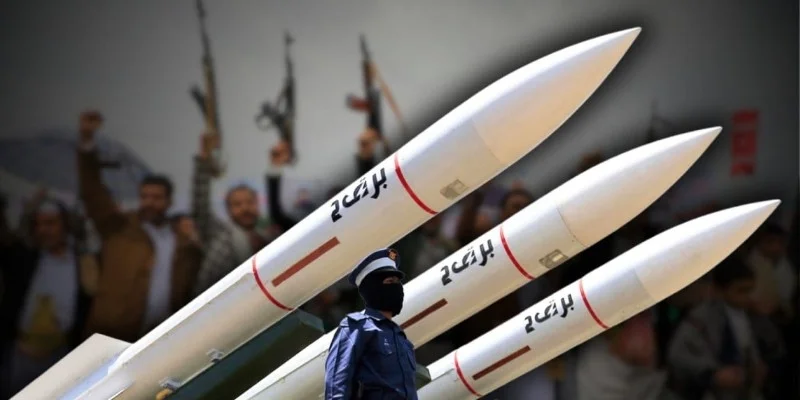
Houthi Attack on Saudi Arabia’s Dammam Airport Kills Two, Injures Eight
A Houthi attack on King Fahd International Airport in Dammam, Saudi Arabia, killed one Saudi citizen and one Indian national and injured eight others. Saudi aviation authorities confirmed that airport operations and flight movements have returned to normal, while security agencies assess the damage and strengthen protective measures.
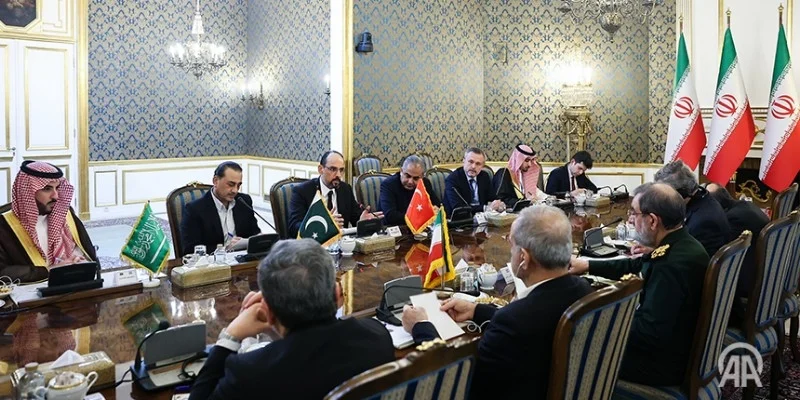
Iran, Pakistan, Saudi Arabia and Türkiye Agree to Continue Regional Security Talks in Tehran
Iran, Pakistan, Saudi Arabia and Türkiye concluded high-level talks in Tehran aimed at reducing regional tensions and preventing renewed conflict. Iranian President Masoud Pezeshkian called for greater regional cooperation before departing for Moscow to attend the Gas Exporting Countries Forum summit.