
Makkah Defence Pact Is Defensive, Operational Details Will Not Be Made Public: Pakistan Army Spokesperson
· 44 views
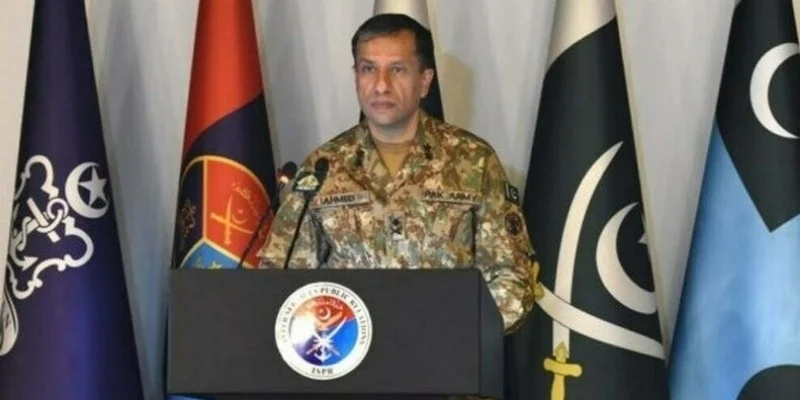
Islamabad (Terror Monitor) — Pakistan Army spokesperson Lieutenant General Ahmed Sharif Chaudhry has said that the Makkah Joint Defence Agreement between Pakistan, Saudi Arabia and Türkiye is defensive in nature and contains no offensive or interventionist agenda.
In an interview with Al Arabiya English on September 16, Chaudhry said Pakistan, Saudi Arabia and Türkiye have maintained strategic relations for decades, built not only on governmental and military cooperation but also on people-to-people contacts and emotional and cultural ties.
Asked whether the new defence arrangement between the three countries could complicate Pakistan’s position toward Iran, the army spokesperson replied: “Absolutely not.”
He said the agreement had not emerged overnight but formally codified strategic and defence relationships that already existed among the three countries.
“A simple reading of the agreement” shows that its underlying principle is that an enemy of any of the signatories should be deterred from attacking them, Chaudhry said.
“There is no offensive or interventionist element in it. It is completely defensive in nature,” he said.
Operational Commitments Will Remain Confidential
Asked what the agreement practically obliges Pakistan to do if one of the three countries comes under attack, Chaudhry said the pact formalizes decades-old defence relations and the principle of collective resistance among Pakistan, Saudi Arabia and Türkiye.
However, he declined to disclose the operational mechanisms that could govern a response to an attack.
“Operational details regarding defensive commitments are never made public,” he said, explaining that states generally do not disclose the practical procedures through which defence agreements would be implemented.
Such matters, he added, fall within the scope of operational security and classified information.
The agreement signed by Pakistan, Saudi Arabia and Türkiye provides a framework for collective defence, with an armed attack against any one of the three states to be regarded as an attack against all three.
No Regional Expansion Agenda
Asked whether the agreement represented primarily defence cooperation or the beginning of a broader strategic alliance, Chaudhry reiterated that it was defensive, as indicated by its name.
“There is no offensive aspect or agenda of regional expansionism,” he said.
The Pakistani military spokesperson was also asked whether the agreement was intended to become part of a wider security structure for the Muslim world.
Chaudhry said the agreement itself does not describe the arrangement as a “Muslim alliance” and that its stated objective is regional stability.
“This is not a specific club for Muslim countries,” he said.
He added that any decision on whether to expand the arrangement, and how to do so, would be taken by the leadership of the three participating countries.
“There is a possibility that in the future, partners could also join who agree with the principles of peace, stability, non-aggression and collective resistance,” he said.
Pact Complements Pakistan’s Relationship With China
Chaudhry was also asked whether the new defence agreement could compete with Pakistan’s close strategic relationship with China.
He rejected the suggestion, saying the Makkah arrangement complements Pakistan’s relationship with Beijing.
“China is an extremely strategic relationship for Pakistan. There is no question of competition,” he said.
The Makkah Joint Defence Agreement was signed by Pakistan, Saudi Arabia and Türkiye in Makkah on August 7, 2026. The agreement builds on longstanding defence ties among the three countries and establishes a collective-defence framework.
Related Articles

Saudi Arabia Announces Discovery of 110 Million Tonnes of Uranium-Bearing Ore in Madinah
Saudi Arabia has announced the discovery of an estimated 110 million tonnes of uranium-bearing ore in the Madinah region, with the deposits also containing rare-earth minerals. The discovery was announced by Energy Minister Prince Abdulaziz bin Salman during the IAEA General Conference in Vienna.
Iranian Nuclear Chief Barred From Attending IAEA Conference in Vienna
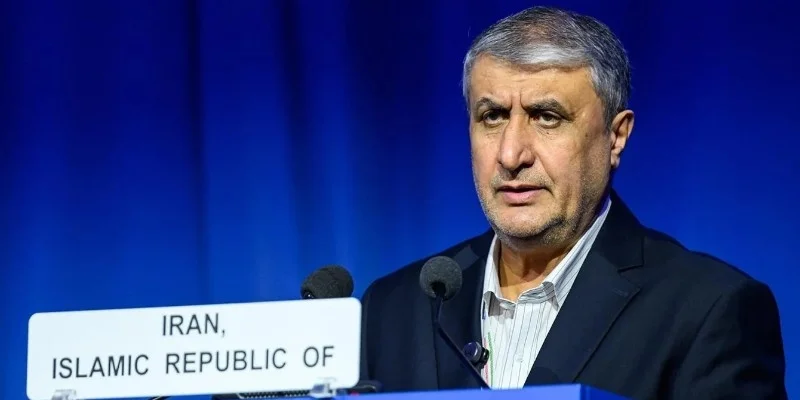
Iran’s nuclear chief Mohammad Eslami was barred from attending the IAEA’s annual conference in Vienna after the United States pressured Austria to deny him entry, citing UN travel restrictions and sanctions.
BRICS Leaders Call for Restraint, Gaza Ceasefire and Protection of Nuclear Facilities
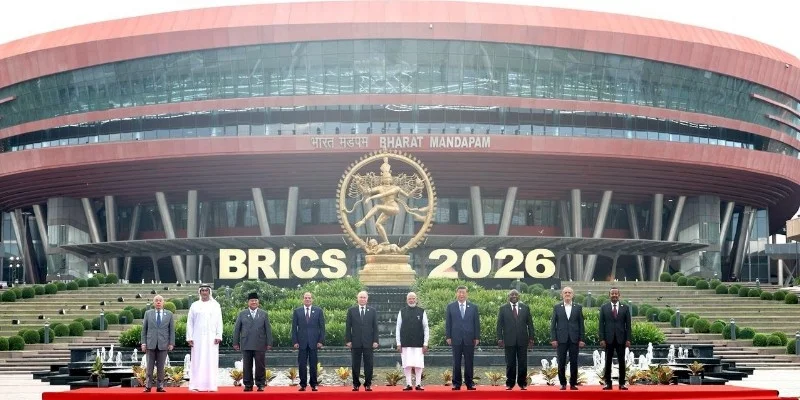
BRICS leaders have called for maximum restraint amid escalating tensions in the Middle East, urging all parties to avoid actions that could worsen the conflict. The group also backed a Gaza ceasefire, full UN membership for Palestine, a two-state solution and protection of peaceful nuclear facilities.

London Police Arrest Two People Suspected of Links to Iranian Intelligence
London police have arrested a 60-year-old man and a 42-year-old woman suspected of assisting an Iranian intelligence service. The suspects were arrested under the National Security Act and later released on strict bail conditions pending further investigation.