
Turkey, Qatar, Pakistan and Indonesia Sign ‘Badr’ Defence Pact to Boost Military Production
· 39 views
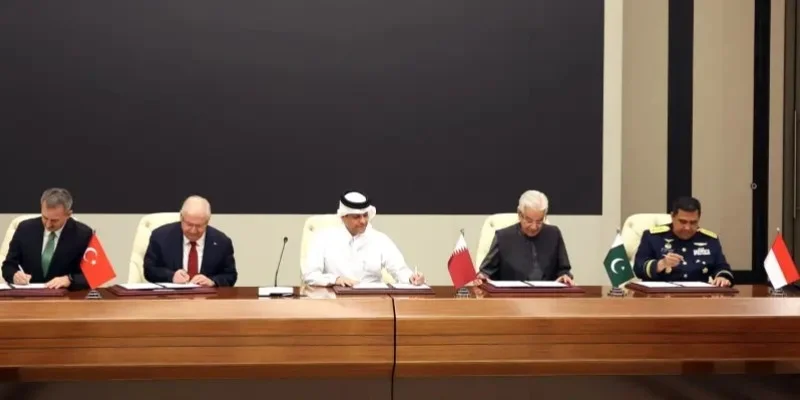
DOHA (Terror Monitor) — Türkiye, Qatar, Pakistan and Indonesia have signed a multilateral defence cooperation agreement in Doha aimed at strengthening military production, enhancing defence capabilities and expanding collaboration in military technology, training, research and development.
The agreement, known as the “Badr Memorandum of Understanding (MoU),” was signed on Wednesday, October 21, 2026, by representatives of the four countries’ defence ministries and relevant defence industry institutions.
According to the Turkish Ministry of National Defence, the agreement reflects the four countries’ commitment to deepening mutual cooperation, strengthening strategic partnerships and developing closer ties in the defence sector.
The ministry said the agreement carries significant economic importance and is intended to combine the participating countries’ military production capabilities to strengthen their defence industries and meet the requirements of allied and friendly nations.
Focus on Joint Military Production and Technology
Under the agreement, the four countries intend to expand cooperation in defence manufacturing, improve their military capabilities and facilitate joint initiatives in technical military training, research and development.
The Turkish Defence Ministry said the initiative would enable the participating countries to benefit from one another’s distinct military production capabilities, encouraging greater industrial integration and strengthening their collective defence manufacturing capacity.
The agreement is also expected to support the development of advanced defence technologies and industrial solutions suited to the evolving requirements of modern military systems.
By bringing together their respective resources, expertise and production capabilities, the four countries aim to establish a stronger framework for cooperation in the defence industry.
The initiative could also create opportunities for joint projects, technology development and closer coordination between defence manufacturers in the participating countries, although the specific projects and production arrangements have not yet been detailed publicly.
Senior Defence Officials Attend Signing Ceremony
The signing ceremony took place in the Qatari capital, Doha, and was attended by senior defence officials from all four countries.
The signatories included Turkish Defence Minister Yaşar Güler, Qatar’s Deputy Prime Minister and Minister of State for Defence Affairs Sheikh Saoud bin Abdulrahman Al Thani, Pakistani Defence Minister Khawaja Muhammad Asif and Indonesian Deputy Defence Minister Yusuf Jauhari.
Haluk Görgün, head of Türkiye’s Presidency of Defence Industries, also attended the ceremony.
The participation of defence ministries alongside specialised defence industry institutions highlights the agreement’s emphasis on industrial cooperation, rather than military coordination alone.
The framework is intended to strengthen cooperation between the countries’ defence sectors and broaden opportunities for joint manufacturing and technological development.
According to Qatar News Agency, other friendly countries may also be allowed to join the memorandum in the future, subject to criteria agreed upon by the four founding participants.
Complementary Strengths of the Four Countries
The agreement brings together four countries with different but potentially complementary strengths in defence manufacturing, technology, investment and domestic demand.
Türkiye has developed a substantial defence industry, producing a range of military equipment and systems. Its expertise in defence technology, systems integration and manufacturing could contribute to collaborative projects with its partners.
Pakistan brings an established military manufacturing sector and experience in producing defence equipment, while Indonesia offers manufacturing capacity and a sizeable domestic market.
Qatar, meanwhile, has the potential to support joint projects through investment and demand for modern military equipment as it continues efforts to strengthen its domestic defence capabilities.
Defence analysts cited by Al Jazeera said such cooperation could help the countries develop more integrated supply chains, jointly manufacture military systems and improve their ability to maintain and support equipment.
The arrangement could also create opportunities for technology transfer, domestic production and employment, depending on how future projects are structured and implemented.
Existing Defence Partnerships Provide a Foundation
The Badr memorandum builds on existing defence industry relationships between Türkiye and the other three participating countries.
Türkiye and Pakistan have cooperated on naval manufacturing, including a programme involving the construction of four MILGEM-class corvettes for the Pakistan Navy. Under the project, two vessels are being built in Türkiye and two in Pakistan.
Türkiye and Indonesia have also been cooperating on the development of the Kaplan MT medium tank, known in Indonesia as the Harimau.
Türkiye and Qatar, meanwhile, have developed close defence ties, including cooperation involving military equipment and defence industry investment.
The new four-country framework could help bring these separate partnerships into a broader structure for cooperation, potentially making it easier to coordinate joint production, technological development and supply chains.
Rather than relying exclusively on individual bilateral agreements, the initiative provides a platform for the four countries to explore multilateral defence industry projects.
Regional Security Concerns Add to Momentum
The agreement comes amid heightened security concerns across the Middle East following the war involving Iran, the United States and Israel, which has increased pressure on regional countries to strengthen their defensive capabilities and reassess their security partnerships.
Recent regional tensions have also highlighted the importance of air defence, missile interception, drone technology and the reliability of international military supply chains.
Qatar has been working to expand its domestic defence production capabilities. On October 19, Qatar’s Minister of State for Defence Affairs, Sheikh Saoud bin Abdulrahman Al Thani, said the country was preparing to announce a domestic defence production hub, with potential areas of focus including ballistic missile and drone defence and cybersecurity.
Against this backdrop, closer industrial cooperation could help the four countries develop greater capacity to produce, maintain and support military equipment.
However, the Badr memorandum is primarily a defence industry cooperation agreement. The publicly announced objectives focus on military production, technical training, research and development, and strengthening defence manufacturing capabilities. The announcement does not, by itself, establish a mutual defence obligation requiring the four countries to intervene militarily on one another’s behalf.
Türkiye’s Expanding Defence Role
Türkiye’s participation reflects its broader efforts to expand its defence industry partnerships and strengthen its security relationships across the Middle East and Asia.
A member of the North Atlantic Treaty Organization (NATO), Türkiye has developed a domestic defence industry that supplies military equipment to its own armed forces and international customers.
Ankara also maintains a military presence in Qatar, providing another dimension to the countries’ longstanding defence relationship.
The Badr agreement could further strengthen Türkiye’s industrial links with Pakistan, Qatar and Indonesia by creating additional opportunities for joint production, research and technological cooperation.
At the same time, the agreement gives the other participants a framework through which they can seek greater involvement in defence manufacturing and technological development.
The memorandum is separate from the Mecca Joint Defence Agreement signed by Türkiye, Pakistan and Saudi Arabia in August 2026. That separate arrangement concerns defence cooperation among its three signatories, while the Badr memorandum focuses on industrial and technological collaboration among Türkiye, Qatar, Pakistan and Indonesia.
Potential Economic and Strategic Implications
Beyond its military objectives, the Badr memorandum could have economic implications for the participating countries by encouraging investment, supporting domestic manufacturing and creating opportunities for their defence industries to work together.
Joint production could help participating countries share development costs, expand industrial capacity and improve access to technical expertise.
Closer integration could also provide a basis for supplying defence equipment to other allied and friendly countries, although the extent of future exports will depend on the projects developed under the agreement and the applicable export regulations.
The four governments have not yet publicly outlined a detailed implementation schedule, specific production targets or a list of weapons systems to be developed jointly under the memorandum.
For now, the agreement establishes a framework for expanding defence industry cooperation, with its practical impact likely to depend on the projects, investments and manufacturing arrangements that follow.
The signing marks a further step in efforts by Türkiye, Qatar, Pakistan and Indonesia to deepen their strategic partnerships and strengthen their respective defence industries through multilateral cooperation.
Related Articles
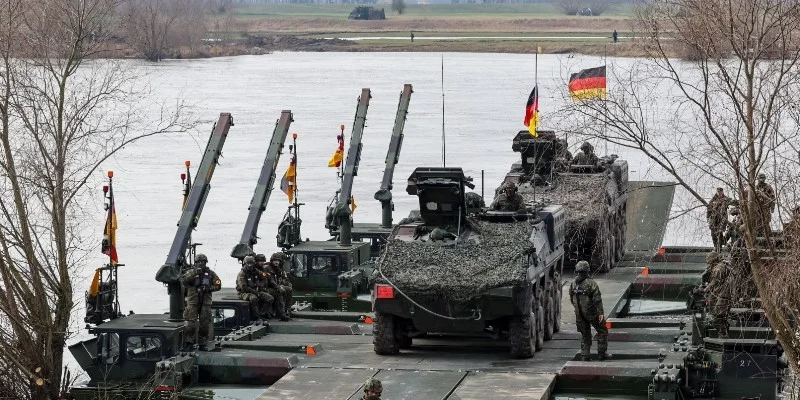
Germany Tests Secret NATO War Plan as Fears of Possible Russian Attack Grow
Germany is testing its classified NATO defense plan through military exercises simulating Russian threats, sabotage and troop movements. The plan envisages moving 800,000 soldiers and 200,000 military and support vehicles across Germany within six months during a major crisis.
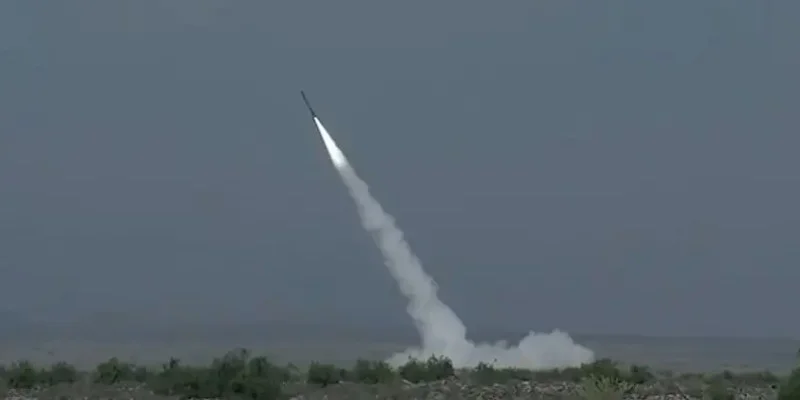
Pakistan Successfully Tests Fateh-II Hypersonic Ballistic Missile With Extended Range
Pakistan’s military has successfully tested the extended-range variant of its Fateh-II hypersonic ballistic missile, the ISPR announced Tuesday. The missile features advanced navigation and avionics systems, can change its trajectory during flight and is designed to strike designated targets with high precision, according to the military.
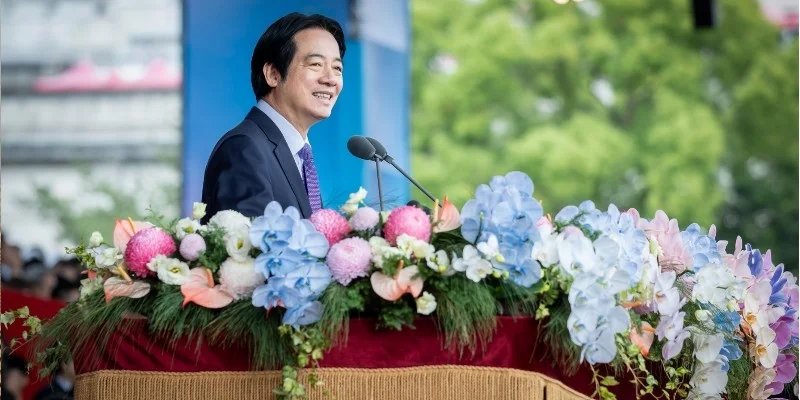
Taiwan President Announces Major Defense Spending Increase Amid Rising Chinese Military Pressure
Taiwan President Lai Ching-te has announced plans to increase defense spending to NT$1.1 trillion, equivalent to more than 3% of GDP, to counter growing Chinese military pressure and deter a potential conflict across the Taiwan Strait. Lai stressed that Taiwan's goal was to prevent war, not provoke one, as Taipei seeks to modernize its armed forces and awaits approval of a $14 billion U.S. arms package that includes Patriot air defense systems.
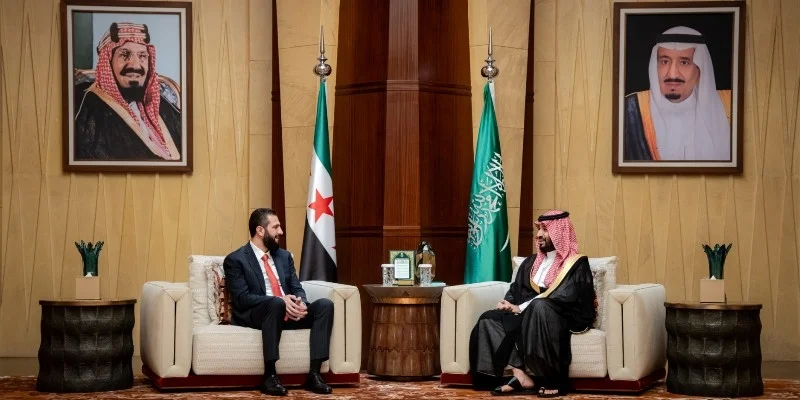
Syrian President Ahmed al-Sharaa Meets Saudi Crown Prince Mohammed bin Salman in Riyadh
Syrian President Ahmed al-Sharaa met Saudi Crown Prince and Prime Minister Mohammed bin Salman in Riyadh on Tuesday to discuss bilateral relations, expanding cooperation and the latest regional developments. The meeting came amid heightened tensions across the region, including the escalating conflict involving Iran-backed Houthis in Yemen.