
Trump Warns US Could Soon Strike Iran’s Kolang Mountain Nuclear Complex
· 69 views
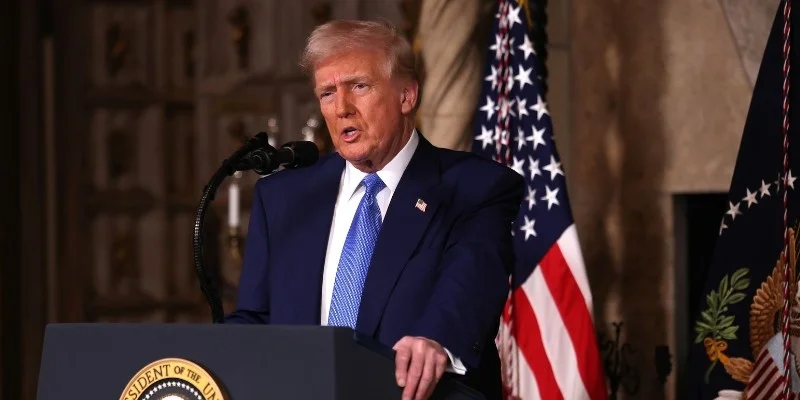
Washington, D.C. (Terror Monitor) — U.S. President Donald Trump said Friday that the United States could potentially strike Mount Kolang in Iran very soon, a site known as “Pickaxe Mountain” in Western media reports.
The site is an underground tunnel complex located near Iran’s Natanz nuclear facilities.
Speaking to reporters, Trump said the United States was “far ahead” in space technology and claimed that Washington knew about the movements of people inside Mount Kolang and across Iran.
“If something goes wrong, we’ll hit them,” Trump said, warning that the United States would strike Iran “very hard.”
Responding to questions from reporters, Trump also claimed that the United States had prevented Iran from obtaining nuclear weapons.
“If we hadn’t intervened, Israel wouldn’t exist today, the Middle East wouldn’t exist, and most likely they would then have targeted European cities and our cities,” Trump said. “But we stopped them from getting nuclear weapons.”
Trump also said that the conflict with Iran was “no big deal” for the United States.
A day earlier, U.S. Vice President JD Vance said he did not describe the ongoing confrontation with Iran as a “war.”
Asked on Friday what the conflict should be called if it was not a war, Trump said many people did not call it a war and that he considered it a “military conflict” because it was relatively minor for the United States.
He compared the situation with Iran to the Vietnam War, saying the United States had lost 18 people in the conflict with Iran, compared with about 100,000 U.S. deaths in Vietnam.
What Is Mount Kolang?
Trump’s latest threats have drawn attention to a relatively little-known site compared with Iran’s better-known nuclear facilities: Mount Kolang.
The underground complex is located near the Natanz nuclear facility. Trump said the United States was closely monitoring the site and warned that it could become the target of a “major attack.”
U.S. officials told The Wall Street Journal that an attack on the complex was among the options being considered as part of a possible expansion of military operations against Iran.
However, it remains unclear what the precise target would be in the event of an attack.
Iran says the complex was built as a replacement for an advanced centrifuge assembly facility at Natanz that was damaged in an alleged act of sabotage in 2020.
However, the unusual depth of the tunnels, the potential size of the complex and the lack of access for International Atomic Energy Agency (IAEA) inspectors have fueled speculation that activities beyond centrifuge assembly could potentially take place there.
The site has also emerged in discussions over the whereabouts of Iran’s stockpile of highly enriched uranium.
Since U.S. and Israeli strikes on Natanz, Fordow and Isfahan last summer, uncertainty has surrounded the location and condition of Iran’s stockpile of uranium enriched to 60 percent.
Western officials and analysts have considered the possibility that sensitive materials or equipment may have been moved to new underground facilities before or after the attacks.
Mount Kolang has been mentioned among the possible locations, although there is no concrete evidence that uranium or related materials were transferred there.
Experts say the significance of the complex stems from its location, depth, limited publicly available information and its potential future role in Iran’s nuclear program.
Where Is Mount Kolang and Why Was It Built?
Mount Kolang, also known as Kolang Gazla Mountain and referred to as Pickaxe Mountain in Western media, is located in Isfahan province, approximately two kilometers south of the Natanz nuclear complex and about 220 kilometers south of Tehran.
The mountain is approximately 1,608 meters high.
Construction of the relatively new underground complex began after an explosion at Natanz’s advanced centrifuge assembly facility on July 2, 2020.
Iranian authorities described the Natanz incident as sabotage, while various reports attributed responsibility to Israel, although Israel did not officially claim responsibility.
Several months later, Ali Akbar Salehi, who was then head of Iran’s Atomic Energy Organization, announced that Iran would build a “more advanced, larger and more comprehensive” replacement facility inside a mountain near Natanz.
The project was first identified through satellite imagery in the fall of 2020, which showed land preparation, road construction and early work on supporting infrastructure.
Excavation accelerated in 2021, and tunnel entrances, along with piles of soil and rock removed from the mountain, became increasingly visible.
Satellite imagery indicates two entrances on both the eastern and western sides of the mountain, as well as an additional access route or entrance on the southern side.
It remains unclear whether all of the tunnels are connected to a single central section or form separate areas.
According to the Institute for Science and International Security, the elevation difference between the eastern entrances and the mountain ridge is approximately 145 meters, while the difference between the western entrances and the summit is about 100 meters.
Experts say these differences could indicate the presence of multiple underground levels. However, without internal maps or direct access, the actual depth of the tunnels and halls cannot be determined.
The institute estimated in 2022 that even a single central hall beneath the ridge could have more than 5,000 square meters of usable space, making it larger than the destroyed centrifuge assembly facility at Natanz.
These estimates are based on the mountain’s structure, the potential length of the tunnels and the volume of excavation, rather than direct observation of the underground areas.
In 2024, activity on the eastern slope was observed that analysts associated with possible ventilation ducts, electricity transmission or cable systems.
A deep underground industrial facility, particularly one containing centrifuges, requires a stable electricity supply, effective temperature control, adequate ventilation and emergency exits.
However, the actual purpose or use of structures visible on the surface has not been independently confirmed.
Security Measures Expanded
Security measures around the complex were further expanded in 2025.
According to the Center for Strategic and International Studies, a security wall was constructed around almost the entire complex between June and September 2025, following the 12-day war, while construction activity continued around the eastern, western and southern entrances.
The institute concluded that Iran tightened access controls to the site following the June attacks.
Iran also strengthened the entrances in several stages.
During the summer of 2025, one of the eastern entrances was partially covered with soil and rocks. Satellite imagery from April 2026 showed that both eastern entrances had also been partially covered with earth.
According to the institute, the measure was likely intended to restrict vehicle access, although the entrances were not completely sealed.
Satellite imagery from July 9, 2026, showed that the western entrances remained open and accessible.
The institute’s latest assessment indicates that the complex does not yet appear to be fully operational and that construction and finishing work are still underway.
What Is Happening Inside Mount Kolang?
Iran’s official position remains that the facility is intended for the production and assembly of advanced centrifuges.
The timing of the project, its location and statements by then-Atomic Energy Organization chief Ali Akbar Salehi support that explanation.
Moving centrifuge assembly activities deep underground would make strategic sense as a protective measure against sabotage and potential airstrikes following the attack on Natanz.
However, the potential size and structure of the complex have led experts to consider other possible uses.
One possible scenario is the establishment of a limited enrichment unit equipped with advanced centrifuges.
New-generation centrifuges have greater separation capabilities, meaning that even a relatively small number could produce significant quantities of enriched uranium within a limited space.
The Institute for Science and International Security has assessed that the estimated available space inside the mountain could be sufficient for such a facility. However, no verified evidence has emerged showing that centrifuge cascades have already been installed there.
Another possibility is the storage of centrifuge components, sensitive equipment or materials associated with the nuclear fuel cycle.
A deep underground complex could protect rare components, completed centrifuges or measurement equipment from attacks.
The institute has also raised the possibility that parts of the site could potentially be used for activities involving uranium metal, which is an important stage in the process of producing components for a nuclear weapon.
However, this assessment concerns the technical capabilities of the location, and there is no evidence that such activities are actually taking place there.
Experts say satellite imagery does not show surface indicators typically associated with reactor construction, such as cooling towers, spent-fuel pools or large water-delivery systems.
For this reason, speculation has largely focused on centrifuges, enrichment, equipment storage and fuel-cycle activities rather than the construction of a reactor.
A major obstacle to determining the actual use of the Mount Kolang complex is that the International Atomic Energy Agency has not yet been granted access to the site, and Iran has not provided information about its design.
IAEA Director General Rafael Grossi said in March that because Iran had indicated a potential nuclear use for the facility, agency inspectors should be given access.
Iran, however, maintains that a facility cannot necessarily be considered subject to nuclear safeguards until nuclear material has been introduced into it.
The IAEA disagrees, saying that under “Modified Code 3.1,” design information should be provided once a decision to construct a facility has been made.
Is Iran’s 60 Percent Enriched Uranium at Mount Kolang?
According to the IAEA’s latest estimate, as of June 13, 2025 — the day Israel began its attacks during the 12-day war — Iran had 440.9 kilograms of uranium enriched to up to 60 percent.
That enrichment level is below the 90 percent generally associated with weapons-grade uranium, although technically only further enrichment is required to reach that level. Producing a nuclear weapon, however, involves additional technical, industrial and engineering processes beyond uranium enrichment alone.
Before the 2025 attacks, the IAEA knew that most of Iran’s 60-percent-enriched uranium was produced at the Fordow and Natanz facilities. However, that did not necessarily mean all of the material was stored at those sites.
Before the 12-day war, the agency considered Iran’s nuclear facilities in Isfahan to be important storage locations for nuclear material and monitored them closely.
Following the attacks and the loss of access for inspectors, uncertainty emerged over the location of some of those stocks.
IAEA Director General Rafael Grossi said this year that the agency estimates more than 200 kilograms of Iran’s 60-percent-enriched uranium may still be located at an underground complex in Isfahan, although the lack of access has prevented independent verification.
Meanwhile, Mount Kolang has become one of the locations mentioned in speculation about the possible whereabouts of Iran’s nuclear material and sensitive equipment because of its unusual depth, strengthened security measures and lack of access for international inspectors.
However, neither an official IAEA report, a published intelligence document nor any verifiable imagery indicates that Iran has moved its 60-percent-enriched uranium to Mount Kolang.
According to the Center for Strategic and International Studies, the complex could potentially be used in the future as a secure storage facility for sensitive nuclear material or important equipment, but there is currently no public evidence that this is happening.
Could the United States Destroy It?
The depth of Mount Kolang makes it a considerably more difficult target than surface buildings or relatively shallow underground facilities.
The United States has previously used the GBU-57 Massive Ordnance Penetrator, a roughly 13.6-ton bunker-busting weapon designed to penetrate layers of soil, rock and reinforced concrete before detonating.
However, the success of any potential strike would depend on numerous factors, including the composition of the rock, the actual depth of the target, the angle of impact and the available intelligence about the underground facility’s internal layout.
For example, the United States and Israel spent years gathering detailed information about tunnels, entrances, ventilation systems and underground halls at the Fordow facility.
By contrast, very little public information is available about the internal structure of Mount Kolang.
Matthew Bunn, a nuclear security researcher affiliated with the Massachusetts Institute of Technology and a former U.S. diplomat to the IAEA, told The Wall Street Journal that the United States could not expect to achieve the same results from an attack on Mount Kolang as might be possible at Fordow because the complex is deeper and information about its internal layout is limited.
Experts say that in deep underground facilities, tunnel entrances, access routes, electricity supplies and ventilation systems are generally more vulnerable than the main underground chambers.
Therefore, the objective of an attack would not necessarily be to directly destroy the deepest underground halls. Strikes against entrances and supporting infrastructure could disrupt operations even if deeper sections remained intact.
If nuclear material or sensitive equipment is stored deep inside Mount Kolang, it is currently unclear whether an airstrike would be capable of completely destroying it.
Moreover, satellite imagery continues to show the complex as under construction. Some analysts therefore believe that a potential strike could be aimed not at its current capabilities but at the role the facility might play in Iran’s nuclear program in the future.
This may explain why Mount Kolang has featured prominently in recent U.S. statements.
Although there is no evidence that the complex is currently operating as a fully functional enrichment facility, its unusual depth, strengthened security measures and potential ability to support Iran’s nuclear program in the future have made it a focus of attention for U.S. and Western officials.
Related Articles
Trump Threatens Devastating Strike on Iran’s Nuclear Sites as Pentagon Weighs ‘Mother of All Bombs’
President Donald Trump has threatened to strike Iran’s deeply buried Pickaxe Mountain nuclear facility as the Pentagon reportedly considers using the massive non-nuclear “Mother of All Bombs.” Tehran has dismissed the threats and warned that further U.S. attacks could trigger retaliation and escalate the regional conflict.
US Embassies Issue Urgent Middle East Security Alert Amid Houthi Attacks
US embassies across the Middle East have urged American citizens to remain vigilant amid escalating regional hostilities, warning of possible flight cancellations, airspace closures and travel disruptions. The alerts come as Iran-backed Houthi rebels intensify attacks on Saudi Arabia, with deadly strikes disrupting operations at Riyadh’s international airport and raising fears that the conflict could spread further across the region.
Iran-Backed Houthis Kill 53, Wound 200 in Ballistic Missile Attack on Yemen Military Camp
Iran-backed Houthi rebels killed at least 53 people and wounded around 200 in a three-missile attack on a military training camp in Yemen’s Shabwa province on Monday. The escalation comes as the Houthis intensify attacks on Saudi Arabia, prompting Egypt to consider military assistance to Riyadh and the United States to warn its citizens of growing security risks across the Middle East.
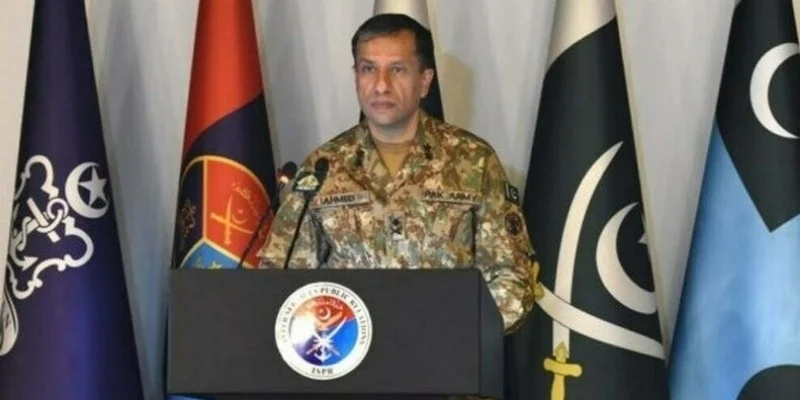
Pakistan Vows Collective Military Response to Any Attack on Saudi Arabia Under Makkah Defence Alliance
Pakistan has warned Yemen’s Iranian-backed Houthi rebels that any attack on Saudi Arabia could trigger a collective military response under the Makkah Joint Defence Alliance. ISPR Director General Lieutenant General Ahmed Sharif Chaudhry confirmed that Islamabad is providing Riyadh with necessary military assistance and would consider any formal request from Yemen’s internationally recognised government for direct support.